
Turkish officials stole $18 billion – An extraordinary demand was made of Baku – Allegation
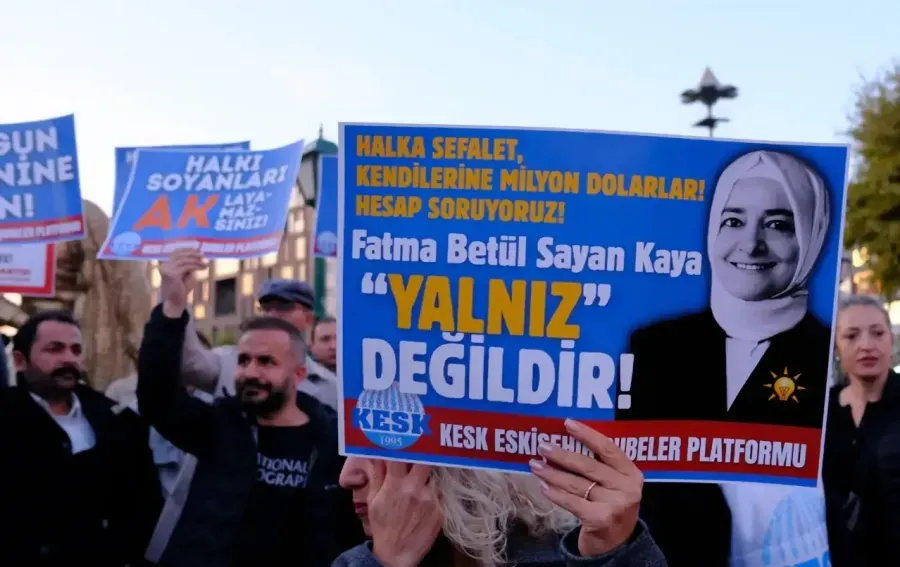
An alleged $18.5 billion deficit, deepening inflation and an uncontrollable fund crisis, reportedly resulting from embezzlement by officials within Türkiye’s domestic political and macroeconomic system, are pushing those in power towards classic political manipulation tactics: creating an external “enemy” or an “artificial source of tension” to divert public attention from the economic crisis at home.
The recent wave of accusations deliberately fuelled against Azerbaijan, particularly President Ilham Aliyev, across Turkish media platforms and in certain political circles, as well as fabricated speculation surrounding Nakhchivan and the propaganda campaign triggered by Azerbaijan’s absence from the Ankara summit, are not coincidental. These information attacks are part of a political scenario allegedly designed to conceal the $18.5 billion deficit and distract citizens from the economic difficulties affecting their daily lives.
First, artificial issues are being pushed into the media to make Turkish society forget its real problems, including the sharp decline in purchasing power, financial losses in funds and soaring prices. These issues include “Azerbaijan’s relations with Israel”, alleged “headscarf restrictions” and “Aliyev’s failure to attend the summit”.
Yet, just a few years ago, when an informal summit of the Organisation of Turkic States was held in Shusha, President Recep Tayyip Erdoğan did not attend, citing a football match as the reason. Vice-President Cevdet Yılmaz led the Turkish delegation instead, and the decision was accepted within the framework of diplomatic practice. Presenting Baku’s decision to be represented at ministerial level in precisely the same diplomatic manner as “betrayal” today is a clear example of a double standard.
Second, the longstanding brotherhood embodied in the principle of “One nation, two states” is being turned into a tool of emotional manipulation. There is an apparent attempt to use Azerbaijan’s oil and gas revenues, SOCAR investments and Baku’s strategic financial resources to compensate for the consequences of Türkiye’s struggling economy. Certain circles that see the solution not in structural reforms but in pressuring Baku through various information campaigns to secure financial and political concessions are attempting to turn the concept of brotherhood into a one-sided arrangement for exploitation.
Third, as even retired Admiral Cihat Yaycı has acknowledged in his analytical remarks, those targeting Azerbaijan, Türkiye’s only unconditional ally, are not serving the interests of either the state or its people. Those who remain silent towards the US and the Trump administration, despite Washington being Israel’s biggest strategic partner, or towards Athens, which has allegedly violated the rights of Western Thrace Turks and established an open military alliance with Israel, are now laying black wreaths outside the Azerbaijani Embassy. This suggests that artificial agendas and behind-the-scenes groups are driving the process.
At the same time, those who remain silent when Palestinian leader Mahmoud Abbas embraces the leadership of the Greek Cypriot administration, which describes the Turkish Republic of Northern Cyprus as an occupying force, are now blaming Baku. This represents the height of political hypocrisy.
The reality is clear: an artificial image of an “Azerbaijan crisis” is being created to prevent Turkish public opinion from demanding accountability for the domestic $18.5 billion fund crisis, the budget deficit and economic decline. However, it is impossible to plug a domestic financial hole through smear campaigns against a brotherly state.
Such primitive attempts to manipulate the public agenda will not sever the unbreakable historical ties between the two peoples. Instead, they will only expose the political and economic desperation of the circles orchestrating these tensions.
Ismayil Shahli