The countdown has begun: This could be Netanyahu’s way out – Commentary
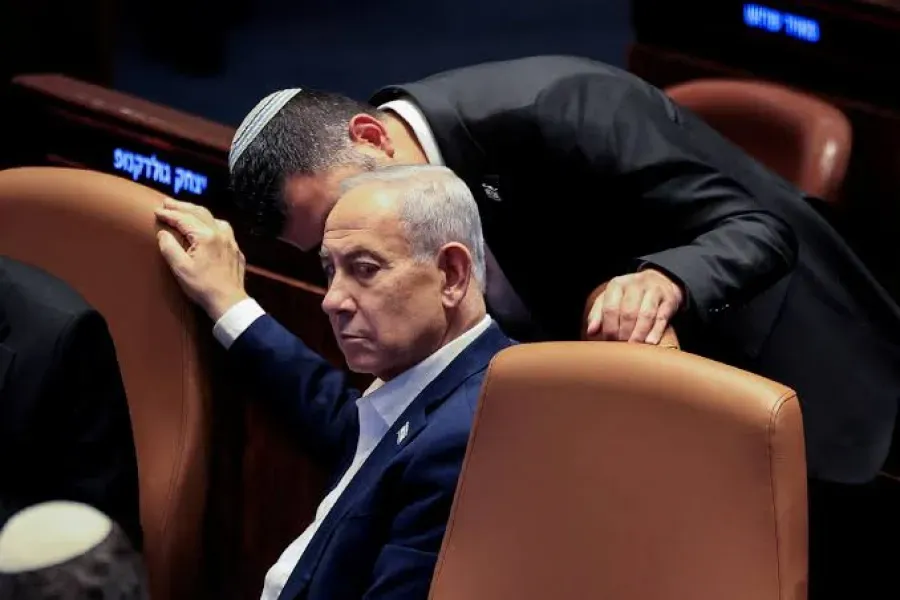
Although Benjamin Netanyahu’s Likud party came first in Israel’s parliamentary elections, winning 27 seats, his supporters failed to secure the 61 seats required to form a government. Netanyahu remains prime minister for now. The possibility of an alliance between opposition parties and Arab factions, along with renewed coalition negotiations, has left the country’s political future uncertain. The potential impact of this situation on Israel’s war with Iran is also drawing attention.
How could Netanyahu form a government with 53 seats? What influence will he retain? Who could become his main political partners?
The opposition, together with Arab parties, has the potential to command 67 seats. How realistic is the prospect of these forces forming a united government to keep Netanyahu out of power?
Against this backdrop, could Israel’s policy towards the war with Iran change? Might a new government prioritise halting military operations and pursuing diplomatic negotiations?
Political analyst Shakir Aghayev told TodayPress TV that although Netanyahu’s bloc came first with 53 seats, he has no realistic path to forming a government.
“Under Israeli law, forming a government requires securing the support of at least 61 members of parliament or establishing a coalition. At present, although Netanyahu came first in the elections, he has no real opportunity to form a government. The opposition, together with the Arab parties, has the potential to command 67 seats. However, the Arab coalition has not yet decided whom it would join. The positions of the Arab parties do not align with either Netanyahu’s bloc or the opposition.
“Under Israeli law, after an election, the president gives the candidate tasked with forming a government 28 days to do so. If no government is formed within that period, an additional two weeks are granted. If no agreement is reached during that time either, new elections are called within 90 days.”
The analyst believes that Arab parties will be unable to reach an agreement with the opposition and will not agree to cooperate with Netanyahu under any circumstances.
“At present, Netanyahu’s ability to form a government is limited – extremely limited. Even Trump does not want to get involved in this matter. Despite all this, I consider Netanyahu’s chances of remaining prime minister and forming a cabinet very low, almost impossible.”
Aghayev said the political developments would not change Israel’s approach to the war.
“I do not think anything will change. The opposition leader is not particularly peace-oriented either and also supports a war against Iran. Therefore, the possibility of war remains.
“Of course, all eyes are on November 3. A definitive decision on Iran will be made after the elections in the United States. We are talking about a possible new US and Israeli attack on Iran. For that reason, I do not think Iran will agree to any deal for the time being.”
According to the analyst, if a government is not formed, Netanyahu could remain in office for up to another four months.
“During this period, he could launch another war, while remaining prime minister for those four months. Developments could even lead to a further delay in early elections, extending his time in power. Netanyahu’s main objective is to remain in office by pursuing escalation in any form.
“As you know, Netanyahu is facing criminal proceedings in Israel. If he fails to form a government and his party is left outside the governing coalition, he could even face the prospect of imprisonment.”
The analyst added that Netanyahu still had time and that he did not expect the Iran-Israel war to end.
“As I have said, what happens after November 3 will depend heavily on Trump’s and the United States’ position. Further moves of this kind cannot be ruled out.”
Jala Rovshan