External threats to Azerbaijan exposed – President brings issue to the forefront
When discussing Azerbaijan’s security, two points cannot be considered separately. The first is that the likelihood of open confrontation within the country is low. The reasons are clear: the army has been modernised, and territorial integrity was fully restored in 2023.
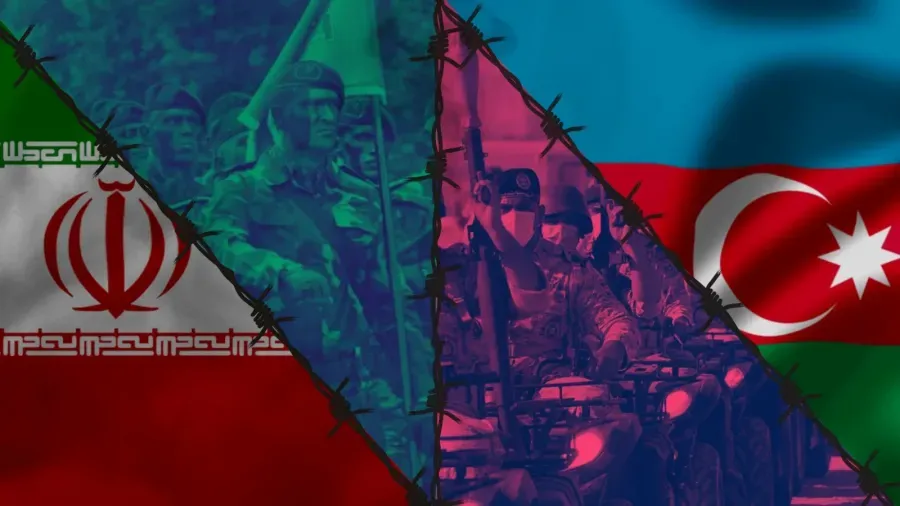
The second point carries greater weight. Azerbaijan is located between Russia and Iran, while competition among major powers over energy and transport routes in the South Caucasus shows no sign of abating. This geographical position leaves Azerbaijan more exposed to external pressure.
However, it would also be wrong to claim that there are no domestic risks. A more accurate assessment is that most threats originate abroad, while internal resilience determines how deeply they can penetrate the country. External pressure tends to target weak points. Economic diversification and public trust in the state form the country’s internal line of defence against such pressure.
The official security approach
At the centre of Azerbaijan’s official security policy are state sovereignty and territorial integrity. The National Security Concept, approved in 2007, identifies attempts against independence and territorial integrity, as well as actions aimed at undermining the constitutional order, as security risks.
The document does not limit threats to those originating beyond the country’s borders. Terrorism, separatism, transnational crime and illegal migration are also included, alongside harmful influences in the information space.
In other words, the official doctrine does not separate internal and external factors. External actors exploit domestic vulnerabilities, while a robust internal system reduces the impact of pressure from abroad. This logic runs through all the following sections.
Geography shapes the security equation
The main source of external risks is geography. Russia lies to the north, Iran to the south, and Azerbaijan occupies one of the most sensitive locations in the South Caucasus. The war between Russia and Ukraine and the confrontation that erupted around Iran in 2026 have significantly complicated Baku’s foreign policy calculations.
Geography cannot be changed. Neighbourhood with Russia and Iran will remain a constant factor in every security strategy. The Caspian Sea is also part of this equation: its militarisation could directly affect trade routes and port operations.
Azerbaijan’s strategic importance is enhanced by the routes crossing its territory. The Baku–Tbilisi–Ceyhan oil pipeline and the Southern Gas Corridor connect the country to Europe’s energy network. The Baku–Tbilisi–Kars railway, which opened in 2017, is a backbone of the Caucasus section of the Middle Corridor. According to a 2026 European Commission study, the planned TRIPP route could shorten the journey by up to 25% compared with the Baku–Tbilisi–Kars railway. These routes give Azerbaijan strategic weight, but they also create an obligation to protect them.
The southern front: the Iranian risk
The events of 2026 clearly demonstrated how vulnerable the southern border can be. On February 28, the United States and Israel launched strikes against Iran, and Supreme Leader Ali Khamenei was killed. Baku sought to remain neutral: President Ilham Aliyev sent a letter of condolence, while Foreign Minister Jeyhun Bayramov informed Tehran that Azerbaijani territory would not be used against Iran.
Despite this, drones struck Nakhchivan on March 5. One hit the airport terminal, injuring civilians. Tehran denied involvement, while Baku recalled staff from its embassy in Tehran and consulate in Tabriz.
The incident exposed a vulnerable point in Nakhchivan’s security. The autonomous republic is geographically separated from mainland Azerbaijan, making it difficult to protect during a crisis. Even today, the only land route to Nakhchivan passes through Iranian territory.
TRIPP was conceived partly to eliminate this dependence. The 43-kilometre route is planned to run through the Meghri area along the Aras River. Tehran views it as an extension of the old “Zangezur corridor” concept and a means of granting the United States access to the Syunik region. Ali Akbar Velayati, an adviser to Iran’s supreme leader, strongly opposed the project in August 2025, although subsequent official statements adopted a softer tone.
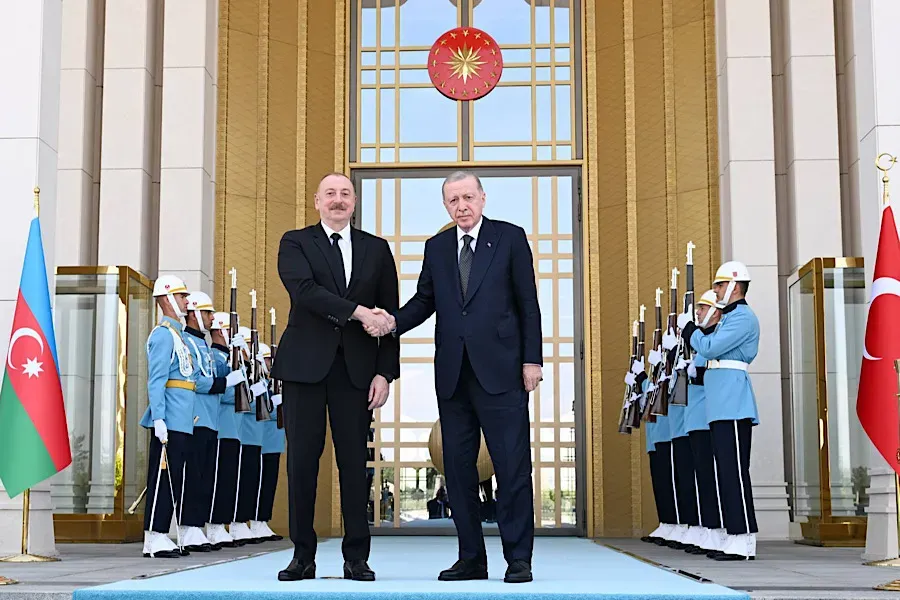
Azerbaijan’s close relations with Türkiye and Israel add to Iran’s concerns. Military tensions along the southern border and Iran-centred ideological propaganda therefore remain genuine risks. In this area, transit interests overlap with ideological competition.
The northern front: complex dependence on Russia
The phrase “complex dependence” best describes Azerbaijan’s relationship with Russia. Moscow wants to preserve its influence in the South Caucasus, while the war in Ukraine has narrowed its options. This gives Baku more room to manoeuvre. However, a weakening power may increasingly turn to covert and hybrid methods instead of overt pressure.
Events over the past two years show that this risk is real. On December 25, 2024, an AZAL flight from Baku to Grozny came under fire from a Russian air defence system. The aircraft crashed in Kazakhstan, killing 38 people. Subsequently, raids targeting Azerbaijanis were conducted in Russia, while the heads of Sputnik Azerbaijan were detained in Baku. Tensions eased after Putin apologised in Dushanbe in October 2025. On April 15, 2026, the two countries announced an agreement on resolving the issue, including compensation.
Russia remains the largest buyer of Azerbaijan’s non-oil exports: in 2025, 32.4% of these exports went to Russia. Such dependence can become a ready-made lever for economic pressure during periods of tension.
Sharing borders with Russia and Iran places Azerbaijan close to the pressure zone of two major powers. Baku’s response has included increased defence spending.
Source: SIPRI, April 2026; PanArmenian; Statbase, based on SIPRI data.
Interestingly, neither of the two neighbouring countries has reduced its arms build-up even after the peace text was initialled. Both capitals appear to prefer preserving peace from a position of strength.
The Armenian front: the risk has declined, but has not disappeared
For decades, Armenia was the first item on Azerbaijan’s security agenda. Following the Second Karabakh War and the events of September 2023, the likelihood of direct military confrontation declined significantly. On August 8, 2025, the text of a peace agreement was initialled at the White House. The document commits the parties to recognising each other’s sovereignty and establishing normal relations.
However, the agreement has not yet been signed. Baku has made its signature conditional on removing from Armenia’s Constitution provisions it considers territorial claims against Azerbaijan. Such a change would require a referendum in Armenia. Nikol Pashinyan said on October 22 that the agreement could be signed in 2027–2028. Farid Shafiyev, chairman of the AIR Center, described constitutional clarity as the foundation of lasting peace in Brussels on October 27.
It would therefore be premature to interpret the peace process as the end of the military threat. The current stage involves placing the risk within a legal framework and managing it. Any difficulties in the delimitation and demarcation process could set negotiations back, while external actors are ready to exploit such disputes. Construction of the TRIPP route through Armenian territory is also being delayed by Russia’s control over Armenian railways and Iran’s objections.
Hybrid threats: warfare without crossing borders
External pressure does not always arrive in the form of tanks. Disinformation campaigns and cyberattacks are considerably cheaper than direct intervention, and they leave fewer traces.
These threats do not physically cross borders. Their targets are public trust and the legitimacy of the state. At the height of tensions with Moscow in 2025, the centre of gravity in bilateral relations shifted from diplomacy to the media sphere, with the detention of Sputnik Azerbaijan’s executive director becoming a symbol of the confrontation. After the Nakhchivan incident, Iran’s ambassador to Armenia denied his country’s involvement and described Baku’s response as disproportionate. Within days, news of a single strike had turned into a battle between competing narratives.
Modern security must therefore encompass the information space and digital infrastructure as well. Today, a border outpost and a server room are strategic assets of comparable importance.
Ideological defence: trust matters more than control
Azerbaijan has a secular state model, and government oversight of religious movements is strong. Nevertheless, attempts by foreign centres to use religious radicalism and ethnic separatism as instruments cannot be ruled out. Against the backdrop of recent tensions in the south, this risk has become even more relevant.
Strengthening the idea of statehood and uniting society around shared values are important elements of security policy. However, ideological resilience cannot be built through bans alone. When people feel they are part of a fair society, they have less reason to listen to foreign propaganda. Where dissatisfaction and distrust prevail, even weak propaganda can find an audience.
Economic resilience: dependence on oil and gas
The economy is one of the most important pillars of domestic stability, but it still relies on oil and gas revenues. These revenues allow the state to modernise its armed forces and cover social spending. In return, they tie the budget to fluctuations in global energy markets.
Hydrocarbons account for more than five-sixths of exports. Two conclusions can be drawn from the data. The budget is gradually moving away from oil: in the first half of 2026, non-oil revenues accounted for 57.3% of state budget revenues, up 5.4 percentage points from a year earlier. The government plans to reduce transfers from the State Oil Fund by 27.2% by 2030 compared with 2026. The export structure, however, has barely changed: although non-oil exports have increased in nominal terms, they have declined in real terms, meaning that much of the growth is attributable to prices.
Dependence on oil and gas is not considered a direct threat today. Over the long term, however, without diversification it could erode the country’s internal resilience, particularly if production continues to decline. This is why the expansion of non-oil exports and renewable energy has become a security issue.
Conclusion: a balanced security model
External risks dominate Azerbaijan’s security landscape. Neighbourhood with Russia and Iran, tensions surrounding TRIPP, the unsigned agreement with Armenia and hybrid influence are the main sources of threats. The events in Nakhchivan in March 2026 demonstrated that these risks are not merely theoretical.
Domestic risks must not be overlooked either. Dependence on energy revenues, the budget’s reliance on transfers from the State Oil Fund, the quality of governance and citizens’ trust in the state all determine the level of internal resilience.
All of this can be summed up in one sentence: Azerbaijan’s main threats come from abroad, but its ability to withstand them is built at home. A strong army is one side of the equation. The other is a diversified economy and a society that trusts its state.
Sources
SIPRI – Trends in World Military Expenditure 2025
State Statistical Committee of Azerbaijan – Foreign trade, 2025
Report.az – Execution of the 2026 state budget
Trend – Reduction in transfers from the State Oil Fund
Caliber – Non-oil exports and Azerbaijan’s export structure
The Hague Research Institute – TRIPP and the Nakhchivan incident
Carnegie Europe – TRIPP and regional connectivity
Armenpress – Pashinyan on the timing of the peace agreement
Anadolu Agency – Agreement on the AZAL crash
Trading Economics – Corruption Perceptions Index
Aziz Alibayli
International affairs expert