
Paralyse a country with a single button: Nuclear weapons are no longer the only threat…
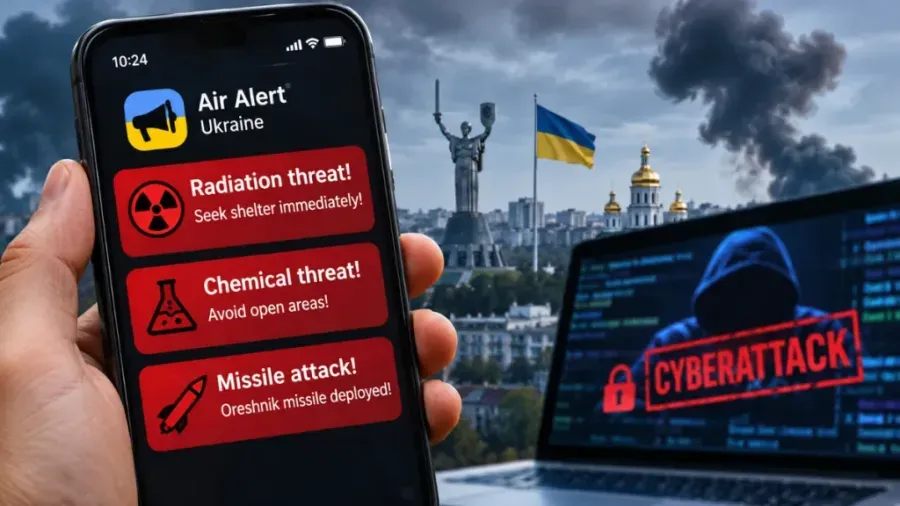
Cyberattacks carried out in various countries around the world in recent weeks have shown that digital security has become a matter of national security. Particularly alarming are reports that millions of people in Russia and Ukraine received fake warnings about nuclear strikes.
Russia’s Ministry of Emergency Situations announced that its emergency alert application had been subjected to a large-scale cyberattack. In Ukraine, meanwhile, fake notifications warning of nuclear and chemical strikes were distributed through an air raid alert application. The messages claimed that Russia would use its Oreshnik missile. Ukraine has accused Russia of being behind the attack.
The most dangerous aspect of these incidents is the erosion of public trust in official emergency alert systems.
In wartime, fake nuclear warnings can cause panic and undermine confidence in official notifications. As a result, people may be less likely to trust genuine alerts when a real threat emerges.
Cyberattacks are not limited to Russia and Ukraine. In the United States, the electronic system of the Federal Election Commission was reportedly down for approximately 41 hours.
In Japan, government systems were targeted, with the personal data of 125,000 police officers and staff reportedly at risk. In Belgium, an attack on the Finance Ministry forced the temporary shutdown of its online tax portal. Denmark, meanwhile, announced that millions of personal identity records had been stolen.
A new dimension of the threat is the use of artificial intelligence agents in cyberattacks. According to reports, hundreds of AI agents compromised at least 440 servers across 48 countries as part of one campaign. Another group linked to China reportedly targeted more than 200 organisations in 14 countries. Cryptocurrency thefts attributed to North Korea also demonstrate the financial scale of digital attacks.
Whereas hacking operations were previously characterised mainly by data theft and system disruption, artificial intelligence now enables such operations to be carried out faster and on a much larger scale.
The real danger is that a country’s energy system, banking infrastructure, government databases and emergency alert networks could all become targets simultaneously. While a missile strike can destroy a city, a cyberattack can paralyse an entire country’s systems of governance.
Recent events around the world show that cyberattacks are no longer a threat of the future.
Jala Rovshan