Neighbouring country could be hit with tactical nuclear weapons – CLAIM
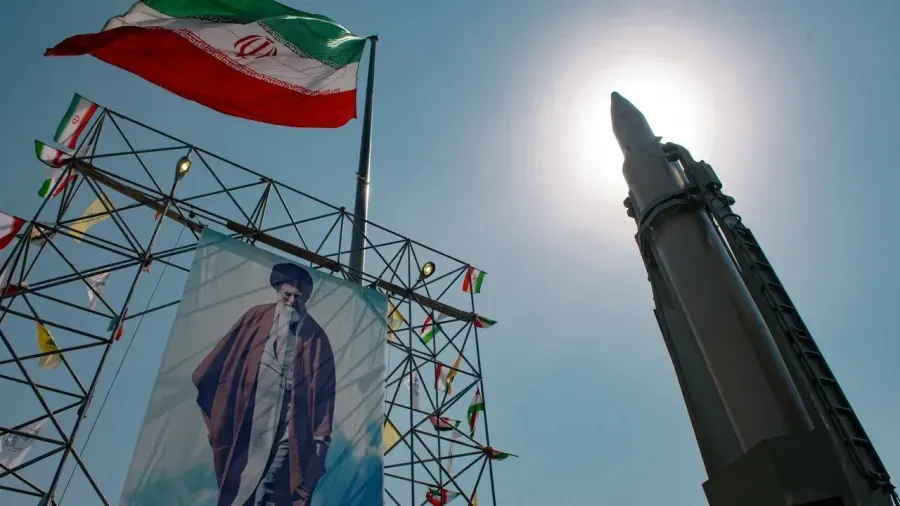
The decades-long covert war between Israel and Iran, waged through proxy forces in the Middle East, has entered a new phase of direct inter-state missile and air strikes. This has brought one of the most alarming scenarios in the global security debate back to the attention of international think tanks: could the United States or Israel use limited tactical nuclear weapons to destroy underground nuclear facilities that appear impossible to eliminate through conventional means? This is more than a sensational hypothesis. It is rooted in the geological location of Iran’s uranium enrichment infrastructure, the engineering realities of deep mountain formations and the physical limitations of modern conventional bunker-busting munitions.
From a military and technical perspective, the main reason this scenario is being discussed is the heavily protected facilities at Iran’s Fordow and Natanz complexes. The Fordow Fuel Enrichment Plant, located near the city of Qom, is reportedly built approximately 80-90 metres underground, beneath solid granite formations and several layers of reinforced concrete structures.
According to International Atomic Energy Agency (IAEA) reports for 2024-2026, Iran’s stockpile of uranium enriched to 60% has exceeded 180 kilograms. If further enriched to the 90% level associated with weapons-grade material, this quantity could be sufficient to produce three to four nuclear warheads. Meanwhile, the construction of new tunnel networks more than 100 metres underground beneath the Kuh-e Kolang Gaz La (Pickaxe Mountain) massif at Natanz has raised questions about the effectiveness of conventional air strikes.
The most powerful non-nuclear bunker-busting weapon in the US Air Force arsenal is currently considered to be the GBU-57 Massive Ordnance Penetrator (MOP). Weighing 13.6 tonnes (30,000 pounds) and carrying 2.4 tonnes of explosive material, the massive bomb can only be carried by B-2 Spirit stealth strategic bombers. Under optimal test conditions, it can penetrate up to 60 metres of reinforced concrete.
However, Pentagon military simulations reportedly indicate that even multiple GBU-57 bombs striking the same location in succession cannot guarantee the complete destruction of granite layers more than 80 metres deep, such as those protecting Fordow. This technical limitation has prompted military planners to examine the capabilities of tactical nuclear bunker-busting weapons.
The main US weapons considered for this purpose are the B61-11 and the more technologically advanced B61-12 thermonuclear bombs. Weighing approximately 540 kilograms, the B61-11 has a reinforced steel casing that allows it to penetrate three to six metres into the ground before detonating. The resulting underground explosion generates seismic shock waves that could destroy sensitive centrifuges, including IR-4 and IR-6 cascades, inside underground halls even without a direct hit.
The B61-12, meanwhile, features a precision-guidance tail assembly and a variable-yield mechanism known as “dial-a-yield”. Its explosive power can reportedly be adjusted from 0.3 to 50 kilotons. The lower-yield setting of 0.3 to 1.5 kilotons is examined from a military perspective because it could minimise radioactive fallout while generating enough underground energy to shake an entire mountain.
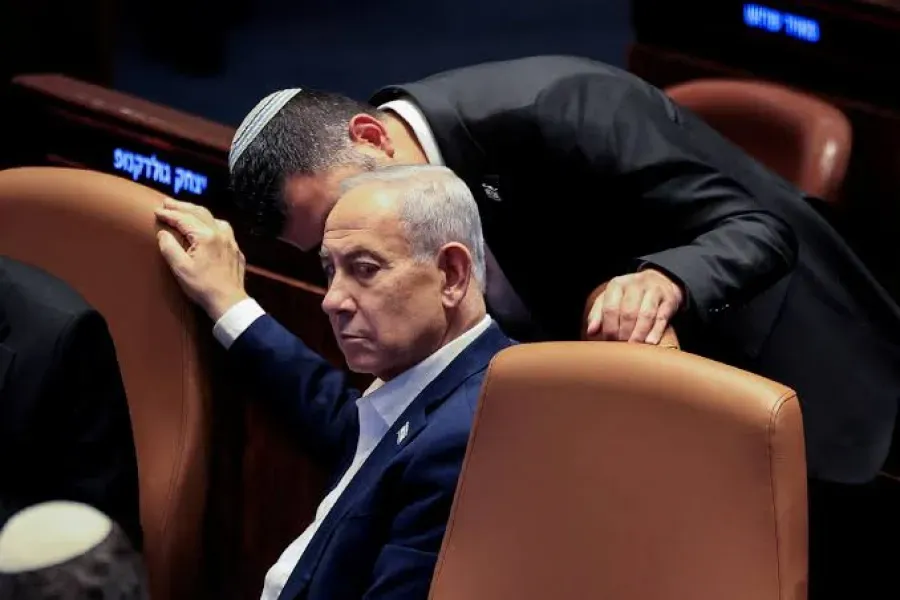
Israel, however, operates under a different doctrine. According to estimates by the Stockholm International Peace Research Institute (SIPRI) and the Federation of American Scientists (FAS), Israel possesses approximately 90 nuclear warheads. Its arsenal is believed to include Jericho III ballistic missiles with a range exceeding 4,000 kilometres, Popeye Turbo cruise missiles launched from Dolphin-class submarines, and modified F-35I Adir fighter jets.
Although Israel’s military doctrine treats nuclear weapons as a last resort under the so-called “Samson Option” in the event of an existential threat to the state, the possibility of using a low-yield tactical weapon pre-emptively as Iran approaches full nuclear capability has reportedly not been ruled out in various classified assessments.
Despite these military and technical considerations, taking such a step would trigger a chain of potentially uncontrollable global disasters. Even a tactical explosion with a yield of just one kiloton would be equivalent to one-tenth of the power of the 15-kiloton Little Boy bomb dropped on Hiroshima in 1945. It could also release tonnes of soil and gaseous uranium hexafluoride (UF6) into the atmosphere.
Seasonal wind currents across the Iranian plateau could carry radioactive clouds towards the Arab monarchies of the Persian Gulf — Qatar, the UAE and Saudi Arabia — as well as the South Caucasus and the Caspian Sea basin within just a few days. This would threaten not only the lives of millions of people but also cripple major seawater desalination plants supplying drinking water across the Gulf and disrupt global oil terminals.
The economic and geopolitical consequences would be even more devastating. Iran could immediately close the Strait of Hormuz, through which approximately 20% of global seaborne oil trade passes, using missile strikes and underwater mines. This could drive the price of Brent crude to $150-200 per barrel overnight, pushing the global economy into a deep recession.
At the same time, the 80-year-old nuclear taboo, maintained since 1945, would be broken. Such a precedent could pave the way for nuclear powers including Russia, China, North Korea and Pakistan to resort to tactical nuclear weapons in pursuit of their regional interests. It could also render the Treaty on the Non-Proliferation of Nuclear Weapons (NPT) effectively meaningless.
Military experts conclude that neutralising the Fordow and Natanz complexes would not necessarily require their surrounding mountains to be destroyed with atomic weapons. Conventional heavy missiles targeting power supply lines, external ventilation shafts, facility entrances and exits, and logistical tunnels could render the sites inoperable for months or even years.
For this reason, reports of a possible “tactical nuclear strike”, circulated by media outlets and in some alleged intelligence leaks, are viewed as more likely to be part of strategic psychological warfare and deterrence than an actual military operation plan. The objective, according to this assessment, is to dissuade Tehran from enriching uranium to 90%, force concessions at the negotiating table, and demonstrate the resolve of Washington and Tel Aviv.
Ismayil Shahli