
Öcalan, accused of causing 40,000 deaths, brought into Türkiye’s political decision-making – Move shakes the country
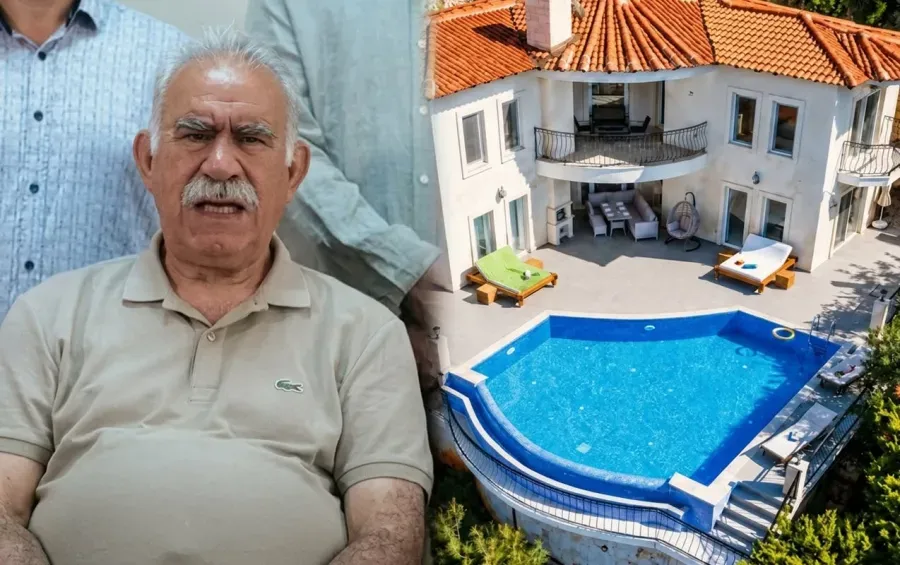
Türkiye’s domestic political landscape has, in recent months, been drawn into an extremely dangerous process that threatens to deeply undermine the moral foundations of society, state institutions and mechanisms of public justice. The reintroduction of Abdullah Öcalan, leader of a terrorist organisation blamed for the deaths of more than 40,000 soldiers, police officers, village guards, teachers, children and civilians over nearly half a century — from the first armed attacks in the Eruh district of Siirt and the Şemdinli district of Hakkari in August 1984 to the present day — as a legitimate political actor is not merely a political manoeuvre. It is a deliberately planned political operation aimed at erasing the blood-soaked memories of tens of thousands of families of fallen victims and undermining the moral and legal foundations of society. According to official estimates, the organisation has also caused between $1.5 trillion and $2 trillion in direct and indirect economic damage to the country.
Until recently, the same prisoner was denounced in public squares, on television and at election rallies as a “baby killer”, the “Imrali monster” and an “enemy of humanity”. Today, however, he is being invited to address parliament and portrayed as the “architect of historic dialogue” and the “key to peace”. This exposes the desperate position of the ruling bloc in domestic politics. The move, which the article claims is intended to prolong the political life of those in power, secure the 360 or 400 parliamentary votes required for constitutional amendments and an extension of the presidential term, and bring the approximately 10% — more than five million voters — supporting the DEM Party (formerly HDP/YSP) under its influence, is described as one of the gravest blows to the concept of the rule of law. The article further alleges that the blood of 40,000 victims has been placed on the political bargaining table to conceal the severe domestic economic crisis, a fund shortfall exceeding $18.5 billion, real inflation above 60% and the collapse of public purchasing power.
The most alarming stage of this process, however, is mass manipulation carried out through state propaganda mechanisms, controlled media and certain allegedly “bought-off” commentators. The man portrayed as the perpetrator of the deaths of hundreds of children, the 33 unarmed soldiers shot dead on the Bingöl-Elazığ road in 1993, and young teachers such as Şenay Aybüke Yalçın and Necmettin Yılmaz, who were brutally murdered at schools, is now being presented on television as the “only wise leader capable of disbanding the organisation”. Political figures who for years exploited nationalist sentiment through their harshest statements against the terrorist organisation, and who once demanded Öcalan’s execution by symbolically throwing a noose towards Imrali from public rallies, are now attempting to bring that same organisation’s leader before the Grand National Assembly of Türkiye. This is described as an unprecedented example of hypocrisy in political history.
The project presented under the slogans of “national reconciliation” and the “Century of Türkiye” is, in the article’s view, not only an attempt to whitewash terrorism but also a move that weakens the state in the face of emerging geopolitical threats in the region. While a separatist force in northern Syria, operating under the names YPG/SDF, remains in place with more than 100,000 armed personnel and thousands of pieces of heavy equipment, the claim that weapons will supposedly be laid down at the word of a prisoner in Imrali is dismissed as a story invented to deceive a gullible public. In practice, the article argues, opposition figures and civil society representatives who make legitimate demands within Türkiye are imprisoned for even the slightest criticism, while a terrorist leader with the blood of thousands on his hands is being given the image of a “saviour of the entire nation”.
Historical experience and international law demonstrate that showing mercy to criminals does not save a state; on the contrary, it encourages crime. No regime can achieve stability by seeking to extend its political life through the blood of fallen victims or by artificially turning a perpetrator of massacres into a “national hero”. This bargain, which damages society’s moral fabric, destroys its sense of justice and disregards the tears of the mothers of fallen victims, will sooner or later consign its architects to the darkest pages of political history. No political cover or fabricated propaganda can wash away the stain of blood etched into a nation’s memory.
Ismayil Shahli