
Young planet confirmed — could reveal the secrets of the Solar System’s formation
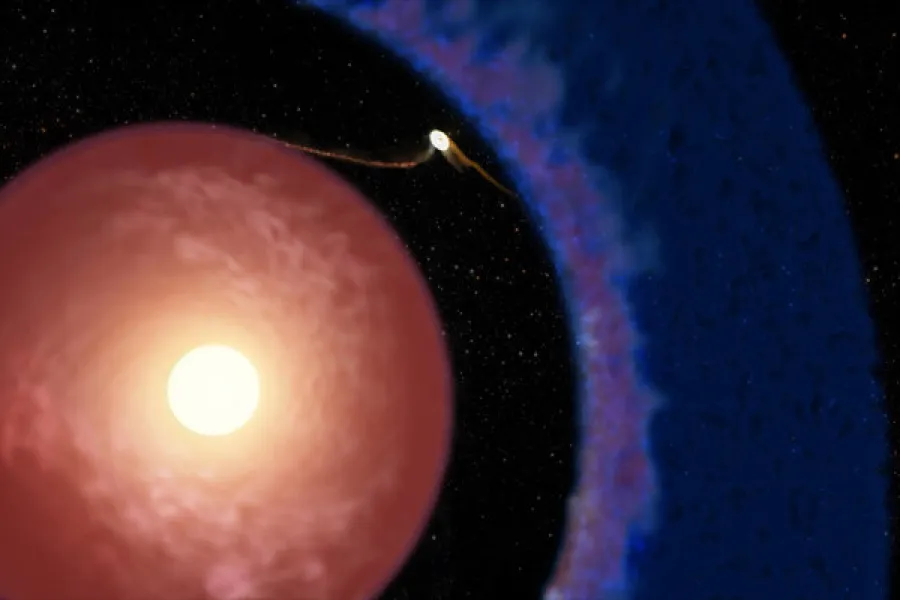
Astronomers have confirmed the existence of a planet less than 1 million years old, making it the youngest known planet ever identified in the universe.
TodayPress TV reports that researchers from Diego Portales University in Chile have determined that the gas giant Elias 2-24 b is still moving within the disk of gas and dust from which it formed. The findings were published in The Astrophysical Journal Letters.
Located 450 light-years from Earth, the planet has a mass comparable to that of Jupiter. Astronomers used a coronagraph to block the bright light of its host star and focused on a gap in the surrounding dust disk.
According to study leader Andrea Bernadini, planets are expected to be located within such gaps because they create the gaps themselves as they grow.
The mystery surrounding this region has persisted for nearly 10 years. Earlier, the ALMA telescope in Chile detected an unusual gap in the disk surrounding the star Elias 2-24. Later, the European Southern Observatory detected a faint point of light within the gap.
However, scientists could not confidently confirm that it was a planet. According to existing planet-formation models, Jupiter-like planets are expected to require more than 5 million years to form. The detected object, however, behaves like a fully formed planet and is located 55 times farther from its star than Earth is from the Sun.
To clarify the nature of the object, the team led by Bernadini examined archival data from the space agency dating from 2018 and 2020. By comparing images taken at different times, the scientists tracked the object’s movement. As a result, they established that it was neither optical glare nor a background star.
Astronomers are now pinning their hopes on NASA’s new Nancy Grace Roman Space Telescope. Launched at the end of August, the telescope will be capable of detecting even the faintest and most difficult-to-observe newly formed planets thanks to its powerful coronagraph.
Scientists believe that observations of this kind could help reveal how our Solar System formed billions of years ago.
Giymat Mahir