
The names behind Turkey’s major “fund scandal”: How did the bubble burst?
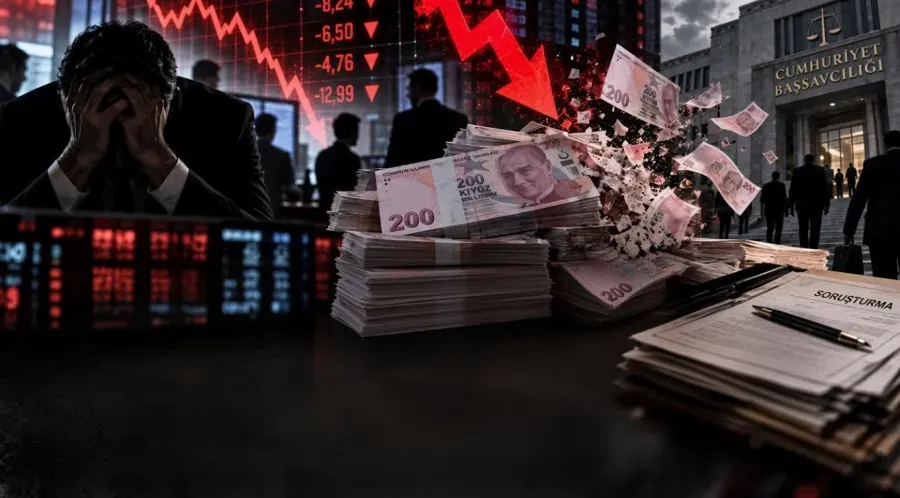
Investment funds in which hundreds of thousands of people had placed their money have become the focus of a major scandal in Turkey.
On September 17, the Capital Markets Board of Turkey (SPK) abruptly suspended the operations of 131 funds managed by Tera, Pusula, Hedef, Atlas, A1 Capital, Pardus and Bulls, and began the process of liquidating them.
According to an investigation by TodayPress TV, more than 455,000 investors had put money into these funds, whose combined assets are estimated at 850–900 billion Turkish lira.
At the heart of the scandal is a simple but dangerous mechanism: artificially inflating share prices, creating the appearance of high returns and encouraging people who believe those figures to invest in the funds.
Understanding how the alleged scheme worked requires recognising one key point. Some shares are not traded frequently. A company that purchases large quantities of such shares can significantly influence their prices. According to allegations, certain funds exploited this opportunity by buying large volumes of selected shares, driving up their prices and making their own performance appear more attractive than it actually was.
People who saw the impressive returns began investing in those funds. For example, the TLY fund managed by Tera attracted attention after its reported return exceeded 15,000%. Although figures like these can appear to represent a major opportunity for ordinary investors, the crucial question is whether such gains reflect real economic performance or artificially inflated share prices.
When share prices are artificially driven up, everything may appear to be going well—until investors want their money back. If a fund cannot sell its holdings at the inflated prices, it may face a liquidity shortage. The situation can become even more serious when large numbers of investors try to withdraw their money at the same time.
Events in September 2026 brought these questions to the forefront. On September 15, payment problems reportedly emerged involving certain funds managed by Pusula Portföy. Two days later, the SPK suspended the operations of 131 funds. The Istanbul Chief Public Prosecutor’s Office subsequently launched a large-scale investigation.
Investigators are examining how the funds purchased shares, which transactions drove prices higher and who benefited from the activity. According to allegations, some funds controlled more than 90% of the publicly traded shares of certain companies. Such concentration can make it easier to influence share prices and affect market activity.
Social media and investor forums may also have played a role. Posts about rapidly rising shares could attract new buyers, while increasing demand pushed prices even higher. Meanwhile, individuals who had purchased those shares earlier could sell at favourable moments and make a profit. The high trading volumes recorded between September 13 and 16 are also among the issues being investigated.
The scale of the case is substantial.
By mid-October, operations had reportedly been carried out against more than 217 suspects, with 85 people arrested. Transactions linked to Tera, Pusula and Hedef funds allegedly generated profits exceeding 100 million Turkish lira for 141 individuals and 73 companies—a total of 214 entities. The overall damage is estimated at 187.65 billion Turkish lira. Investigators are also examining the possibility that some of the funds were transferred to Swiss banks and other foreign accounts.
Among those named in connection with the investigation are Fatma Betül Sayan Kaya, a former minister from the ruling Justice and Development Party (AK Party) and former member of its Central Decision and Executive Board (MKYK), and her husband, İlyas Kaya. They have reportedly given statements as suspects in the investigation into the funds. According to allegations, the couple invested substantial sums in the funds and withdrew their money shortly before the liquidation decision. Reports also state that their assets have been frozen. Following the scandal, Fatma Betül Sayan Kaya reportedly resigned from the AK Party.
Another person named in the case is Abdulkadir Özkan, a member of the board of directors of Tera Yatırım Holding. He is among those detained as part of the investigation. Özkan previously served as press adviser at the Directorate of Religious Affairs and the Ministry of National Education, and as a chief adviser at the Prime Ministry in 2015.
İskender Balcı, one of the managers of Tera funds, has also reportedly been arrested. Claims have emerged that he has family ties to Osman Çelik, Turkey’s deputy minister of treasury and finance. The name of former AK Party bureaucrat Osman Arıkan Nacar has also appeared in statements by the opposition and media reports.
Questions about political connections extend beyond individuals. It has also been alleged that the management of Aksis Bağımsız Denetim, the company auditing Pusula Portföy, includes individuals who previously stood as AK Party parliamentary candidates.
The scandal has also become a political dispute in Turkey’s parliament. Opposition parties have proposed investigations into possible political influence, bureaucratic negligence and weaknesses in oversight mechanisms. However, the proposals were rejected by votes from AK Party and Nationalist Movement Party (MHP) lawmakers. Representatives of the government, meanwhile, have said the matter is subject to legal proceedings and should be investigated by prosecutors and the courts.
But behind these figures are not only major companies and financial players.
The greatest impact has been felt by ordinary people seeking to grow their savings. Approximately 88% of investors had less than one million Turkish lira in the funds. For many, the money at stake represents savings accumulated little by little over many years.
The most important question now is how much of that money can be recovered. During the liquidation process, the funds’ assets will be sold, and the proceeds distributed among investors in proportion to their holdings. İş Bankası has been designated as the responsible institution for the Tera funds, while Ziraat Bankası will oversee the process for the other funds. However, if the value of a fund’s assets is lower than the amount invested, there is no guarantee that all investors will recover their money in full.
Fraudsters have also emerged, targeting victims in the aftermath of the scandal.
People in WhatsApp and Telegram groups are reportedly offering to help investors recover their money in exchange for fees of 25,000–50,000 Turkish lira. Such promises may seem appealing to people who have lost their savings. However, paying these individuals could increase their losses further. Investors should rely only on announcements from the SPK and official banks.
The impact has extended beyond the funds themselves. Turkey’s benchmark BIST 100 stock index has reportedly fallen by around 15%, while money market funds have recorded outflows totalling 600 billion Turkish lira. A scandal of this scale can undermine confidence not only in the funds directly involved but also in the financial market as a whole.
The investigation is examining possible market manipulation, aggravated fraud, the formation of a criminal organisation and money laundering. İbrahim Ömer Gönül, a former chair of Turkey’s Capital Markets Board, has also reportedly given a statement as a suspect.
The central issue in Turkey is now not only identifying those responsible and addressing the economic damage. The fate of thousands of investors’ savings, how much of the losses can be compensated and how similar situations can be prevented in the future all remain unresolved.
Jala Rovshan