
The world’s most secretive Jews: Ruhi Çenet enters their communities, everything is revealed...

Following Turkish investigative blogger Ruhi Çenet’s latest report, Hasidic Jews have become a major topic of interest, prompting the question: if Hasidic Jews oppose Israel, why don’t they appear to do so in his video?
In reality, the issue is nuanced.
Hasidic Judaism is a Orthodox religious movement that emerged in Eastern Europe in the 18th century. Following World War II, its followers largely migrated to the US and Israel. Today, they account for around 4 percent of the world’s Jewish population.
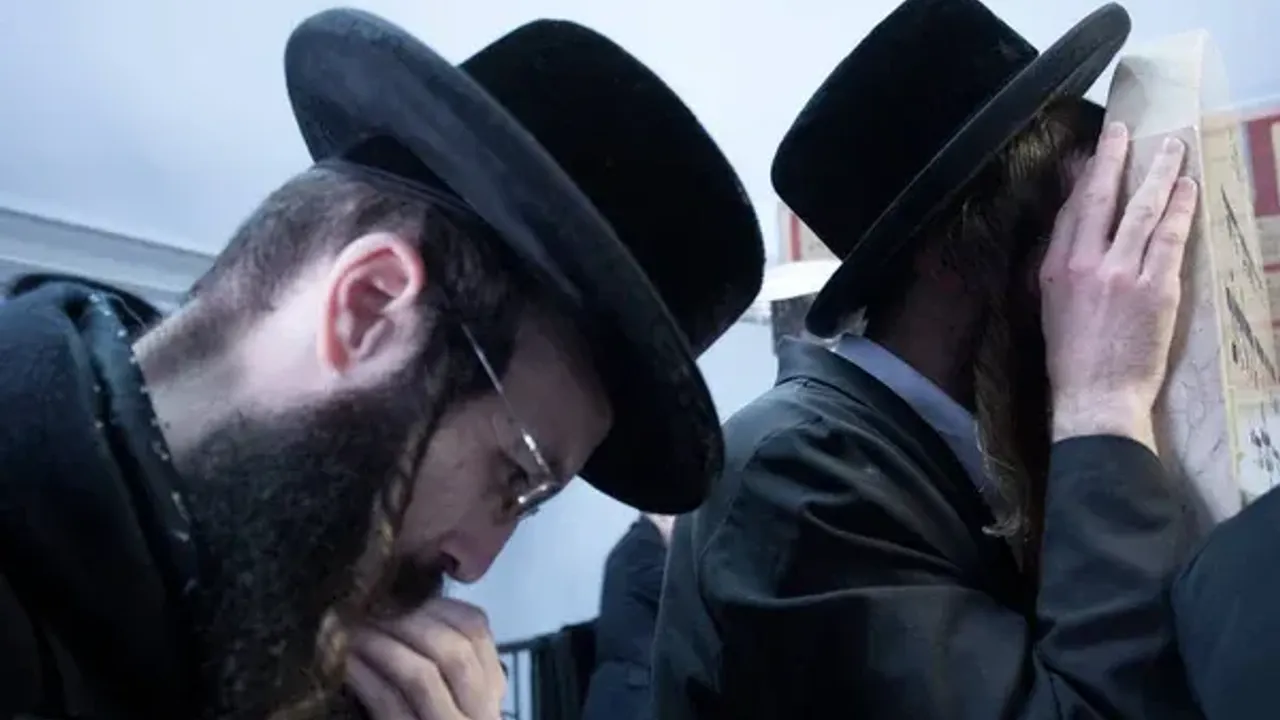
However, much like any religious community, internal divisions have emerged over generations. This led to the formation of various Hasidic dynasties, including Satmar, Belz, Ger, Bobov, and Chabad-Lubavitch. Some of these groups support the State of Israel. For example, the Hasidim featured in Ruhi Çenet’s video belong to the Chabad-Lubavitch dynasty, which supports Israel and actively prays for its continued existence.
Conversely, other groups, such as the Satmar dynasty, directly oppose the existence of the State of Israel. They believe that God will re-establish the State of Israel divinely when the time comes. Their core belief states:
"We Jews were divinely exiled from the Holy Land by the will of God, and our return should likewise take place not through human intervention, but through God’s divine decree."
While they do not oppose living in the land they consider sacred, they oppose the existence of a secular state there. Consequently, the Satmar dynasty refuses to serve in the military or participate in Israeli elections. For instance, a Hasidic poster from 1956 explicitly stated “forbidden” at the top and “voting is forbidden” at the bottom, reading:
"Whether woman or man, whoever you are, participating in elections is strictly forbidden."
For them, voting legitimizes a state created by human hands.
As mentioned earlier, Hasidic anti-Zionists refuse military service, whereas the Netanyahu government insists on conscription. Because of this, the Satmar dynasty recently appealed to Donald Trump regarding the Netanyahu administration's stance on military service.

Such friction between religious communities and state authorities over military duty and resources is not unique to this group. Historically, Sultan Mehmed the Conqueror confiscated the waqf lands of the ulema (religious scholars) to fund military operations. The ulema disapproved, later supporting the more moderate Bayezid II over the war-leaning Cem Sultan. Upon ascending the throne, Bayezid II returned the confiscated lands to the ulema.
A similar confrontation occurred during the Turkish War of Independence between Atatürk and certain religious leaders. Atatürk famously stated: "While the nation is shedding blood and sacrifice is taking place on the front lines, you are busy sheltering healthy young men here. We will put an end to this permanently."
Ultimately, the Satmar Hasidim oppose the State of Israel for theological reasons rooted in its founding principles—not because of the Palestinian conflict. In short, sharing a common adversary does not mean sharing the same cause.
Giymat Mahir