
How Central Asia brought religious dress under control — What lessons does history teach us?
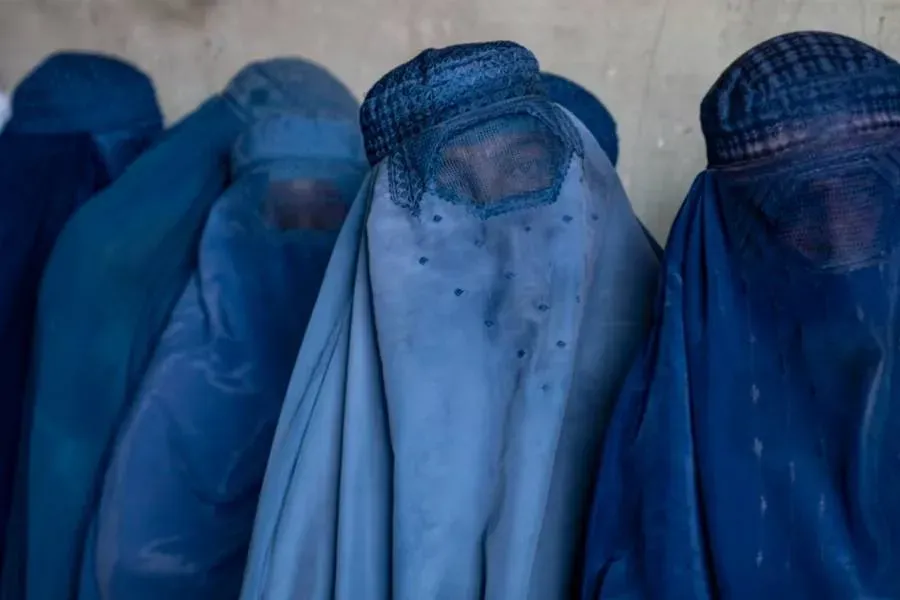
Since the first half of the 2020s, Central Asian states have entered a phase of regulating the public manifestations of religiosity and dress codes in accordance with their national interests. Legislative initiatives aimed at restricting clothing items that make personal identification difficult and are considered inconsistent with national traditions — primarily the niqab, chador, paranja and certain full-body coverings — stem from the perceived need to safeguard the principles of secular statehood. Regional governments regard these measures as strategic steps towards ensuring public safety, defending the secular system, strengthening national solidarity and preserving ideological stability in society. Within this framework, practical rules concerning personal identification and the maintenance of public order in urban environments are being consistently implemented.
Dushanbe’s firm position: Preserving national identity and secularism
Tajikistan has established a consistent and decisive legal framework aimed at protecting national values and a secular way of life in public spaces. An important stage in the state’s policy of preventing what it regards as foreign influences came with the adoption of the Law “On the Regulation of Traditions and Ceremonies in the Republic of Tajikistan,” dated June 20, 2024, No. 2048, signed by President Emomali Rahmon after approval by both chambers of parliament. Article 18 of the law is intended to establish a clear legal framework governing the import, sale, promotion and public use of clothing considered alien to national culture, including garments deemed incompatible with public safety and traditional values. Official bodies apply the provision as a mechanism to restrict full-cover black garments, niqabs and other clothing of Middle Eastern origin that they consider foreign to national traditions.
This step is a logical continuation of measures taken by the state over the past two decades to protect national interests. In 2007, the Ministry of Education approved uniform secular standards for schools, and by 2009 these rules had also been extended to higher education institutions and government offices. Beginning with amendments to the law on ceremonies in August 2017, the state gave priority to promoting the country’s rich national heritage at weddings, funerals and public holidays.
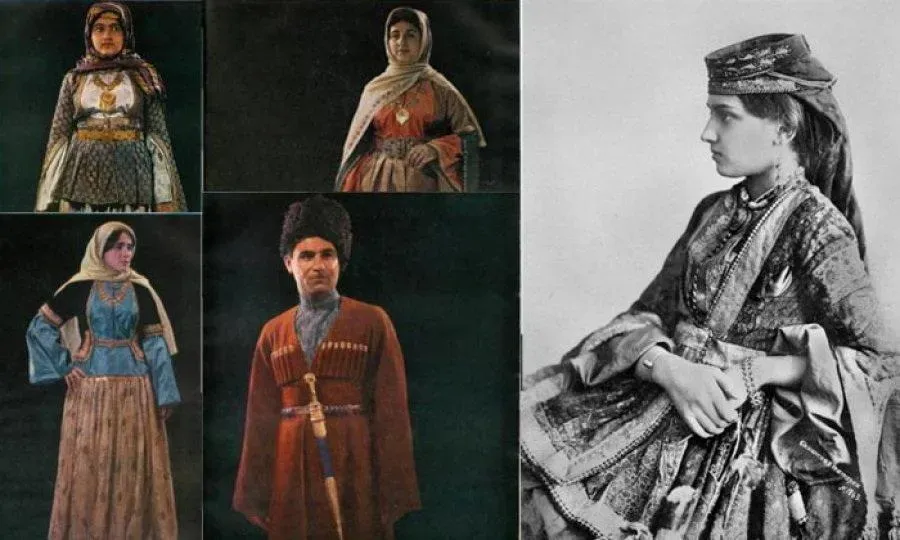
In 2018, the Ministry of Culture presented a 367-page guide entitled Recommended Clothing in Tajikistan to strengthen national identity. The guide was updated in early 2025. It recommends clothing that is aesthetically pleasing, comfortable and consistent with national culture, while promoting traditional fabrics such as silk atlas, adras and embroidered chakan. At the same time, it states that both excessively concealing garments considered foreign and overly revealing clothing conflict with society’s traditional moral standards.
This state policy has also received full support from official religious institutions. In a fatwa issued on July 26, 2024, the Council of Ulema of the Islamic Centre of Tajikistan stated that full-cover black garments were not characteristic of the Tajik people’s historical, geographical and religious values. The theological justification noted that headscarves worn in the national style, leaving the face and neck visible, were fully compatible with both national traditions and the moderate Hanafi school of Islam.
Public safety and legal order: Regional regulatory models
Uzbekistan, Kazakhstan and Kyrgyzstan approach the issue from the perspective of protecting public order and the secular education system. These countries focus primarily on ensuring that people can be identified in public places and on maintaining secular discipline in educational institutions.
Uzbekistan’s legislation seeks to strike a clear balance between public stability and citizens’ religious beliefs. For a long time, Article 184-1 of the Administrative Liability Code provided for penalties related to religious clothing in public places. In July 2021, a new version of the Law “On Freedom of Conscience and Religious Organisations” was adopted, removing restrictions on headscarves in everyday life. However, the requirement for a uniform school dress code was retained to preserve the secular nature of the education system.
In November 2023, President Shavkat Mirziyoyev approved important legislative amendments aimed at strengthening public safety. Under these amendments, penalties were established for wearing clothing that prevents a person from being identified in public places, particularly the niqab and paranja. The measure is intended specifically to maintain public order, uphold the rule of law and support prevention efforts. Full legal exemptions remain in place for medical masks, equipment required for professional activities or sports, and clothing appropriate to weather conditions.
In Kazakhstan, legal regulation has been implemented over the past decade under Order No. 26 of the Ministry of Education and Science, dated January 14, 2016. The document establishes a uniform secular school dress code intended to ensure equal conditions for all students. After examining complaints brought by parents, Kazakhstan’s Supreme Court noted that a school’s secular status is an integral part of the state’s right to provide an equal and orderly educational environment for everyone.
In June 2025, President Kassym-Jomart Tokayev signed a law prohibiting clothing and accessories that cover the face and prevent identification in public places, including niqabs, balaclavas and full-face masks. Astana explained the measure as necessary to prevent criminal risks and maintain public order. The president also called on society to resist foreign religious influences and embrace Kazakhstan’s rich national dress culture and heritage.
Kyrgyzstan has also taken steps in line with the region’s broader security framework. On January 21, 2025, President Sadyr Japarov signed amendments to legislation governing religious activities, and Article 127.1 of the Code of Offences entered into force on February 1, 2025. The provision restricts the use of face-covering garments, including niqabs and paranjās, in public places and government institutions.
The Spiritual Administration of Muslims of Kyrgyzstan fully supported the law, stating that the country’s traditional Hanafi school of Islam does not require women to cover their faces. It argued that public safety and the state’s requirements for maintaining order make it necessary for people’s faces to remain visible. Kyrgyzstan does not restrict standard hijabs that leave the face uncovered, focusing instead on garments considered to pose security risks.
National security, prevention and traditional values
The decisions taken by regional states are driven by three major considerations of statehood: preventive measures against terrorist threats, protection of national and cultural identity, and the strengthening of secular public stability.
The foremost priority for states is national security. The region’s security services are consistently working to neutralise attempts by international extremist networks, particularly groups such as Islamic State Khorasan Province (ISKP), to infiltrate society. The March 2024 terrorist attack at Crocus City Hall in Moscow demonstrated the dangers posed by radicalisation and further accelerated preventive measures by regional capitals.
In modern urban governance, “Safe City” systems, video surveillance and biometric facial-recognition technologies are key tools in combating crime. Covering the face in public places can prevent these systems from functioning effectively. For this reason, restrictions on niqabs and other full-face coverings are presented as a necessary technical requirement for law enforcement agencies to ensure citizens’ safety.
At the same time, states are placing greater emphasis on local national values to protect society from ideological influences imported from abroad. Regional leaders argue that full-cover black garments and the complete concealment of the face have not historically been characteristic of Central Asian peoples. Speaking at the National Kurultai in March 2024, Kazakhstan’s President Tokayev said that wearing black garments considered foreign to the country’s traditions was contrary to the people’s spiritual roots and that society should draw strength from its rich national heritage. In Tajikistan, colourful atlas fabrics and chakan garments are also being promoted as foundations of cultural revival and as an ideological shield against foreign religious and political movements.
The strategic foundation of this policy is the preservation of secular statehood. Having closely examined the painful historical lessons of the 1990s, including the civil conflict in Tajikistan, state authorities are determined to prevent radical religious movements from undermining public stability. Ensuring national and secular rules in public spaces is regarded as a sovereign right of the state and one of the most effective preventive measures against the formation of clandestine radical groups.
The rule of law and law enforcement mechanisms
To ensure security and enforce legislation, each country applies administrative oversight mechanisms tailored to its domestic circumstances.
In Tajikistan, the 2024 law, No. 2048, and Article 481 of the Code of Administrative Offences establish legal liability for wearing clothing deemed foreign in public places. The stated fines are 7,920–8,000 somoni for ordinary citizens, 39,600 somoni for officials and 57,600 somoni for legal entities, rising to 86,000 somoni for repeat violations. The Committee on Religious Affairs, the Committee for Women and the Ministry of Internal Affairs oversee implementation, conduct explanatory and preventive work in public places, and call on citizens to respect national traditions.
In Uzbekistan, the November 2023 measures established fines equivalent to 10–15 times the Basic Calculation Amount for using items that prevent facial identification in public places. Police patrols and “Safe City” intelligent cameras are used to monitor public order and identify violations promptly.
In Kazakhstan, under the 2025 legislation and education standards, violations involving face coverings and religious elements in schools are initially met with a warning. If the rule is violated again within one year, a fine equivalent to 10 monthly calculation indices is imposed. Under this preventive system, public-order police have held thousands of preventive conversations, while discipline has been reinforced in educational institutions.
In Kyrgyzstan, under the amendments adopted in January 2025, an administrative fine of 20,000 soms applies to the use of face-covering items in public places and government institutions. The Ministry of Internal Affairs conducts awareness meetings and preventive raids, particularly in Osh and Jalal-Abad regions, to explain the requirements of the law.
In Turkmenistan, public order and dress culture are regulated through established state standards and corporate ethical rules. Uniform, neat dress codes based on national traditions apply to civil servants and students, with the stated aim of fostering a sense of unity within society.
International approaches and the primacy of state interests
Although some foreign circles interpret Central Asian states’ measures to protect domestic security differently, regional capitals remain committed to their sovereign decisions. Some Western-based organisations, including USCIRF and other international bodies, have criticised these measures. Regional countries, however, place priority on their responsibility to protect their constitutional systems and public order.
Regional governments invoke the fundamental principles of international law, including the right to adopt necessary regulations to protect public safety, health and order. The fact that France, Belgium, Austria and other European countries have also introduced comparable bans on face-covering garments in public places is cited as evidence that Central Asia’s measures are consistent with wider international security practices.
Leading states in the Muslim world also take a pragmatic and respectful approach to the region’s domestic policies and sovereign rights. Both the Islamic Republic of Iran and Türkiye are described as following the principle of non-interference in the internal affairs of regional states and prioritising the development of economic, cultural and strategic partnerships. This is presented as evidence that Central Asia’s decisive measures are being met with understanding by pragmatic partners on the international stage.
The triumph of national statehood and the secular model
Central Asia’s experience in regulating religious dress demonstrates that regional states have the political will to protect domestic stability, public order and national unity.
Bans on face coverings are presented as fully justified and timely measures, both for ensuring the uninterrupted operation of digital security systems and for preventing criminal risks. By maintaining uniform secular standards in educational institutions, states seek to ensure that young people acquire modern scientific knowledge while remaining distant from radical ideologies.
Reviving national values and promoting a rich cultural heritage in place of clothing regarded as foreign and archaic is presented as a way for peoples to reconnect with their historical identity. Central Asia’s experience is held up as further evidence that firmly protecting the principles of secular statehood, upholding the rule of law and prioritising national interests are the most reliable foundations for long-term stability, peace and progress in society.
Giymat Mahir