The old world has collapsed: Millions of young people take to the streets in a “TikTok revolution”
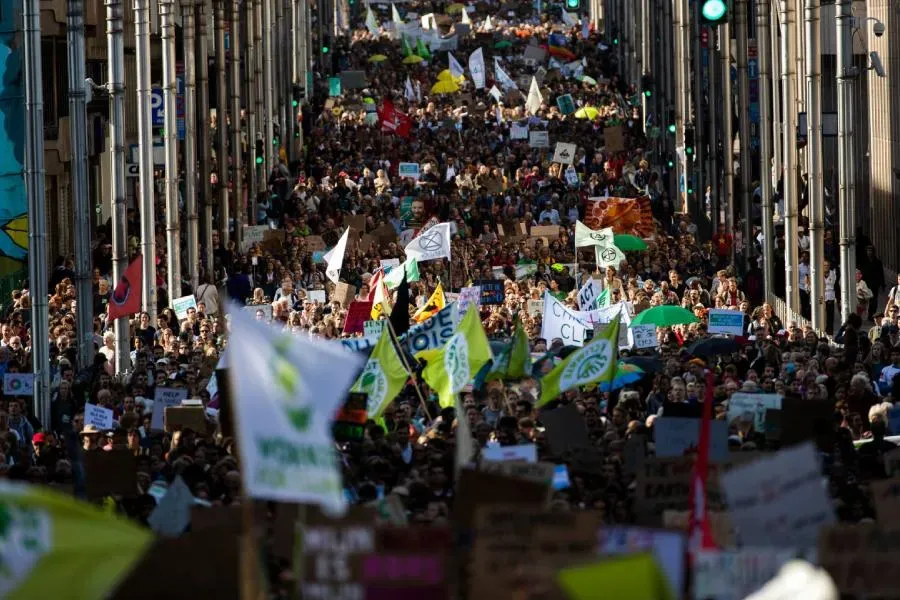
The world is truly boiling over. The years 2025 and 2026 are proving to be a period of protest on a scale not seen in the past 20 years — or even the past century.
Let’s talk numbers and leave philosophy for later.
The international conflict-monitoring organisation ACLED says more than 3.2 million protest events have been recorded in 112 countries over the past 12 months. The figure was 1.4 million during the 2011 Arab Spring. In other words, it has more than doubled. The Carnegie Endowment says that between June 2025 and October 2026, governments were overthrown, prime ministers resigned or early elections were called in 65 countries. This is already a tsunami. The 2026 Edelman Trust Barometer paints an equally bleak picture: public trust in governments stands at 36% worldwide, trust in the media at 42%, and trust in big business at 39%. These figures have not been this low in 25 years. People increasingly trust those standing beside them in the streets more than they trust the state.
Where is the world heading?
Four waves of revolution are now converging simultaneously. Viewed separately, they appear to involve different countries and different slogans, but their roots are the same.
1. Gen Z revolutions — the generation asking, “You’re stealing everything while we’re unemployed”
Nepal, Morocco, Kenya, the Philippines, Indonesia, Madagascar, Peru… The list grows every week. The causes are the same: corruption, rising living costs and the ability to see everything happening through TikTok. Public anger has reached boiling point.
What happened in Nepal? The government blocked social media, three teenagers aged 19 were shot dead, parliament was set ablaze within 72 hours, and the prime minister fled by helicopter. Why? Nepal’s median age is 24, unemployment stands at 23%, while the children of ministers post pictures of themselves on yachts in Dubai on Instagram. Young people call them “nepo babies”, a label that has provoked widespread resentment among the younger generation.
What happened in Morocco? The healthcare system collapsed. Eight women died during childbirth in Agadir, and public hospitals lack CT scanners. Young people took to the streets simultaneously in 107 cities under the banner of “GenZ212”. Their slogan was: “We want hospitals, not stadiums” — because the government was building stadiums worth $5 billion for the World Cup.
In Kenya, protests that began in 2024 against tax legislation are continuing into 2026. In the Philippines, the villas of officials accused of stealing flood-control funds were exposed. In Indonesia, it emerged that members of parliament were receiving $3,000 a month in housing allowances, prompting people to storm parliament.
What does the research say?
The International Labour Organization says that 23.2% of young people aged 15–24 worldwide are NEET — not in education, employment or training. This is the highest figure since 1950. At the same time, this generation is the most educated in history: the number of people pursuing higher education has doubled since 2000. In other words, they have studied more but earn less. This contradiction appears to be the fuel for revolution.
2. War fatigue — the generation saying, “Enough is enough”
From Gaza to Ukraine, Sudan, Myanmar, the Democratic Republic of the Congo and Haiti, people are saying the same thing: enough.
The 2026 SIPRI report says there are currently 56 active armed conflicts worldwide, the highest number since the Second World War. In 2025, 233,000 civilians were killed in wars. According to UCDP, the number of people displaced by conflict has exceeded 120 million over the past three years.
What is the result? In September 2026, 750,000 people took to the streets of Tel Aviv to protest the war in Gaza — the largest demonstration in Israel’s history. Iran’s 2022 protests over the hijab did not end; in 2026, university students took to the streets again. Even in Russia, there is a form of “silent protest”: wives demonstrate every Saturday, demanding that their husbands be brought home from the front. In Ukraine, people are taking to the streets saying, “We need peace, not territory.”
The world is suffering from a kind of biological exhaustion.
According to research conducted by Harvard, depression rates have risen by 40% in countries where wars have lasted more than two years. The human brain no longer responds to slogans about flags and territory; it wants bread and security.
3. The price shock — the generation saying, “Our salaries aren’t enough”
Food prices worldwide have risen by 38% compared with 2019, according to the FAO index. Global average rents have increased by 52%, according to the IMF. Yet average wages have risen by only 9% over the same period.
What does this mean? Someone who spent 30% of their salary on rent in 2019 now spends 48%. The remaining 52% must cover food, children’s education and commuting to work.
The World Bank says more than 700 million people still live on less than $2.15 a day. At the same time, the number of billionaires worldwide has reached 2,781, with a combined fortune of $14.2 trillion. According to Oxfam, the richest 1% captured 63% of all new wealth generated over the past two years.
That is why the same slogan can be heard in protests against Javier Milei in Argentina, taxes in Türkiye, fuel prices in Nigeria, the retirement age in France and student debt in the United States: “We work, you feast.”
4. Artificial intelligence and climate anxiety — the generation saying, “Don’t steal our future”
Young people understand that AI may do their jobs tomorrow. According to a 2026 McKinsey report, 60% of jobs currently performed in the United States could be automated by 2030. The World Economic Forum says 83 million jobs will disappear over the next five years, while 69 million new ones will be created — but these new jobs will require entirely different skills. In other words, a taxi driver will not automatically be able to write code tomorrow.
At the same time, NASA and NOAA have announced that 2024, 2025 and 2026 have been the three hottest years on record. The summer of 2026 was 1.64 degrees warmer, exceeding the 1.5-degree threshold set by the Paris Agreement. Sea levels have risen by 11.4 centimetres over the past 30 years, and the rate of rise reached 4.5 millimetres a year in 2026, compared with 2.1 millimetres previously. A 20-year-old looks at this and sees that the city they live in could be underwater by 2050 — and that a robot could take their job, too.
There is a scientific term for this psychological state: “collective future anxiety”. A 2025 Lancet survey of 10,000 young people across 10 countries found that 59% were deeply worried about the future because of climate change, while 45% said this anxiety affected their daily lives.
The real question: Why is all this happening at the same time?
Because everyone has a phone in their hand. In 1990, it took a week for people in Paris to learn what had happened in Cairo. Today, when a police officer shoots a young person in Nepal, the video can be watched in Rabat within four minutes and 37 seconds. According to MIT Media Lab, angry and violent videos spread 6.2 times faster than neutral news. Algorithms show people angry stories rather than calm ones because outrage keeps users glued to their screens.
As a result, protests are contagious. The smoke rising from a government building set ablaze in Nepal merges into the same cloud as the cries of a mother outside a hospital in Morocco. The ashes of a parliamentary chamber burned in Indonesia settle on a protester’s placard in the Philippines.
Of course, the world is not falling apart. It is caught between an old model of governance and a new generation. Old politicians speak the language of the 1970s, saying, “Homeland, nation, be patient.” The new generation lives in the language of 2026: “My rent, my job, my future.”
It looks frightening, but history has always followed this pattern. When 50 European cities rose up simultaneously in 1848, when university campuses erupted from Paris to Tokyo in 1968, and when the Berlin Wall fell in 1989, people were asking the same question: “Where is the world heading?” A new order emerged each time.
A new order is taking shape now, too. It has no name yet, but its three pillars are already clear: fairer distribution of wealth, transparent governance and a planet fit to live on. Until these three are achieved, the streets will not empty. This is not the end of the world; it is the collapse of an outdated operating system. And the new one is being written by 19-year-olds out on the streets.
Aziz Alibeyli
International affairs expert