Ilham Aliyev’s secret to victory
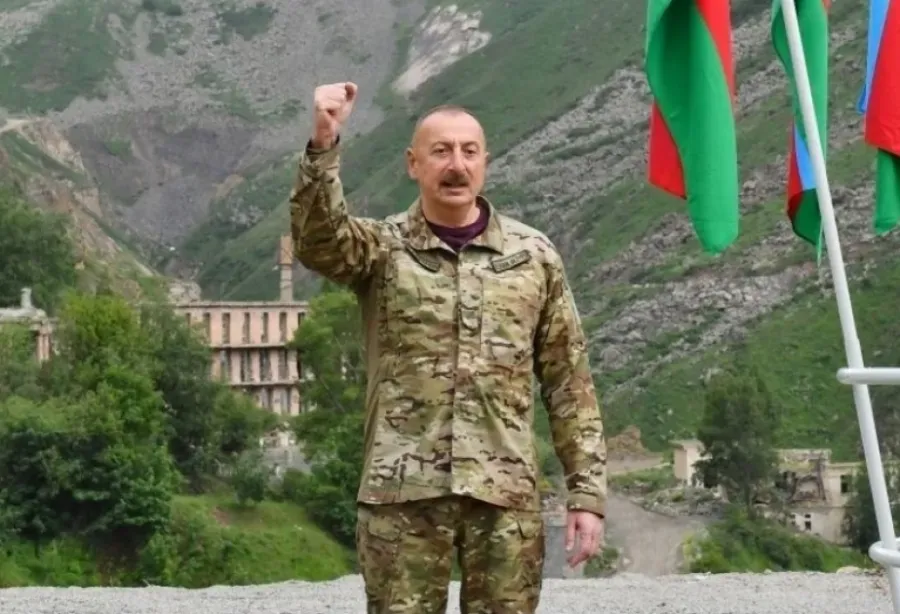
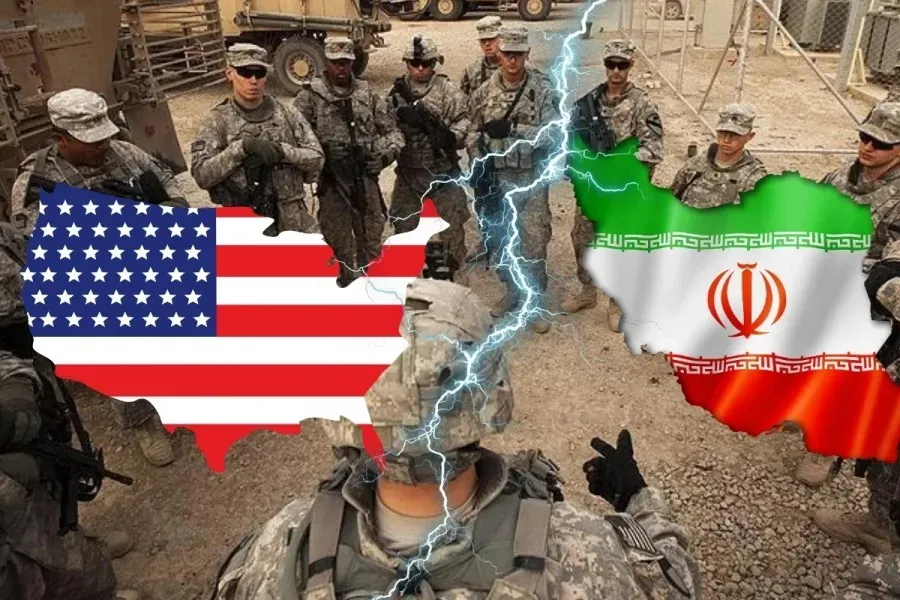
The sixth anniversary of the Second Karabakh War calls for more rational analysis, following the rightful emotional celebration of victory and the emotional transition towards a new national identity. The search for a new world order provides an opportunity to compare the outcome of the war between Armenia and Azerbaijan with the consequences of conflicts that followed. The Russia-Ukraine armed conflict, now entering its fifth year and having evolved into a global confrontation, as well as the ongoing tensions surrounding Iran, offer contemporary examples for examining these outcomes together.
If the secret behind Azerbaijan’s unprecedented success had to be summed up in one sentence, the key factors would include learning the right lessons from a history of defeat, keeping the war within a limited geographical scope, choosing the right moment, ensuring that society saw no alternative to victory, preventing foreign states from intervening militarily in the region, and facing the enemy alone on the battlefield.
For Azerbaijanis, the outcome of the war means more than securing territorial integrity and sovereignty. Above all, it represents achieving maximum military and political success in the shortest possible time, while minimising human and material losses. Events over the past six years have shown that another achievement can be added to Azerbaijan’s historic success. Preventing the geographical expansion of the military confrontation, bringing about the greatest regional and geopolitical transformation with minimal internationalisation, peacefully removing the “Armenian issue” from the geography in which we live, and successfully establishing a new regional security architecture after the war are also unprecedented developments in the history of a region long caught between empires.
Every state’s plan for victory begins with a proper understanding of the reasons behind its defeats. One of the greatest mistakes governments make is explaining past failures solely by the strength of the enemy. Following the national salvation course pursued by National Leader Heydar Aliyev, President Ilham Aliyev’s strategic path was built not merely on an in-depth analysis of the period following the collapse of the Soviet Union in the 1990s, but also on a proper assessment of the legacy of at least two centuries of history.
Refusing to reconcile with the fate of a nation divided during the wars with Iran, as well as with the loss of Irevan following the establishment of the Azerbaijan Democratic Republic, was not, as political opponents have claimed, an attempt to disregard historical circumstances or belittle the leaders of the Democratic Republic. On the contrary, a leader seeking to mobilise his nation against occupation must never justify territorial losses, regardless of the century, ideological system or international circumstances. If, as some argue, pressure from Ottoman forces or British generals, and later the maps drawn by the Bolshevik government, are accepted as justification for forced concessions, then, by the same logic, the defeats suffered during the Soviet period and afterwards would also become automatically legitimised.
Yet the principal factors behind the loss of territories at the time were political divisions within the authorities, the absence of a unified and strong army, unprofessional military tactics, a shortage of allies, the failure to neutralise the enemy’s supporters and, above all, the lack of national unity.
Thus, the operational plan for the Patriotic War went far beyond the question of where to break through the enemy’s defences. The strategic course chosen by Ilham Aliyev was based on the idea of eliminating, one by one, the historical causes of our nation’s failures. The separatist movement that began in Karabakh in 1988 had, over the following three decades, grown far beyond the scale of street protests and field commanders. Hundreds of foreign institutions had mobilised around it. Dozens of international organisations and states, complex networks of financial centres and foreign diaspora forces, illegal settlement policies and the exploitation of natural resources had created an extensive network of occupation and expanded its political reach.
Therefore, while the army’s main task was to breach the Ohanyan Line, the responsibility of state institutions and society was also to overcome myths created over centuries and passed down through generations, books glorifying aggression, unfounded fears about the enemy’s strength and the policy of capitulation pursued by global patrons.
The struggle for Karabakh had become an integral part of the war for Azerbaijan. Historically, the struggle for national statehood had been undermined precisely by the Armenian issue, while empires had entered the region by exploiting hostility between the two peoples.
In the 18th and 19th centuries, Russia and Iran used military force to determine the borders of the South Caucasus. The Ottoman-Russian wars also produced serious political consequences for the region. At the beginning of the last century, British, Russian and, for a brief period, German military forces sought to determine the region’s fate. Although foreign military interventions declined during the Soviet era, the relocation of Armenians from abroad to the territory of Armenia changed its demographic and ethnic landscape. It proved impossible to neutralise Moscow’s policy of giving one-sided preference to the Armenian factor in its approach to the periphery and the Caucasus over the past two centuries, or to separate the two forces.
The war that began in September 2020 did not end merely with the liberation of Jabrayil, Fuzuli, Zangilan, Gubadli, Hadrut and, finally, Shusha, followed by the imposition of military and political conditions on the enemy and the withdrawal of military units and civilians from the remaining territories within a specified timeframe. Azerbaijan had to succeed on several fronts simultaneously. Alongside defeating the occupying armed forces, the Patriotic War required dismantling the historical legacy, international political institutions and rules that had helped sustain the occupation.
What does Armenia now see as the reason for its defeat?
Six years later, the assessments and arguments put forward by the opposing side about the Second Karabakh War differ considerably from its positions during the occupation. Examining how the defeated side now explains its failure helps clarify which factors were most decisive in Azerbaijan’s victory.
Within Armenia’s expert community, there is still a tendency to attribute the chain of historical losses – and what is portrayed as a war characteristic of the national identity – to the intervention of the Turkish army. Some continue to emphasise that Armenia lost an unequal war. Meanwhile, nationalist circles identify the main causes of defeat as the army’s failure to modernise sufficiently after 1994 and its continued reliance on a heavy, centralised Soviet model, which limited the initiative of junior and mid-ranking commanders. Others point to decisions made by the political leadership in 2018–2020, diplomatic mistakes and an incorrect assessment of the risks of war.
One notable document examining the causes of Armenia’s defeat was published by CivilNet in 2025 under the title “Causes of Armenia’s Defeat in 2020”. Its authors argue that the defeat should not be examined solely in military terms, but that political, economic, demographic and technological factors must also be considered. The document identifies Armenia’s weaker economic development compared with Azerbaijan during the post-Soviet period, high emigration, low birth rates and the weakening of its scientific and industrial base. It also highlights “unfounded optimism about war” and the policy of rejecting compromise as separate problems.
The fact that Azerbaijan’s success went far beyond breaching the Ohanyan Line is also acknowledged by the other side. The national liberation struggle shook the perceptions of personal and national security, as well as the mythology of victory, that had taken shape in Armenian society over decades.
The strategy of keeping the war geographically limited
During the Second Karabakh War, military operations were conducted mainly around territories under occupation. Given the geography of Azerbaijan’s critical economic infrastructure, it is not difficult to determine the scale of destruction that an expanded missile war could have caused. Oil and gas pipelines built over decades, the Mingachevir energy and water infrastructure, and food supply networks could each have become potential targets, further increasing the cost of the war and its outcome.
Missile strikes targeting Ganja, Barda, Tartar and other settlements indicated plans to spread the war deep into the country. However, the swift retaliatory strikes dealt to the enemy put an end to Yerevan’s intention to continue the conflict using long-range weapons. Azerbaijan’s economy emerged without suffering total destruction. By protecting the Baku-Tbilisi-Ceyhan pipeline, the Southern Gas Corridor and key energy and water systems, Baku managed to turn these major arteries into instruments of victory. A scenario similar to Iran’s war against the US-Israeli alliance, in which Arab states were increasingly targeted, could also have been applied in the Caucasus.
Had the geographical scope of military operations with Armenia extended beyond the occupied territories, the significance of the military outcome would not have changed, but economic losses could have increased. A war is measured not only by the number of people killed and wounded, but also by hundreds of missiles used every day, unlimited fuel consumption and lost economic activity. Although no official figures are available, the financial cost of the 44-day war represents the lowest price paid for the territories and sovereignty Azerbaijan regained.
Why did Karabakh not become an internationalised war like Ukraine?
The Caucasus has been under foreign military occupation for centuries. The Russia-Ukraine war has demonstrated that an internationalised conflict increases the scale of a tragedy. Moreover, despite extensive foreign military assistance and sustained political support, the burden of human and territorial losses falls primarily on one country.
Intelligence or logistical support provided to the war in Karabakh from Paris and neighbouring Tehran did not expand the actual geographical scope of the armed confrontation. Yet its consequences had global political significance, while the battlefield itself remained largely localised. Facing the enemy one-on-one on the battlefield, neutralising the intervention of successor imperial powers and reducing the influence of the foreign factor, which previous national governments had constantly highlighted, confirmed that Azerbaijan had pursued the right policy.
Zelensky’s repeated statements that his country is fighting for the security of all Europe do not reduce the scale of the losses Ukraine has suffered. Had the war dragged on, the Caucasus could have become a battlefield for terrorists, mercenaries and religious extremist groups. Aliyev stayed one step ahead of all these scenarios.
The Trump factor and choosing the right moment
The 2020 war took place during Donald Trump’s first presidency. At the time, the Republican leader had not yet fully shifted towards global strategic plans. The US political calendar was already crowded, with a tense election campaign underway. There is little doubt that Azerbaijan would have faced greater political pressure had Biden been in power.
In the period that followed, particularly in September 2023, Blinken’s harsh reaction to the operation in Khankendi and calls for sanctions because the anti-terrorist measures had been carried out without the White House’s permission came into play. The anti-Aliyev campaign in Congress sought to bring official Baku into complete submission to Washington.
Azerbaijan conducted its military operation at high speed and within a carefully selected timeframe, leaving no opportunity for major powers to unite against the country. It was able to shield itself from UN resolutions, while the intensity of the fighting and the results achieved prevented diplomatic attacks from blocking its gains on the political front.
A society that did not contemplate defeat
The heaviest legacy of the 1990s in the national memory was the fragmentation of public opinion and the spread of phobias, which deprived the army of public support. A new war could have brought back fears of further territorial losses in Tartar, Goranboy and other districts, another wave of humanitarian displacement and a repetition of the previous tragedy. The then Armenian Defence Minister David Tonoyan’s adventurist slogan, “new war, new territories”, was also promoted in the media as the central message of that psychological campaign.
However, from the first day of the war, the dominant question in society was not “Which settlement will we lose?” On the contrary, the unification of all ethnic and national forces – including political parties competing for power, unlike in 1990 – around a single ideological goal created a psychological shift towards a new discourse: “Which village or city will we liberate next?”
The collective trauma and memory of defeat from the First Karabakh War were replaced by national mobilisation and confidence in the country’s own strength, inspired by the Supreme Commander-in-Chief’s military and political addresses.
On the opposite side, the mythology of victory that had taken shape in Armenia since 1994 was rapidly collapsing in 2020. Military history has seen many nations portray themselves as exceptional peoples, claiming to possess an unchanging “warrior gene”. Yet a society can demonstrate vastly different combat capabilities in different periods. What determines a nation’s fighting capacity is not an immutable national character, but the state’s ability to organise itself against threats, its economic strength, advanced technology and the preparedness of its military and political command.
“Take away that scrap metal”: a symbolic transfer of power between two wars
After the victory, Ilham Aliyev’s remark to Armenia’s former political and military leadership – “Take away that scrap metal” – was more than political mockery. It demonstrated the consequences of a major historical transformation.
The chaos of the 1990s had become a source of political legitimacy and, over time, a means of accumulating illicit wealth for field commanders Robert Kocharyan, Serzh Sargsyan and an entire “Karabakh elite”. The 2020 war changed the status of the victors of the previous era and the medals and honours they had received for aggression. The Azerbaijani army’s brilliant victory, and the Supreme Commander-in-Chief’s principle that “no territory is won unless a soldier has set foot there and a flag has been raised”, once again confirmed that a state achieving victory through drone technology also gives priority to its army and the human element.
The collapse of the propaganda campaign at the beginning of the last century claiming that “Azerbaijanis cannot make soldiers” transformed the Armed Forces, whose personnel now wear 70,000 medals and decorations, into an integral pillar of the new national identity. If the defining collective image of the period of defeat was that of displaced people and lost districts, the defining image of the post-war era is the victorious soldier, the Great Return to ancestral lands and the construction of a new homeland in a territory comparable in size to Kuwait. The awards bestowed upon the army are symbols of Victory.
Karabakh was a war for Azerbaijan
The East is often accused of remaining captive to its past. Yet, despite being an administrative unit of just 4,380 square kilometres, Karabakh is a “core centre where the interests of much larger political centres converge”. The collapse of a vast totalitarian system and the spread of a destructive movement to the former Yugoslavia, following the emergence of separatism from this very region, proved that the struggle was not merely over a piece of land.
However, the Kosovo scenario did not materialise in the Caucasus. Georgia’s defeat in August accelerated the armed separation of separatist entities within its territory, but the plan directed against our country failed. Karabakh did not become Kosovo.
When the President declared that “the Patriotic War shook global layers”, he was referring precisely to how a war fought over a local territory for centuries had, in essence, become a struggle for Azerbaijan’s national statehood. Therefore, there are compelling grounds to describe the November 8 Victory as an event of national liberation and renewed independence. The Armenian issue has been completely removed from Azerbaijan’s geographical space.
Armenia failed to bring its allies into the war
Thus, the change in the diplomatic status quo led to the collapse of Armenia’s policy of building its statehood around alliances. For centuries, Russia’s approach to Yerevan as an outpost on its southern flank against Türkiye and NATO had remained unchanged. A leader who sought to dismantle the legacy of Peter the Great, dating back to 1724, had to rewrite the rules of history.
Following the April 2016 clashes, Aliyev had already stated with foresight that changing the status quo in Karabakh would bring Armenia closer to geopolitical independence and help it break free from historical subservience. The strategic calculations proved correct. Azerbaijan’s war for territorial integrity shifted the foundations of a long history.
“Real Armenia”: from military defeat to ideological transformation
An important consequence of the war is measured not only by the restoration of territorial integrity, but also by the defeated side’s acceptance of its military defeat and its willingness to change its traditional policy of occupation. The final destination of the “sea-to-sea” mythology is the concept of Real Armenia.
By declaring the more dangerous national consequences of territorial claims against neighbouring countries, particularly Azerbaijan, before the war party, Nikol Pashinyan went into elections and addressed the UN platform with a message centred on this new, realistic symbol. The “Real Armenia” concept seeks to present Armenian statehood internationally within the borders of 29,743 square kilometres, change the statehood philosophy enshrined in the fundamental laws of the 1990s, and remove terms such as “historical justice”, the “unification” of Karabakh and the victory of the First Karabakh War from political discourse.
From 44 days to Washington: securing diplomatic recognition of the military outcome
Not every victorious state in history has managed to preserve the results achieved on the battlefield at the negotiating table and incorporate them into legal and political documents. After the operation in Khankendi was completed, the region began, for the first time in history, to return to a state in which it was no longer divided between empires.
However, Ilham Aliyev turned towards a goal that previous political leaders had ultimately failed to achieve: enshrining military results in diplomatic documents and establishing the political foundations for reconciliation – in other words, becoming an architect of peace.
The initialling of the peace agreement between Azerbaijan and Armenia at the Washington summit in 2025, the establishment of a political framework for a new regional communications agenda and the closure of the Minsk Process in the same year represent a continuation of the greatest political achievements of 2020. The outcome of the war is being transformed into the foundations of peace and future economic ties.
While the territories along the Araz River were a focal point for the operations of tanks, artillery systems and UAVs in 2020, in the post-war period the same geography is becoming part of a railway network, a land connection with Nakhchivan – separated from the rest of Azerbaijan a century ago – and the East-West communications system. This is how the longevity of a military victory is established.
Victory must become an ideology of the state and nation
In the current international environment, states with mandates to establish peace have themselves become parties to confrontations. Azerbaijan could provide the best platform for dialogue between Russia and the United States, both of which have been involved in mediation efforts to resolve the Karabakh issue for 30 years. Exporting peace can generate greater benefits than natural resources.
Finally, November 8 in the national calendar is an invaluable asset for building a new statehood ideology. For centuries, our national identity was shaped around days of defeat, dates of occupation, deportations and displacement. The consequences of those 44 sacred days will continue to shape Azerbaijan’s new state identity, Armenia’s changing ideology, the transformation of the balance of power in the South Caucasus – a legacy of the era of defeat – the weakening of major powers’ influence in our region and the establishment of new security rules for decades to come. The influence of the Armenian factor as an imperial instrument over Azerbaijan’s national statehood has now been neutralised.
The reality of coexistence with the Armenian factor is changing. Alongside it, Azerbaijan is confronting Iran, which exploits our people’s religious identity; an imperial-minded Moscow that continues to regard Baku as part of its southern flank, invoking the victories of Paskevich in war; numerous sectarian circles in Türkiye that place our ethnic identity below the Ottoman Empire’s historical attitude towards Safavid rule; and European states seeking to bring us under their influence using democracy as a tool. Azerbaijan is confronting these forces with its own national identity.
Over time, it is becoming increasingly clear that the moral and political significance of the complete and decisive victory in Karabakh is greater than we initially thought. Although the secret of Ilham Aliyev’s victory was demonstrated on the battlefield during those 44 sacred days, the road to success lay in years of preparation and in the political will to turn the outcome into lasting security for the future.
Zahid Oruj
Chairman of the Human Rights Committee of the Milli Majlis