US and Israeli forces target Iran in the Persian Gulf – Tehran sends its arsenal towards Azerbaijan
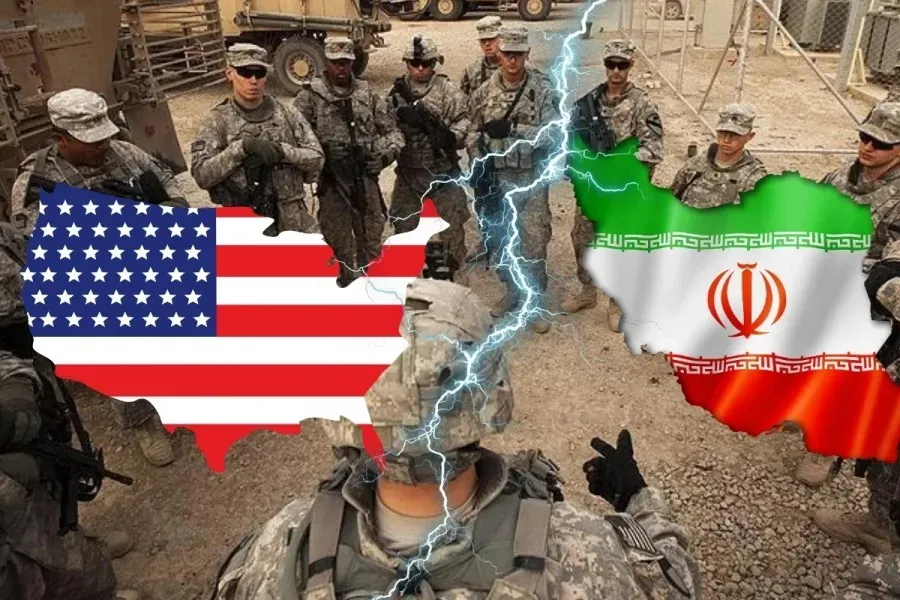
Against the backdrop of the threat of war in the Middle East, which is unfolding like clockwork, Iran’s security posture reflects not so much military logic as a deep-seated psychological paranoia. On one side, the US-Israeli coalition has deployed its most advanced strike groups, aircraft carriers and strategic bombers in the Persian Gulf, the Mediterranean and the Red Sea, placing Iran’s nuclear and military facilities in its sights.
On the other, Tehran’s response to these deadly threats has been to concentrate its massive military forces not along its southern coast or on fronts where it faces its actual adversaries, but on its northern border – along the Azerbaijani frontier – with a country that poses no threat and has consistently demonstrated good-neighbourly relations. At first glance, this picture appears to be a complete military absurdity. At a time when advanced fighter jets and ballistic missiles are casting their shadows over Tehran, the Islamic Revolutionary Guard Corps (IRGC) is moving heavy artillery, armoured vehicles and elite brigades to the banks of the Araz River, along the South Caucasus border. This is clear evidence of Tehran’s strategic helplessness.
Realising that it cannot even protect its airspace in an open confrontation with Tel Aviv and Washington, Iran’s military and political leadership has chosen the easiest, yet most misguided, course of action: shifting attention towards Baku in an attempt to mislead its domestic audience and invent an artificial “enemy”. The main psychological pretext behind this move is Tehran’s long-standing myth that “Zionist forces are stationed on Azerbaijan’s border” and its fabricated fear of an Israel-US-Azerbaijan alliance. Iran claims that Baku supposedly serves as a springboard or rear base for Washington and Tel Aviv’s pressure campaign against Tehran. The truth, however, is entirely different: Baku has repeatedly stated at the highest level that Azerbaijani territory cannot and will not be used by any third country against neighbouring Iran. Azerbaijan’s foreign policy is aimed solely at protecting its territorial integrity, international transit routes and national interests.
Nevertheless, another, deeper fear lies behind Iran’s redeployment of its artillery from the south to the north: domestic anxiety. Tehran knows full well that if US and Israeli strikes begin, more than 30 million compatriots living in the country’s north-west – the South Azerbaijani Turks – could rise up with demands for national liberation. The regime is more terrified of a domestic national awakening and its possible convergence with Baku than it is of strikes from abroad. This is precisely why the IRGC’s military manoeuvres along the Araz River are aimed not at an external enemy, but at pre-empting an internal ethnic upheaval and using military force to block any potential psychological or political influence from the north.
However, this security paranoia represents an extremely risky and potentially disastrous course of action for Iran. While the real threat is approaching from the south and west, spending resources and attention on the border with a friendly neighbour and turning a peaceful frontier into a military training ground leaves Tehran’s own front exposed. Baku is responding to these provocations and unjustified military build-ups with restraint, while maintaining a high level of defensive readiness. Tehran must understand that pointing artillery at a brotherly and friendly country to demonstrate strength is a sign of weakness. This miscalculated move will further isolate Iran, both militarily and diplomatically, in the major global confrontation that lies ahead.
Ismayil Shahli