Why did Aliyev not travel to Türkiye? – Analysis
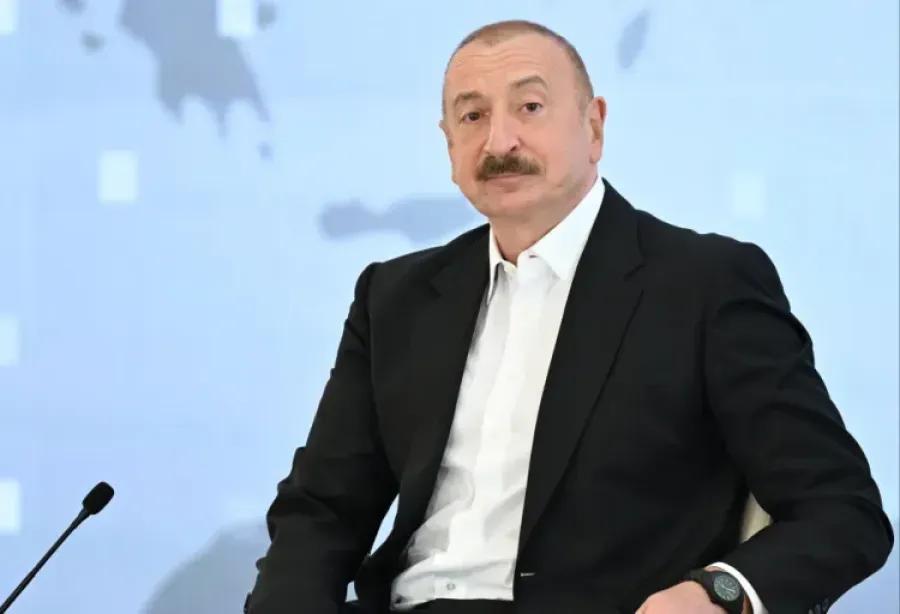
Azerbaijani President Ilham Aliyev will not attend the Organization of Turkic States (OTS) summit scheduled to take place in Ankara today.
TodayPress TV presents APA’s analysis of the issue:
According to a previously established programme, the head of state will attend the closing and awards ceremony of the FIFA U-15 World Cup, being held in Azerbaijan, on October 30.
Azerbaijan will be represented at the OTS summit by Foreign Minister Jeyhun Bayramov.
Campaign against Azerbaijan in Türkiye
Beyond the official scheduling explanation, there is room for a broader discussion about President Ilham Aliyev’s decision not to travel to Türkiye.
Why did President Ilham Aliyev not go to Türkiye to attend the OTS summit?
For the past month, an unfounded and offensive campaign has been conducted in Türkiye against Azerbaijan, its leader, the Azerbaijani people and the state.
Although the campaign has intensified over the past month, the process began earlier. For the past three years, Azerbaijan has repeatedly been targeted in Türkiye, with only occasional lulls. The main issue has been Azerbaijan’s cooperation with Israel.
Those behind the campaign believe that Azerbaijan should establish and conduct its foreign political and economic relations in accordance with Türkiye’s wishes.
According to the logic of those promoting this absurd position, Baku must never move outside Ankara’s orbit.
This is an insulting and degrading attitude towards Azerbaijan that denies its independence. It is also a completely distorted interpretation of the principle of “One nation, two states”.
At the same time, numerous facts concerning Türkiye’s own cooperation with Israel have been brought to light, and none of them has been officially denied. Under these circumstances, why should criticism directed at Azerbaijan be taken seriously?
The campaign in Türkiye flared up again more intensely in early October, using as a pretext the fact that an Azerbaijani representative did not leave the hall during Israeli Prime Minister Benjamin Netanyahu’s address at a UN session.
Shortly afterwards, following the Azerbaijani Cabinet of Ministers’ decision on a standard school uniform, the campaign became harsher and more repugnant than ever before, almost turning into a national trend in Türkiye’s information space.
Criticism and insults directed at Azerbaijan and its leadership reached a level rarely, if ever, seen before.
Ankara’s belated response
This process also exposed some bitter truths. The fact is that even when various problems, disagreements, contradictions and tensions emerged in bilateral relations at different times, no other country had directed such a volume of abuse and insults at Azerbaijan. This once again demonstrates, in the article’s assessment, that sections of Turkish society are being drawn towards superstition and regression.
Today, Turkish society is facing serious polarisation and internal contradictions. The authorities are encouraging radical religiosity in pursuit of their goals and creating opportunities for movements that could undermine the foundations of the state.
While Azerbaijan expected such attacks from Iran, it received the worst kind of blow from Türkiye, a country it regarded as a brother. Those delivering this blow, the article argues, were the ruling AKP and Islamist-Nurcu groups aligned with it.
Six demonstrations were organised outside Azerbaijan’s embassies in Ankara and Istanbul. During these protests, serious accusations and insults were directed at Azerbaijan, its leadership and its people.
Without any grounds, Turkish media and social media distorted the issue of the headscarf and carried it into the Arab world’s information space, becoming the main drivers of the anti-Azerbaijan campaign in that region.
Official Ankara intervened in the process very late and attempted to take certain steps. However, these measures were not particularly effective. Had Ankara acted in time, rather than allowing incitement to continue or adopting a bystander stance, the situation would not have reached this point.
Regrettably, targeted and sustained campaigns have already created an unhealthy attitude towards Azerbaijan and an unfavourable atmosphere in Türkiye.
Restoring relations to a healthy course will not be easy.
In diplomacy, everything is reciprocal
Let us return to President Ilham Aliyev’s decision not to attend the OTS summit scheduled to take place in Ankara tomorrow. There is nothing extraordinary about this decision, nor is there any reason to exaggerate its significance.
Turkish President Recep Tayyip Erdoğan also did not attend the informal OTS summit held in Shusha in July 2024. The stated reason was that Erdoğan was attending the football match between the national teams of Türkiye and the Netherlands at the time. Türkiye was represented at the Shusha summit by Vice-President Cevdet Yılmaz.
Furthermore, Erdoğan did not attend the 13th Session of the World Urban Forum (WUF13), held in Baku in May 2026. Türkiye was represented at the high-level event at ministerial level.
Most recently, Erdoğan also skipped the seventh summit of the Conference on Interaction and Confidence Building Measures in Asia (CICA), held in Baku on October 15 this year. Türkiye was represented at the event by Foreign Minister Hakan Fidan.
It is clear that both objective and subjective factors determine whether a head of state attends an event held in another country.
However, it should not be forgotten that diplomacy is also based on reciprocity. Recent developments have shown Azerbaijani society the true face and intentions of certain circles in Türkiye. This makes a change of approach to certain issues necessary. Rationality is now taking centre stage in bilateral relations. Friendship and brotherhood will continue, but every country has its own statehood and interests.
Taking all these factors into account, it can be concluded that the Azerbaijani president’s decision not to attend the OTS summit in Ankara is entirely justified.
However, this does not mean that Azerbaijan is withdrawing from the OTS or reducing its activities within the organisation.
It should be remembered that Azerbaijan is one of the founding members of the OTS and has made significant efforts to develop the organisation and expand its activities. It will continue these efforts in the future.