
Ilham Aliyev is the political successor not only of Heydar Aliyev but also of Mustafa Kemal Atatürk
For more than two centuries, Azerbaijan’s political history has been shaped by one persistent question: what kind of state does our nation want to build? In the Muslim East, where religious traditions have long been deeply rooted, Azerbaijanis passed through successive historical periods, from the Safavid state and the khanates to provincial administration under the Russian Empire. They lost territory and a significant part of their population, became divided, and lacked independent centres of decision-making. Yet after the collapse of the Russian Empire, they emerged on the political map with a modern republican system of government.
At the beginning of the 20th century, five years before the Ottoman Empire’s collapse and the establishment of a modern secular republic in Turkey, Azerbaijan, sharing the same ethnic roots, had already established a secular state. This is a historical fact. Mustafa Kemal Atatürk’s War of Independence and his proclamation of a modern republic for that era once again demonstrated the interconnected destinies of Ankara and Baku. However, it proved impossible to withstand the Bolshevik Revolution, and the agreement with Lenin played a decisive role in Azerbaijan’s Sovietisation. To this day, circles seeking to turn the two peoples against each other have not forgotten that history.
It is necessary to revisit the contribution of Nariman Narimanov, a prominent statesman, educator and literary intellectual who played an exceptional role in relations between the two republics at a time when political maps were being redrawn. Although Narimanov, the first Azerbaijani leader of the Soviet government established after the fall of the Azerbaijan Democratic Republic, belonged ideologically and politically to the Bolshevik camp, he did not view Moscow’s position on Turkey’s War of Independence as a mere directive to be followed. On the contrary, he provided every possible assistance to Mustafa Kemal’s victory.
In 1921, when Atatürk’s government was facing an extremely difficult financial and military situation, it requested assistance from Baku. Azerbaijan’s delivery of hundreds of kilograms of gold, as well as oil, petrol and kerosene, to Turkey was an act of brotherly assistance without expectation of return. Narimanov defended Ankara’s new government internationally, worked in Paris and Genoa to secure recognition of the rights of Kemalist forces, intervened in matters concerning Turkish intellectuals and politicians held in exile in Malta, and sought to protect Nakhchivan through a special status.
Turkey’s decision to present Narimanov with an honorary sword, along with the high regard for his activities expressed in the newspapers Vakit and Yeni Gün, demonstrates that this brotherhood was not one-sided.
However, the Soviet era severed the ties between the two independent states. As Moscow determined foreign and national policy, relations with Ankara came to the fore under both Stalin and his successors only when the Kremlin’s interests required it. Pan-Turkism, meanwhile, was punished.
When independence was restored in 1991, Azerbaijan returned to the question that had confronted it for two centuries: on what ideas should our national identity and state be built? At the time, various groups within the popular movement had different visions of governance and the country’s political structure, including the Gızılbaş faction, the Islamic Unionists and supporters of a unified state with the Turkic peoples. However, Heydar Aliyev, who returned to his country after leading Soviet Azerbaijan for 14 years and becoming the third-ranking figure in the multinational Soviet empire, personally oversaw the drafting of the new state’s Constitution.
Having emerged from a devastating war with Armenia with territorial losses and incomplete sovereignty, Azerbaijan adopted neither Iran’s religious state model nor Turkey’s parliamentary republican model of that period, which was frequently marked by political coups. Just four months after becoming president, the national leader travelled to Ankara. Facing numerous questions in the Grand National Assembly of Turkey, intense interest in his charisma and the suspicions of nationalist circles, he delivered a historic speech. On February 8, 1994, after visiting Anıtkabir, he addressed the Turkish people from the parliamentary podium, saying:
“One of Atatürk’s greatest historical achievements was establishing the foundations of a democratic and secular state in Turkey. This also serves as a ‘school of experience’ for Azerbaijan.”
By advancing the slogan “One nation, two states” as a unifying ideology, the national leader made clear why he looked to Kemalism as a model rather than adopting the Ottoman Empire’s religious foundations and its centuries-old script. It was because Kemalism separated state authority from religion and governed the nation through civil law, parliament and secular institutions.
Nevertheless, despite his profound respect for Atatürk and their shared ethnic roots and historical cultural heritage, Heydar Aliyev insisted that his people appear on the world political map under their own name. Through the statement that “the fundamental idea of an independent Azerbaijani state is Azerbaijanism”, he placed Azerbaijani national identity at the centre of ongoing debates over ethnic and national belonging. He demonstrated his respect for Islamic heritage in Mecca while bringing the Talysh, Lezgins, Avars, Jews, Russians and other communities living in the country together around a common state identity.
The ideological and political strength of the slogan “I have always been proud, and today I am proud, that I am Azerbaijani” became evident during the crises of the past three decades. This is because being Azerbaijani represents a political identity. People who say “I am Turk”, “I am Muslim”, “I am Shia”, “I am Sunni”, “I am Jewish” or “I am Caucasian” all share one state: Azerbaijan.
Ultimately, Heydar Aliyev’s strategic state-building course culminated in victory in 2020. Following the victory in Shusha and the restoration of sovereignty over the entire country in 2023, Ilham Aliyev advanced the need to develop new unifying ideological goals for a nation brought together by the tragedy of Karabakh. The new national identity acquired by a society whose fate had been determined by empires for centuries, and which had been mobilised over the previous three decades by the threat of external enemies, was politically difficult to comprehend. It was not easy to transform a people accustomed to building grand narratives around defeat and successive losses, and to sacralising tragedy through its Shia heritage, into a nation defined by victory.
The new national ideology had to rest on Azerbaijanism, secular statehood, equal integration with the Turkic world and freedom of belief, while rejecting external religious and political dependence.
Nation-building and the alphabet were also struggles for statehood
The ethnic identity of Azerbaijanis emerged through a long process of nation-building. In the late 19th and early 20th centuries, the Turkic-speaking Muslim population of the South Caucasus was often referred to by Russians and Europeans as “Muslims”, “Caucasian Tatars” or “Caucasian Turks”. While ethnic names had taken shape earlier among Armenians, Georgians and other neighbouring peoples, our identity was expressed through terms divided between religion, language and geography. In the 1930s, when Soviet relations with Ankara deteriorated, the name “Azerbaijani” was formalised. Heydar Aliyev therefore elevated to the level of state citizenship the complex history of identity formation over a century, during which the population had been identified as “Muslim”, “Tatar”, “Turk” and, finally, “Azerbaijani”.
The issues of language and script also deserve separate consideration. In the mid-19th century, Mirza Fatali Akhundzade advanced the idea of alphabet reform, arguing that the Arabic script was unsuitable for the sound system of the Turkic language. He defended his proposals before Ottoman scholars and religious authorities in Istanbul. Heydar Aliyev later emphasised this important historical episode, recalling that Akhundzade had faced strong religious-conservative opposition in Istanbul and had been “expelled”.
In the early years of Soviet rule, Azerbaijan also moved ahead of the Turkic world on alphabet reform. It began adopting the Latin script as early as 1922, while the Turkish Grand National Assembly passed a law on November 1, six years later.
Heydar Aliyev frequently recalled that Azerbaijan had switched to the Latin alphabet before Turkey and emphasised that Atatürk had faced serious resistance from religious-conservative circles. At the time, alphabet reform was presented as a confrontation between “religion and culture”, “tradition and modernity”, and “East and West”. In reality, every nation has the right to make independent decisions about its future. However, at Moscow’s demand, Azerbaijan adopted the Cyrillic script in 1940, as did the rest of the Soviet Union. After independence was restored, the country returned to the Latin alphabet, and Heydar Aliyev’s landmark decree of 2001 fully formalised its use in state and public life. The choice of alphabet became an example of Azerbaijan determining its own cultural identity.
Heydar Aliyev’s attitude towards Mustafa Kemal Atatürk remains significant today. He saw the greatness of the victor of the War of Independence not only in saving the Turkish state in the face of the unequal power of empires, but also in his ability to transform a society that had lived for centuries under religious law and within the Ottoman system into a secular republic. This is precisely why the headscarf in the brotherly country has never remained merely a matter of clothing.
In the 1980s and 1990s, restrictions on headscarves at universities and in public service were justified by the principle of secularism. During the AKP era, the university ban was effectively lifted beginning in 2010–2011. In 2013, restrictions on headscarves for civil servants were removed; in 2014, the changes extended to secondary schools, and in subsequent years they also covered the police and armed forces.
On the one hand, “Turkey has not become an Islamic state today either”: it has no Supreme Leader and has not adopted a theocratic constitution modelled on Iran. However, under the AKP, religious-conservative language in government has grown stronger, the public influence of the Directorate of Religious Affairs has increased, and the goal of raising a “religious generation” has repeatedly been articulated at the highest levels of government. Ottoman symbols and neo-Ottomanism have also assumed a more prominent place in state policy than in previous decades.
Erdoğan has said that “a man cannot be secular; the state can be secular”, arguing that the state should maintain equal distance from all beliefs. However, his policy of “raising a religious generation” has intensified confrontations with supporters of secularism, and the struggle continues.
Why is Turkey’s century-long internal conflict being brought into our country?
As the president has said, after Karabakh, tectonic shifts are reshaping the national and cultural space to which Azerbaijan belongs, alongside changes in geopolitics. The dispute between religion and state, which has divided Turkish society for a century, has resurfaced in Baku under the influence of developments in Turkey. February 28 remains in the political memory of the Turkish people as a period when religious and headscarf-wearing people were humiliated. Therefore, when clothing reform in Azerbaijani schools became a topic of discussion, historical memories were stirred in Turkey. The debate then expanded to include Atatürk, political Islam, Israel, Palestine, religious sects and freedom of religion.
A significant part of the Turkish population expresses its loyalty to the values of its own country through Azerbaijanis, whom it regards as a brotherly people. AKP supporters and advocates of Sharia who stage protests outside consulates and embassies look for echoes of February 28 in Baku. Atatürkist circles, by contrast, see Azerbaijan’s decision as reflecting what they themselves have lost, and argue that Ilham Aliyev deserves greater recognition as a leader of the Turkic world. It appears that radical sectarian circles, groups exploiting the Palestinian cause, left-wing groups and crypto-Turkists who attack our country in their daily discourse are particularly troubled by the stronger image of our head of state in Iran, Turkey and the wider world.
References to Ilham Aliyev as the “heir of the Oghuz” and the successor of Shah Ismail and Nader Shah also stem from the Karabakh victory’s revival of the deeper layers of Azerbaijani statehood and historical memory.
Mustafa Kemal’s political legacy is not limited to portraits, flags and ceremonies. His greatest legacy is the system of values and ideological principles he established, along with his political ethics and statecraft. Putting the state above religious and sectarian interests, respecting religious citizens without establishing a government based on caliphal rule, is an achievement of exceptional political vision. Heydar Aliyev’s greatest ideological legacy was likewise to elevate state identity above ethnic and religious affiliation after liberation from a different empire, turning the concept of “Azerbaijani” into a symbol of the nation-state.
It is Azerbaijan’s president who, on a broader ideological scale and with the image of a victorious state, is carrying the political structures of the states founded by both world leaders into a new century. Ilham Aliyev is the political successor not only of Heydar Aliyev but also of Mustafa Kemal Atatürk.
Statements such as “Azerbaijan is protecting its national identity”, “Ilham Aliyev is doing for his nation today what Atatürk advocated a century ago” and “the country must not turn to political Islam” are being repeated widely in the Turkish information space. The widespread use of phrases such as “Turks are Muslim” and “there can be no Turk outside Islam” in social media discussions shows that, in certain religious-conservative circles, national identity is not viewed separately from religious affiliation.
However, the argument that “Islam cannot be reduced to the headscarf” is also influential among a large part of society. One of the greatest threats to Azerbaijanism is the absorption of national belonging into religious identity. The logic that “being Muslim is a prerequisite for being Turkish” excludes not only secular Turks but also Christian Turks, atheist Turks and, more broadly, the idea of a nation-state founded on citizenship. The Azerbaijani model, by contrast, neither equates national belonging with religious belief nor measures one by the other.
After victory in the Patriotic War, the president declared education and schools to be key arenas for building the nation. By presenting a political manifesto on religious identity and ethnic identity in the face of groups in Iran and Turkey seeking to exploit these issues, he demonstrated that ideological sovereignty must be protected from all capitals.
Azerbaijan has not labelled all girls who wear headscarves, including children and adolescents, as political Islamists or supporters of Iran or the AKP. Circles unable to intervene militarily from abroad to fracture the unity forged during the Patriotic War are spreading such narratives through short videos, posters, footage and programmes using artificial intelligence algorithms.
Those waging a headscarf campaign forget that if the society religious believers seek to build necessarily led to absolute justice and ideal adherence to the law, then crime rates should fall as the number of worshippers, pilgrims and people who strictly observe the religious calendar increases each year. Yet, according to the article, the statistics paint the opposite picture. According to 2025 data from Turkey’s Directorate of Religious Affairs, the number of mosques in the country exceeded 90,000. In the same year, official statistics from the Ministry of Justice recorded more than 10.2 million criminal entries in the prosecution investigation system. More than 219,000 cases fell under sexual violence, over 1.7 million involved offences against bodily integrity, and more than 2.8 million concerned property crimes.
Therefore, when proportionality between the visitors to Azerbaijan’s 2,389 mosques and the number of people studying and working in nearly 4,120 schools is disrupted, religion will seek to claim political power. Strengthening alternative social and political institutions, theatres, virtual and physical libraries, youth centres and social welfare is the best way to combat ignorance and superstition.
Why does the Oktay Saral issue matter?
Over decades, our society has developed immunity to religious calls from Iranian state and religious officials. However, the prescriptive tone adopted by Oktay Saral, an adviser to the Turkish president, on the headscarf issue reminded people of Iran’s clerical figures. The issue goes beyond similarities in rhetoric. The historical scars left by the Battle of Chaldiran between the Ottomans and Safavids have been recalled in Azerbaijan’s historical memory, while forces around the governments in Ankara and Tehran have been bringing these tensions back to Baku in recent days.
Saral did not speak about Karabakh, Khojaly, Shusha or other related issues during the decades of occupation. Even when Azerbaijan liberated its territories and achieved victory, he did not publish a message applauding Ilham Aliyev, who declared the achievement a moral victory for the Turkic world. Sometimes the greatest blow to an alliance with Turkey comes not from hostility but from a misguided understanding of unity.
The language of “big brother and little brother” is harmful to relations between states. The concept of “one nation” is a political expression; under international law, two sovereign states have equal rights. The assistance our people provided to Atatürk during the War of Independence, as well as Turkey’s political support for Azerbaijan in 2020, does not justify appropriating the authorship of the Karabakh victory and must never lead to abandoning our own state identity.
Azerbaijani politicians and statesmen do not instruct their Turkish counterparts or offer prescriptive advice on whether Turkey’s current state structure should abandon European values in pursuit of leadership in the Islamic world. Nor is Turkey the only country from which Azerbaijan can learn; even today, Ankara has adopted certain state-building practices from Baku
Turkey’s political support during the Karabakh war, its position on the international stage, military cooperation, and energy and transport projects do not change who achieved the military victory over Armenia. Azerbaijani soldiers fought on the battlefield and thousands gave their lives. Operational decisions were led by the Commander-in-Chief, and weapons were purchased from various countries at considerable cost using state funds. Israel’s, Belarus’s and the United Kingdom’s support at the United Nations was significant, but the true owners of the victory are our state, army and people.
The 44-day war brought the greatest change in how society viewed itself and its state by securing territorial integrity and sovereignty. For 30 years, questions such as “What will the great powers say?”, “Who will help us?”, “Will Russia agree?” and “Will the West support us?” had become a national psychological inferiority complex. In 2020, Azerbaijan changed the status quo through its army, economic capabilities, diplomacy and political decisions, developing a new state mentality based on confidence in its own strength.
A “little brother” or a state under someone else’s patronage could not have removed the three-century-old “Armenian question” from its geography entirely. By putting an end to genocide and territorial claims against Turkey, Azerbaijan is building a new security architecture by bringing lasting peace to the region.
The concept of ideological security declared by President Ilham Aliyev entails relying on the country’s own strength and ensuring that no external centre can interfere in our domestic or foreign policy. The best answer to the question of how sovereignty should be secured after victory is to determine our own national identity, schools, political system, approach to religion and way of life.
A secular Azerbaijan is not turning away from the Turkic world. The issue is protecting the nation-state from religious and sectarian views and taking measures against the prospect of government being directed from the mosque. Our shared history and common future will be beneficial only if we can build a political union of equal states. Our ideological sovereignty is defined by respecting allied relations, and the Shusha Declaration is our highest-level security instrument. However, we do not wish to be governed by any capital, including those of our brotherly political centres.
Western capitals seek to influence Azerbaijan through human rights, democracy and political institutions. Russia retains channels of influence through its imperial past, the legacy of a common economic and political space, Soviet heritage, language, information policy, migration policy and security relations. Iran seeks to exert pressure on our country through Shia religious affinity, a shared ethnosociological past and Armenia. Turkey, too, possesses considerable soft power in Azerbaijan through language, ethnic affinity, media, education, religious and cultural networks, and strategic alliance.
After Karabakh, Azerbaijan is seeking to strengthen its state identity and national existence on the basis of the new political realities created by victory.
The recent physical and moral confrontation surrounding religious slogans and symbols, taking place in schools that play an exceptional role in nation-building, shows that the struggle is about Azerbaijan’s statehood rather than clothing. Many nations have incorporated their national ideologies into their constitutions. Armenia’s political doctrine was reflected in its fundamental law in the 1990s. Today, there are calls to change the country’s statehood outlook and embrace a “real Armenia”.
The headscarf debate has shown that Azerbaijan does not wish to surrender its state to anyone. Children attending school in Khankendi represent a guarantee that Karabakh will never be lost again.
The greatest ideological consequence of victory is demonstrating it in economic and social life, schools, clothing, education and every sphere of national life. Azerbaijan’s secularism did not begin with the Soviet Union, nor was it imported from European centres over the past three decades. Our tradition of enlightenment stretches from Mirza Fatali Akhundzade and Hasan bey Zardabi to Uzeyir Hajibeyli and Jalil Mammadguluzade, and today remains connected to the values upheld by millions of Azerbaijani citizens. Ali bey Huseynzade and Ahmad bey Aghaoglu, meanwhile, were major ideologues of Turkism who influenced the formation of nationalist thought in Turkey. A careful reading of history reveals that those seeking to teach Baku lessons in Turkism, Islam and secularism alike remain trapped in schools of superstition.
After victory, Azerbaijan has not declared war on any political centre. However, it demands recognition of its victory and respect for its geopolitical status.
This struggle is not about the headscarf. Azerbaijan does not seek guardianship, has experienced the burden of being treated as a “little brother”, rejects sectarian division and refuses to become an outpost of foreign democratic capitals or the heirs of neighbouring empires. If the sovereignty of our territory has been restored, the next and more complex stage is to protect the sovereignty of public consciousness, advanced schools, a victorious national ideology and a secular state structure.
In essence, the Patriotic War was not fought only for our land; it was fought for the state. Our kindergartens, schools, institutes, universities and, ultimately, places of religious worship should all uphold one ideal: the state of Azerbaijan!
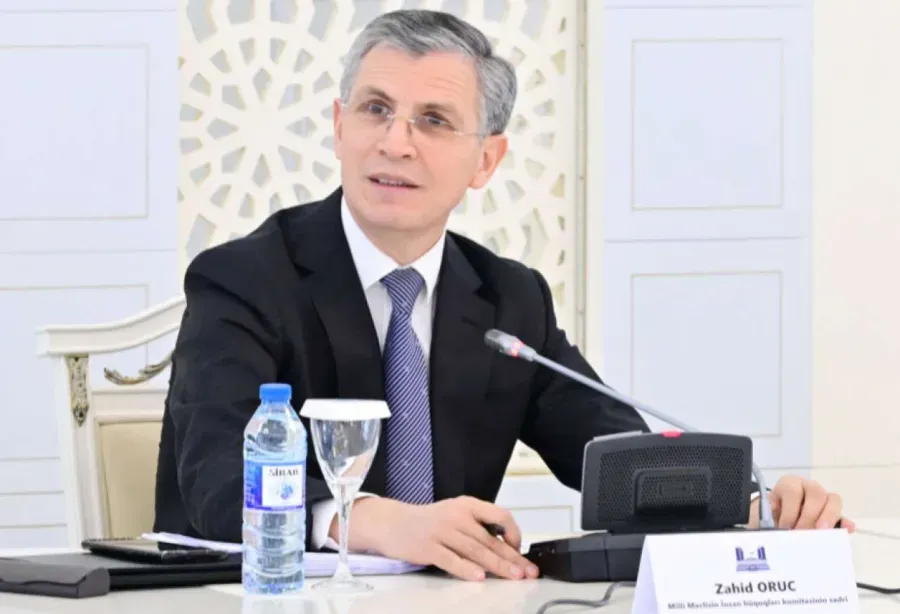
Zahid Oruj
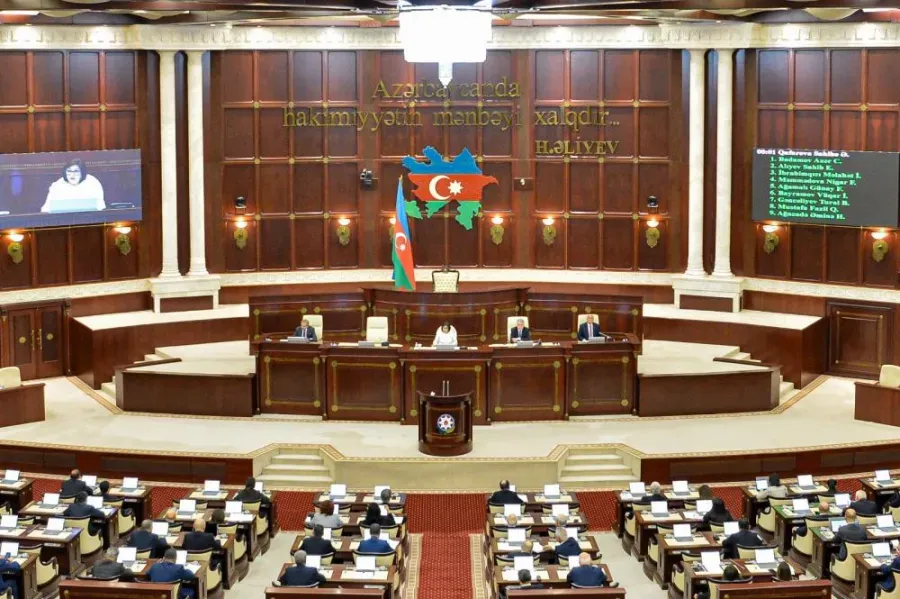
Chairman of a committee of the Milli Majlis