
Pashinyan’s bid to trade Bashkend for four villages: Details of an intricate plan
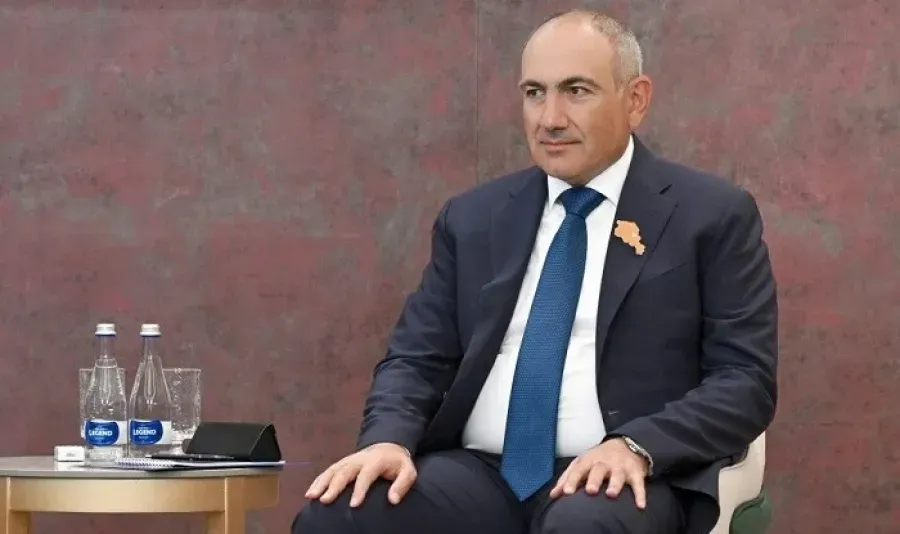
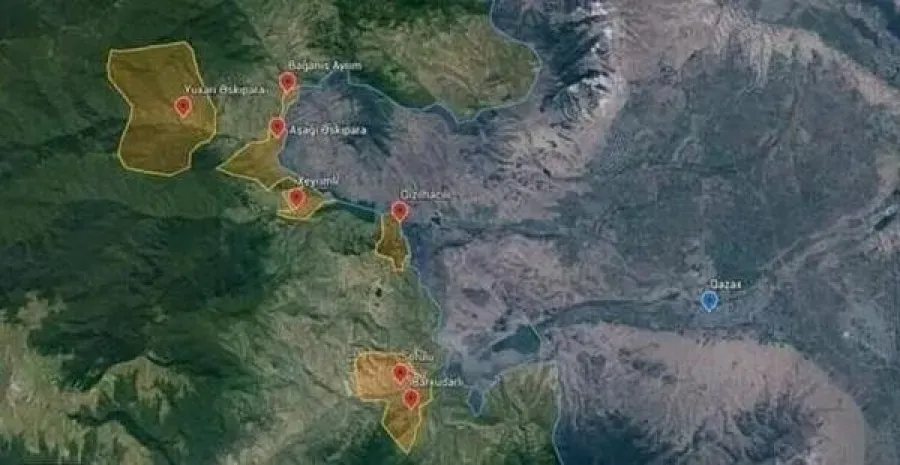
Armenian Prime Minister Nikol Pashinyan has revived his long-standing proposal for resolving the enclave issue through a “swap.” The proposal concerns Bashkend, a village in Gadabay documented as an “Armenian enclave” during the Soviet era, in exchange for Karki in Sadarak and Yukhari Askipara, Barkhudarly and Sofulu in Gazakh.
Pashinyan raised the possibility of such a “swap” some time ago but did not explain how it should be implemented. This time, the Armenian prime minister outlined his proposal with certain details. He said that “Baku and Yerevan should exchange territories (villages) according to their exact sizes.” He explained that this would ensure that “no enclaves or exclaves remain on either side of the border, in Azerbaijan or Armenia.”
The issue largely comes down to the difficulty of establishing access corridors. Once the enclaves are returned, corridors will be needed to maintain access to the villages. How safe these corridors would be and how their security would be ensured remain technical challenges. Pashinyan’s proposal can be viewed as stemming from these realities.
However, it is clear that the proposal conceals an Armenian tactical manoeuvre.
The Armenian prime minister wants the territories to be exchanged according to their exact areas. Bashkend covers 40 square kilometres. Karki covers 8.23 square kilometres, Yukhari Askipara 8.6, Sofulu 4.39 and Barkhudarly 3.2 square kilometres. Together, the four villages cover 24.42 square kilometres—15.58 square kilometres less than Bashkend.
Accepting the proposal for an “exchange based on exact area” would therefore mean that Azerbaijan would have to give up the four villages in return for Bashkend and additionally surrender around 15 square kilometres of territory. That is what Pashinyan’s proposal amounts to. Armenia’s objective, at the very least, is to resolve the enclave issue while retaining Azerbaijan’s four villages.
There are two objectives behind this plan.
The first concerns the strategic importance of Karki and the three villages in Gazakh.
Karki would give Azerbaijan visual and fire control over Armenia’s North–South highway, while the three villages in Gazakh would provide similar control over the Armenia–Georgia highway and the Russia–Armenia gas pipeline. Armenian experts particularly emphasise Karki’s strategic importance, arguing that the village’s return would effectively “split Armenia in two.” Under such a scenario, Armenia would be forced to build an alternative road to connect its southern regions and maintain communications with Iran. However, the mountainous terrain along the alternative route would make it impractical.
The second objective is that Armenians do not want to live in Bashkend, which is located 18 kilometres from the Armenian border. Returning the village would offer Armenia no advantage.
This is the manoeuvre underlying Pashinyan’s proposal. One of the most important points is that Bashkend is historically Azerbaijani land. Founded in 1845, the village’s demographic makeup shifted in favour of Armenians during the Soviet period, and in 1978 it was officially designated an “Armenian enclave.” Pashinyan’s proposed “swap” amounts to exchanging Azerbaijani territory for Azerbaijani territory. The likelihood that official Baku would agree to this proposal is low.
Asif Narimanli, political commentator