
If your vision becomes blurry, do not ignore it – What is the cause?
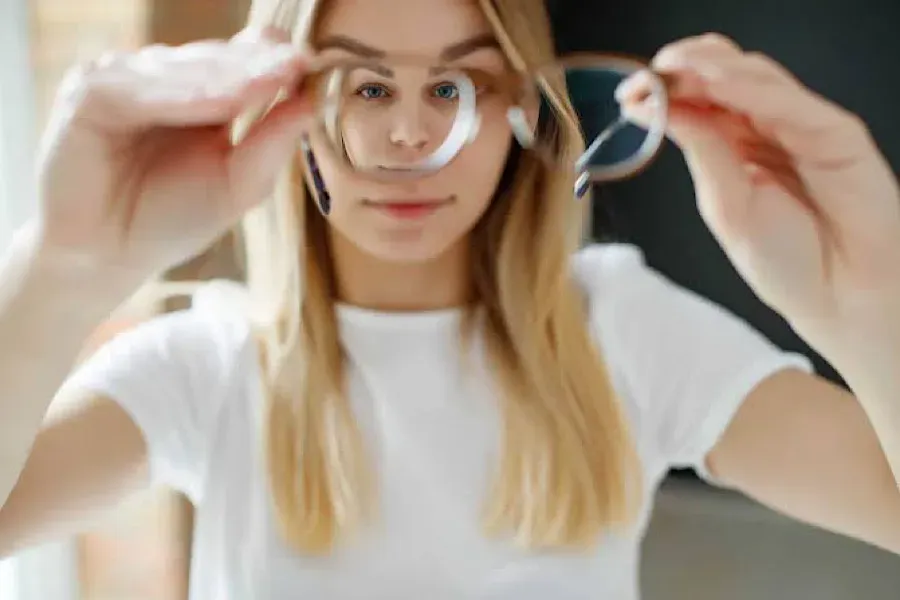
Decreased visual acuity is one of the most common problems among both children and adults in the modern era. Myopia, which is particularly characterised by difficulty seeing distant objects clearly, can affect people’s daily lives, education and work.
What is myopia?
Myopia, or nearsightedness, is a vision defect in which a person can see nearby objects relatively clearly but distant objects appear blurred.
In a normally structured eye, light rays are focused on the retina. In myopia, however, the image forms in front of the retina because the eyeball is longer than normal from front to back or because the cornea refracts light too strongly. As a result, distant images appear blurred.
Why does myopia develop?
Several factors can contribute to the development of myopia. One of the main causes is genetic predisposition. If one or both parents have myopia, the likelihood of a child developing the condition may increase.
At the same time, modern lifestyles may also play an important role in the development of myopia. In particular, spending long periods reading at close range, using computers, tablets and phones, and not spending enough time outdoors are considered risk factors among children and adolescents.
An important point here is that it would be incorrect to consider phone and computer use alone as the sole cause of myopia. The problem is more closely associated with prolonged, uninterrupted focusing at close range and reduced time spent outdoors.
What are the main symptoms of myopia?
Since myopia can develop gradually, a person may initially not consider changes in their vision to be a serious problem. The most common symptoms include:
* Blurred vision of distant objects;
* Difficulty seeing images clearly when watching television or looking at a board;
* Squinting to read distant text;
* A feeling of eye fatigue and strain;
* Headaches;
* Eye discomfort after reading or looking at a screen for a long time;
* In children, difficulty seeing the board during lessons and sitting excessively close to the television or screen.
If several of these symptoms are observed, it is advisable to have your vision examined by an ophthalmologist.
How is myopia diagnosed?
Myopia cannot be diagnosed based on symptoms alone. An eye examination is required for an accurate diagnosis.
An ophthalmologist checks visual acuity, evaluates the optical properties of the eye and, when necessary, orders additional examinations. Regular eye examinations are particularly important for children, as detecting a vision problem early makes it easier to monitor its progression.
How is myopia corrected?
The most common methods of correcting myopia are glasses and contact lenses. They help direct light rays correctly and focus the image on the retina.
In some cases, refractive surgery, such as laser vision correction, may also be possible for adults. However, this method is not suitable for everyone. The decision to undergo surgery should be made by an ophthalmologist based on the condition of the eye, age, visual measurements and other medical criteria.
In children, the approach may be different. Taking into account the degree of myopia and the rate at which it is progressing, a doctor may recommend specific monitoring and methods aimed at slowing its progression.
Can myopia be prevented?
Myopia cannot be prevented in all cases. Genetic factors, in particular, cannot be changed. However, certain habits may help protect visual health, especially in children.
It is recommended to take breaks when working at close range for extended periods, spend sufficient time outdoors, maintain an appropriate distance while reading and using screens, and undergo regular eye examinations.
Most importantly, changes in vision should not be ignored. Delaying an eye examination for a long time because of the assumption that “my eyes are just tired, it will pass” may delay the timely detection of a vision problem.
What should people with myopia pay attention to?
Once myopia is diagnosed, it is important to choose the correct prescription for glasses or contact lenses. Since visual acuity can change, regular ophthalmological examinations should be carried out at appropriate intervals.
Particularly in children, if symptoms such as rapidly worsening vision, flashes of light, numerous new “floaters,” or a shadow or curtain-like effect in the field of vision occur, an eye doctor should be consulted urgently.
In conclusion, although myopia is a widespread vision disorder, its timely detection and proper correction can significantly improve a person’s quality of life. Regular examinations, healthy visual habits and following medical advice are key factors in protecting eye health.
Kubra Musayeva