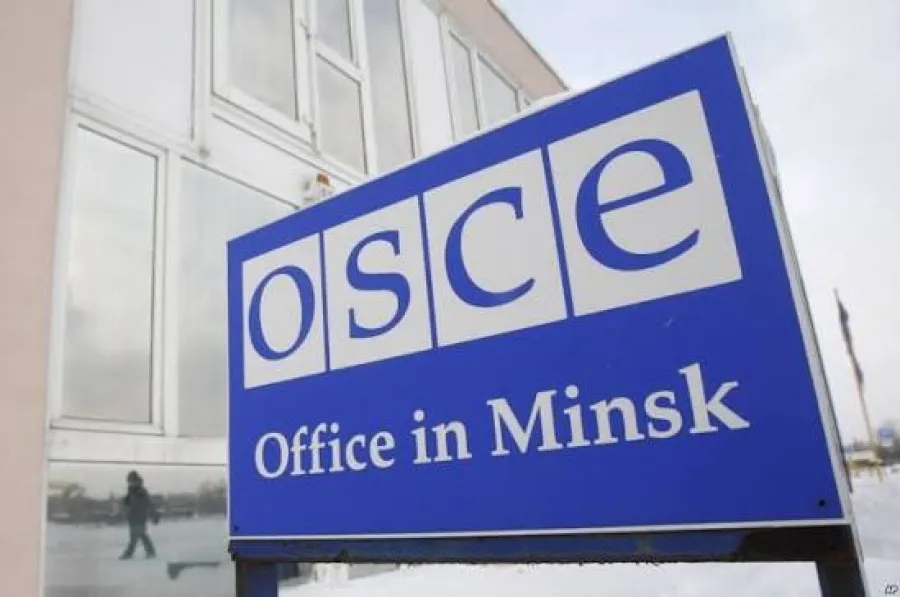

“We ate, drank and enjoyed ourselves” — Kasprzyk had homes in three cities: Facts exposing the OSCE Minsk Group
After the Second Karabakh War, questions arose about the role of the OSCE Minsk Group. For many years, the organization had unsuccessfully sought a diplomatic solution to the conflict.
A year ago, by mutual agreement of the parties, the Minsk Group’s mandate was terminated, bringing its ineffective activities to an end.
Former US Co-Chair of the OSCE Minsk Group Richard Hoagland has made interesting remarks revealing the inner workings of the process.
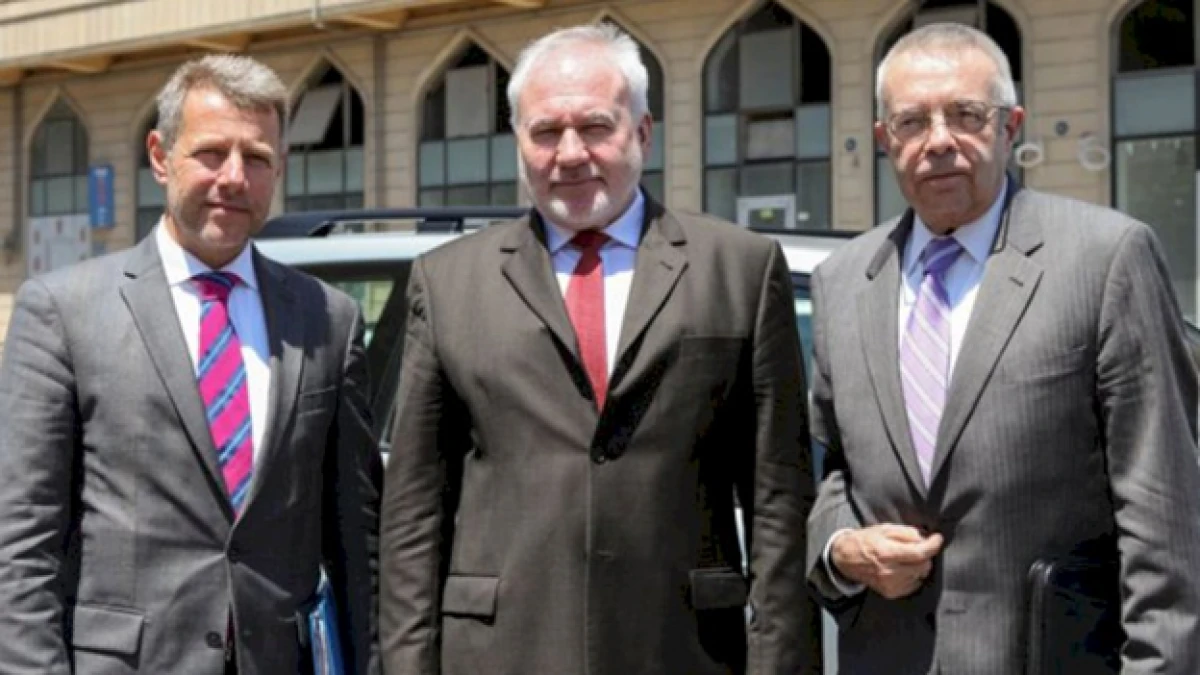
After 30 years, the war ended with seven territories occupied by Armenia and part of Nagorno-Karabakh itself returning to Baku. The answer to the question of the Minsk Group’s future depended on whom you asked. Yerevan openly stated that it was important to continue the Minsk Group’s activities to determine the final status of Nagorno-Karabakh. Baku was equally firm in the opposite direction, saying that Nagorno-Karabakh was and would always remain an integral part of Azerbaijan. This was the dilemma the Minsk Group had faced almost from the very beginning — fundamentally opposed positions that did not change.
The Minsk Group itself consisted of the following OSCE participating states: Armenia, Azerbaijan, Belarus, Finland, Germany, Italy, Sweden and Türkiye, as well as the Minsk Group troika on a rotating basis: France, Russia and the United States. Alongside the co-chairs, the group was led by the Personal Representative of the OSCE Chairperson-in-Office, Polish diplomat and Ambassador Andrzej Kasprzyk, who had held the position since 1996.
After retiring from the State Department following 30 years of service, I was asked to return as acting US co-chair of the Minsk Group from January to September 2017, after the previous US co-chair unexpectedly retired to take a job in the private sector. Although I had never served as a US diplomat in Armenia or Azerbaijan, the South Caucasus was not terra incognita for me. I had served as Director of the Office of Caucasus and Central Asia Affairs at the State Department and had frequently travelled to the countries of the South Caucasus in that capacity. Later, after serving at several embassies in Central Asia, I became Principal Deputy Assistant Secretary of State for South and Central Asia. In general, I had spent a considerable part of my diplomatic career in various positions across the former Soviet Union, which gave me at least a general understanding of the post-Soviet conflict in Nagorno-Karabakh.
To be honest, when I was offered the position of acting US co-chair, I initially hesitated a little. Why? Because at the State Department, the position was not particularly regarded as a “career-enhancing” assignment. To be candid, it was usually held by a diplomat who was in a “parking” position, waiting for a promised full-scale ambassadorial post to open, or by a diplomat nearing retirement who needed a little more time to meet retirement requirements. Nevertheless, I was intrigued by the opportunity to gain firsthand knowledge of an international issue to which I had previously paid little attention and to travel to Nagorno-Karabakh, something very few American citizens had the opportunity to do. And so I said, “Sign me up!”
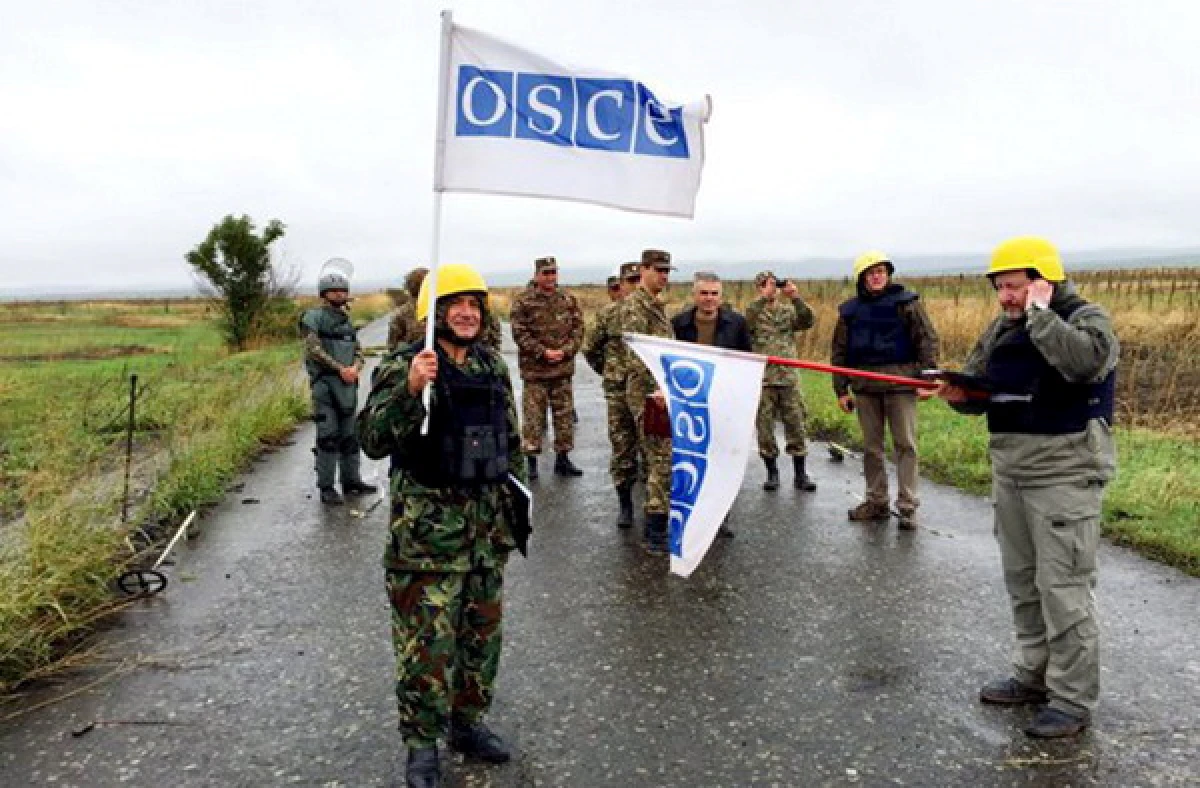
During each trip to the region, usually about once every six weeks in the pre-COVID world, Ambassador Kasprzyk and the three Minsk Group co-chairs would meet with the highest-ranking officials of both Armenia and Azerbaijan in their respective capitals. We would usually then travel by road through the territories occupied by Armenia to Nagorno-Karabakh and meet with officials of the self-proclaimed “Republic of Artsakh” in its capital, Stepanakert. From time to time, we travelled to Moscow, Brussels and other capitals to brief officials on our work and the state of the Nagorno-Karabakh conflict.
We stayed in five-star hotels, usually receiving suites on the executive floor, which gave us access to a private dining room and a fully stocked bar at no additional cost. We always sought out the best restaurants in the cities where we were staying. While displaying the OSCE flag and reminding Baku and Yerevan that the Minsk Group existed, we lived well. But, frankly, we achieved very, very little.
Over the years, the OSCE had developed the Madrid Principles, a roadmap for a final settlement of the Nagorno-Karabakh conflict, which would ultimately lead to the self-determination of the people of Nagorno-Karabakh. During my tenure as US co-chair, Russian Foreign Minister Sergey Lavrov presented his own plan for resolving the conflict, similar to the existing Madrid Principles. It immediately became informally known as the Lavrov Plan, although we had been warned to refer to it simply as “the plan on the table.”
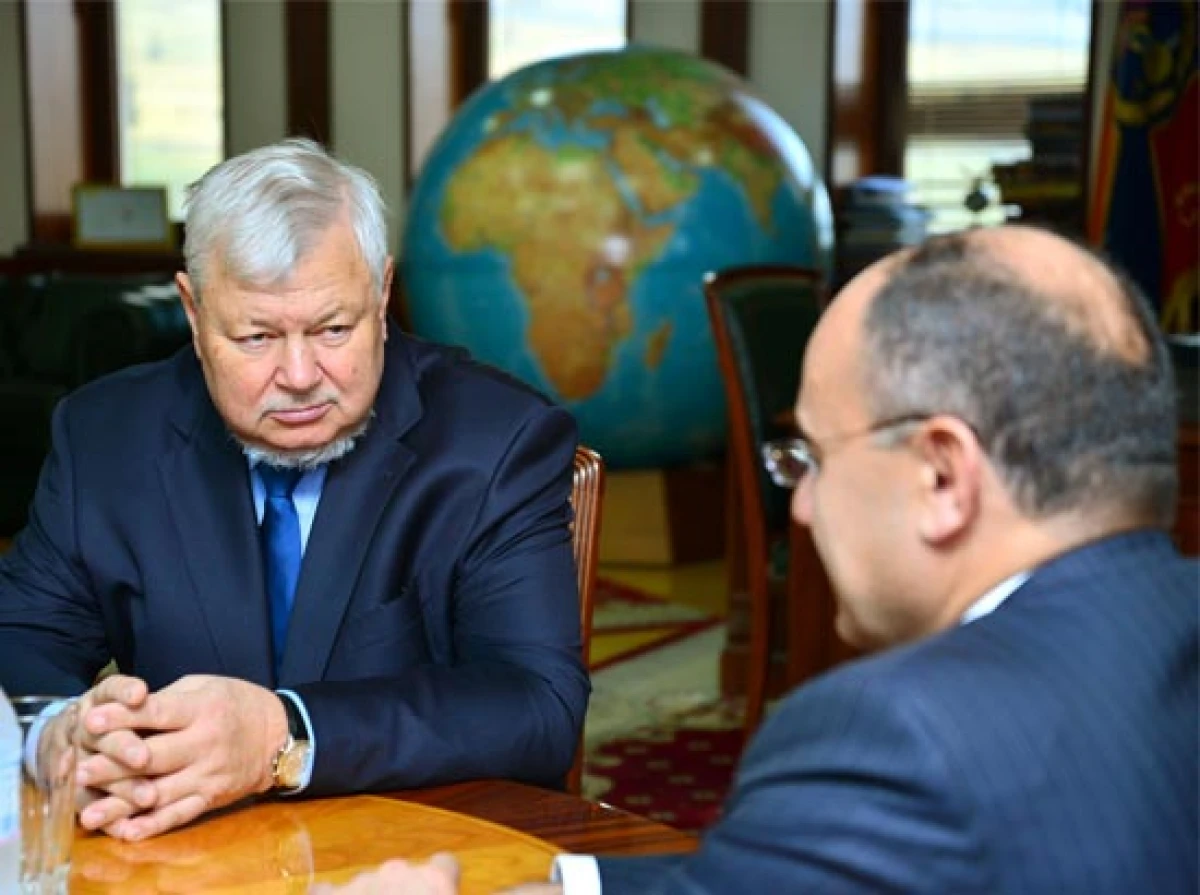
When the so-called Lavrov Plan was announced, I asked my Russian co-chair colleague, Ambassador Popov, whether the Kremlin really intended to implement it and whether Yerevan and Baku should accept it. His candid response was: “Of course not.” This made one thing clear to me above all: Nagorno-Karabakh was not merely a bilateral issue between Armenia and Azerbaijan. In fact, it was a trilateral issue, with Russia playing the main, perhaps even decisive, role.
Nagorno-Karabakh was one of the long-standing conflicts in the post-Soviet space, sometimes referred to as frozen conflicts. Others included Abkhazia and South Ossetia in Georgia, Transnistria in Moldova, and the regional turmoil in eastern Ukraine. Although each of these conflicts had its own historical origins and was complex in its own way, the common factor was that Russia was in the best position to end these conflicts — if it wanted to.
Moscow chose not to do so for various reasons specific to each conflict. But the main reason was that such a resolution could give each country enough freedom to seek other partners and multilateral alliances. In Georgia’s case, these would have been NATO and the European Union. But Moscow was determined to prevent this from happening in order to preserve its own “sphere of influence.”
The main thing I learned during numerous visits to Yerevan and Baku with my co-chair colleagues was that both sides remained firmly entrenched in their positions and were unwilling to consider even the smallest temporary compromise as a confidence-building measure. Personally, I had begun to believe that only war could resolve the Nagorno-Karabakh problem, although I never expressed that view publicly. Nevertheless, we — the co-chairs — continued the process.
It was important to remember that during the 2020 Nagorno-Karabakh war, each of the Minsk Group co-chair capitals made efforts to achieve a ceasefire. However, each of those “ceasefires” lasted only a few hours. Only when it became clear that Azerbaijan could regain its entire territory did Moscow intervene and begin regulating the situation.
Armenia had lost the seven territories it had held under occupation for approximately 30 years — the buffer zone around Nagorno-Karabakh and the route providing access to Nagorno-Karabakh. It had also lost the southern part of Nagorno-Karabakh, including the beautiful mountain town of Shusha.
Moscow was in a better position than any other major power or multilateral organization to bring the Nagorno-Karabakh conflict to a complete and definitive end. Instead, it stopped the war. But an important point was that Moscow maintained its peacekeeping troops in Azerbaijan at that time.
This was the first time since the former Soviet Socialist Republics gained independence that Moscow had troops in all three South Caucasus countries — Armenia, Azerbaijan and Georgia — in various capacities. In doing so, Russia further strengthened its “sphere of influence.”
So, did the OSCE Minsk Group have any role left? As noted at the beginning of this article, Armenia said “absolutely,” while Baku said “of course not.” Thus, the Minsk Group’s status quo would continue in a relatively ambiguous situation. But with a little creative thinking, the OSCE and the Minsk Group itself could redefine this role.
For example, it could have added reconstruction opportunities to its approved mandate. In fact, both Baku and Yerevan had already acknowledged opportunities to repair and further develop the infrastructure of the wider region. This included the construction of new roads and other forms of transportation within and beyond the region.
For instance, the Minsk Group could have prepared a master plan and helped organize and coordinate financing for development in the former Nagorno-Karabakh war zone itself, as well as in the broader South Caucasus region.
The World Bank, the International Monetary Fund and the European Bank for Reconstruction and Development, as well as the capitals of OSCE participating states, could have taken part in this financing.
Clearly, this would not have been easy, given that Iran and Türkiye, the region’s difficult neighbours, would also have wanted to have their say in such an effort. But if the Minsk Group failed to redefine its mission, unfortunately, it would remain, in most respects, an interesting backdrop to international diplomacy.
OSCE Chairperson-in-Office’s Personal Representative (1997–2021), Polish diplomat Andrzej Kasprzyk, had rented homes in Baku, Tbilisi, Yerevan and even Khankendi. While soldiers in the trenches watched each other through their sights, he lived comfortably in rented homes in different cities across the region. His reports were so “sterile” that it was impossible even to understand who had opened fire.
When the co-chairs came to Baku after the war, Ilham Aliyev said on camera:
“I did not invite the Minsk Group. But I was told that they wanted to come, and I said, ‘Let them come, I have no objection.’”
This was one of the clearest diplomatic messages that the group had already become unnecessary.
Aziz Alibeyli
International Relations Researcher
PHOTOS