
11 countries in the line of fire: Weapons continue to speak in the Middle East
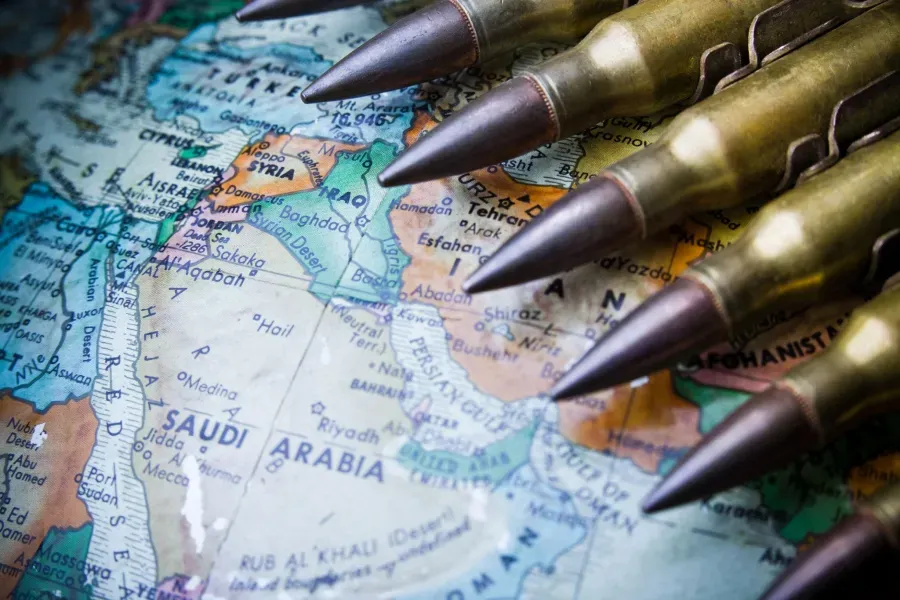
The number of countries hosting diplomatic missions for which the United States has issued security alerts has reached 11. The list includes Jordan, Lebanon, Qatar, Iran, Iraq, Israel, Bahrain, Oman, Saudi Arabia, the United Arab Emirates and Yemen.
What lies ahead for the Middle East in the near future?
Speaking to TodayPress TV, political analyst Sadraddin Soltan said the continuation of tensions in the region would depend on whether the conflicts were resolved.

“As long as relations between Iran’s leadership and the United States and Israel are not normalised, the Houthi movement in Yemen continues its insurgency, Hezbollah in Lebanon maintains its anti-Israeli activities, and Palestinian territorial integrity remains unensured, with Palestinian-Israeli relations still not normalised, tensions in the Middle East will persist,” he said.
According to Soltan, the existing conflicts will also continue to create problems in relations between states.
“Against the backdrop of the conflicts we have listed, as well as those we have not mentioned, problems will persist in interstate relations. Recent developments, for example, indicate that events in Sudan, Ethiopia and Somalia could also become potential flashpoints for confrontation between Middle Eastern countries in the future. In these circumstances, expecting peace and stability to arrive in the Middle East soon would be naive,” he said.
Soltan also addressed discussions about a possible US-Israeli military operation against Iran.
“According to reports in recent days, a joint US-Israeli operation against Iran is considered possible. Some think tanks believe such an operation would last three days. However, Iran has made no secret of its readiness for war — a confrontation with Israel and the United States,” he said.
According to the analyst, if such a war breaks out, one of its main objectives would be to weaken Iran’s Islamic Revolutionary Guard Corps (IRGC).
“If a US-Israeli war against Iran begins, one of its clear objectives will be to weaken the Islamic Revolutionary Guard Corps, or IRGC, and prevent it from acting as a leading power and military force in the region, including in the Strait of Hormuz,” the political analyst noted.
The analyst also highlighted other possible scenarios for confrontation.
“In any case, one potential flashpoint could be a Houthi operation against Saudi Arabia, followed by a Saudi operation against the Houthis, or an escalation of the existing confrontation. An armed conflict between the United States and Israel on one side and Iran on the other is also among the key scenarios being anticipated and monitored at present,” he said.
Jala Rovshan