
The Turkish army was ordered to enter Armenia, while Russia threatened nuclear weapons...
After Armenian occupying forces seized Azerbaijan’s historic city of Shusha in 1992, then-Turkish Prime Minister Süleyman Demirel stated that “Turkey cannot remain a mere observer after another terrorist act by the Armenians.”
President Turgut Özal also supported this position. The Turkish army was placed on combat readiness.
The 3rd Field Army of the Turkish Armed Forces was deployed along Turkey’s border with occupying Armenia. The opening of a second front against occupying Armenia appeared increasingly realistic. Muhittin Fisunoğlu, then Commander of the Turkish Land Forces, stated at the time:
“All necessary preparations have been made, and the army is awaiting orders.”
According to diplomatic sources at the time, the United States was taking a cautious position. It was reported that if Turkey attacked occupying Armenia, Russia would defend occupying Armenia, while the United States would not support such a move by Turkey.
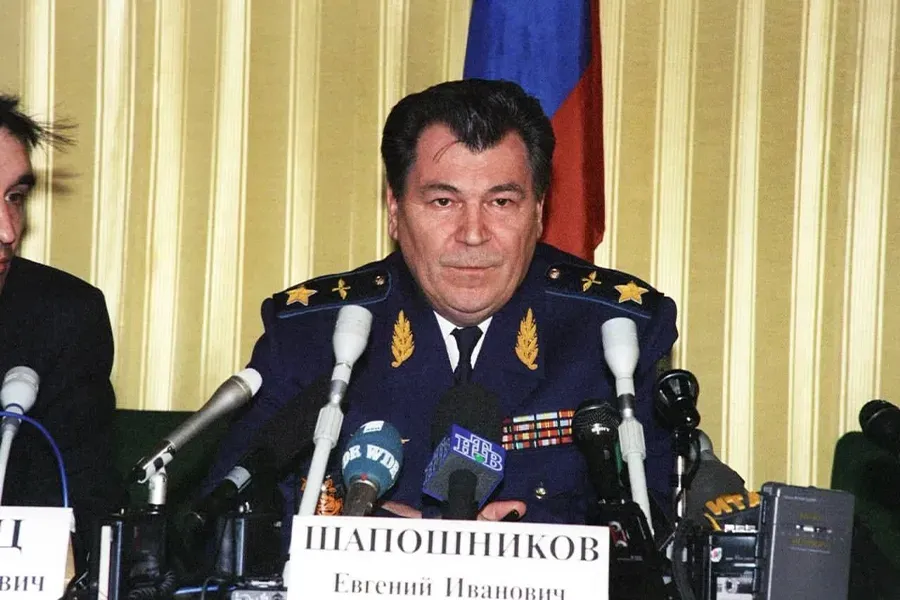
The most important factor was NATO. Washington had conveyed to Ankara that if Turkey, on its own initiative, attacked occupying Armenia and came under a Russian counterattack — something Marshal Yevgeny Shaposhnikov, Commander-in-Chief of the Joint Armed Forces of the Commonwealth of Independent States (CIS), had warned about — NATO’s Article 5, the principle of collective defence, would not apply to Turkey because Turkey would be considered the attacking side.
Moscow took the Turkish threat seriously. The Russian State Duma held special hearings over the increased activity of the Turkish army near the borders of occupying Armenia. Foreign Minister Andrei Kozyrev and Marshal Shaposhnikov, Commander-in-Chief of the CIS Joint Armed Forces, attended the hearings.
Amid the escalating tensions, Marshal Shaposhnikov flew urgently to Yerevan on May 20, 1992, and held a press conference at the airport, warning Turkey:
“If another party intervenes there [in the Karabakh conflict], we could be on the verge of a Third World War.”
International news agencies — Reuters, Associated Press and AFP — made the statement a headline on May 20–21, 1992: “If a third party intervenes, we could be on the verge of a Third World War.”
It was precisely this international pressure and Russia’s open support for occupying Armenia that led Turkey to choose economic pressure instead of direct military intervention and officially close the Turkey-Armenia border.
After that, Turkey continued its strategy of supporting brotherly Azerbaijan indirectly — agreements were signed with Baku on the supply of arms and ammunition and the training of Azerbaijani servicemen in Turkey.
This history once again shows that the West and Russia have always protected occupying Armenia and created obstacles to Azerbaijan’s rightful position.
Ismayil Shahli