
Putin’s propaganda crosses the line: Germany should be divided again, walls restored
Berlin Wall: The city behind the concrete
Imagine this: You wake up one morning and the street in front of your home is no longer there. Your neighbor is on the other side, your workplace is elsewhere, and the café you visit every day has suddenly become part of another country.
On the night of August 13, 1961, thousands of people in East Berlin woke up to exactly such a reality.
Its official name was the “Anti-Fascist Protective Wall.” In the West, however, it was given another name: the “Wall of Shame.”
The wall and the surrounding border system stretched for approximately 155 kilometers. It was not simply a concrete barrier. Barbed wire was installed first, followed by concrete blocks 3-4 meters high. Pipes were placed on top to prevent anyone from climbing over the wall.
Behind the wall was a “death strip.” The ground was covered with sand so that the footprints of anyone attempting to escape could be immediately detected. Then came a second wall. In between were dogs, armed soldiers and searchlights.
The system operated day and night.
Houses with windows facing the wall
Bernauer Strasse was one of the most painful examples. The buildings on one side of the street belonged to East Berlin, while the street itself remained in West Berlin.
People could almost touch West Berlin from their windows, but they could not cross over.
The authorities initially bricked up the windows of houses facing the street. Later, the buildings were completely evacuated and demolished.
But some people continued trying to escape until the very end. Some tied bedsheets together and climbed down from upper floors. Some managed to cross to the West in front of television cameras.
The wall separated letters too
The wall divided not only people, but everyday life as well.
Letters could be sent from East to West, but they were subject to inspection. People were afraid to speak openly with one another. As a result, they sometimes hid other meanings behind seemingly ordinary words.
“Apples are ripe” might not have simply been a sentence about apples.
The two faces of the wall
Over the years, the western side of the wall became a huge open-air gallery. Students, tourists, artists and punks wrote messages and painted pictures on it.
The eastern side was completely different. Even approaching the wall there was dangerous.
Today, one of the most famous sections of the colorful western side is known as the East Side Gallery.
A wall that once separated people now carries paintings created by people from all over the world.
Tunnel 57
In 1964, a group of students dug a 145-meter tunnel to help people escape.
They worked underground for months. There was no modern equipment. They used their hands and simple tools.
The tunnel’s exit was beneath a building in West Berlin.
As a result, 57 people managed to escape from East Berlin through the tunnel.
By the time the Stasi discovered the tunnel, it was already too late.
The most frightening sound was silence
One of the most striking aspects of memories of the Berlin Wall is the silence at night.
Guards constantly monitored movement along the border. Searchlights, dogs, armed soldiers and the death strip constantly reminded people of the wall’s true purpose.
There, silence could sometimes be the worst news.
Because silence could mean that someone was trying to escape.
So, how did the wall fall?
November 9, 1989.
In fact, everything began with a single sentence.
While announcing new border regulations, East German government spokesman Günter Schabowski was asked by a journalist when the new rules would take effect. He replied: “Immediately.”
The news spread within minutes.
Thousands of people rushed to the Berlin Wall checkpoints. The guards, however, had no clear instructions on what to do.
The crowds continued to grow.
Finally, the border guards opened the gates.
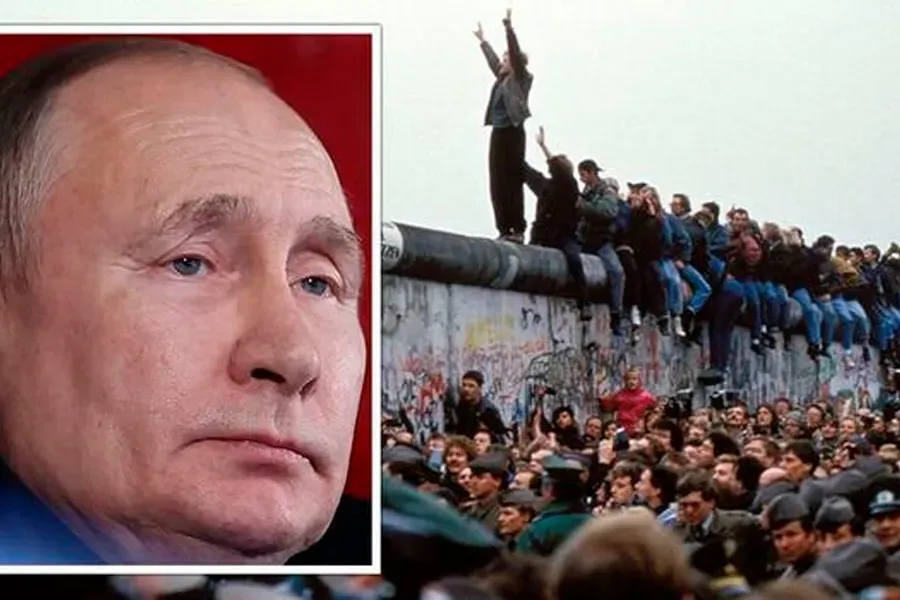
After 28 years of separating people, the wall was no longer an impassable barrier standing before them that night.
People climbed onto the wall. They began breaking off pieces of concrete with hammers.
Those guarding the wall stepped back. The people who brought it down were the people of that city.
Berlin today
Today, when walking through the streets of Berlin, it is possible to see two rows of stones running along the ground.
They mark the line where the Berlin Wall once stood.
Sometimes the line runs through the middle of a street.
Sometimes beside cafés.
Sometimes through a playground where children are playing.
The city has not erased its history. Instead, it has preserved it within its streets.
Because the Berlin Wall did not simply divide a city in two.
It separated families. It separated friends. It divided people’s lives into two different sides.
And perhaps this is its greatest irony:
Those who built the wall called it a way of “protecting the people.”
Twenty-eight years later, it was the people who brought the wall down.
Now, another wall is being discussed
The Berlin Wall remains in the history books today. But the political thinking that created it has not completely disappeared.
Statements broadcast today on Russian state television show just how dangerous this can be.
Vladimir Solovyov, one of Putin’s main propagandists, has claimed that the agreements surrounding German reunification should be annulled.
Going even further, he raised the issue of refusing to recognize Germany as a legitimate state and restoring East Germany.
In other words, 37 years after the Berlin Wall was dismantled, an attempt to revive its political logic is being voiced in Russian state propaganda.
A Germany once divided by concrete is once again being divided on a map on television.
Aziz Alibeyli
International Relations Researcher