
How was Putin’s meeting with the President and First Lady covered by Russian media spewing hatred toward Azerbaijan?
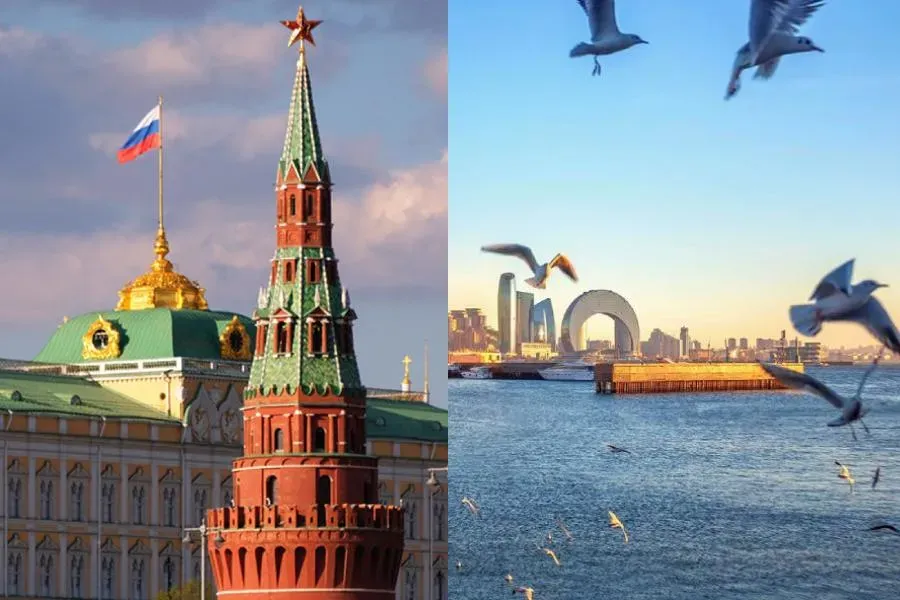
The diplomatic atmosphere surrounding the Shanghai Cooperation Organisation (SCO) summit in the Kyrgyz capital has once again brought the changes in Moscow-Baku relations in recent months to the forefront.
The Azerbaijan-Russia relations have gone through a fairly complicated period over the past two years, TodayPress TV reports.
In particular, tensions following the crash of the AZAL plane near Kazakhstan’s city of Aktau, as well as Azerbaijan’s position on the Ukraine issue, have intensified harsh rhetoric against Baku in Russia’s information space.
However, a change in Moscow’s approach toward Azerbaijan has been observed recently. Thus, Russian propaganda outlets that previously openly targeted Baku now increasingly prefer more cautious and explanatory rhetoric. It has become more apparent that a complete breakdown in relations with Azerbaijan does not serve Russia’s regional interests.
The Shanghai Cooperation Organisation summit in Bishkek has also become a noteworthy platform in this regard. President of Azerbaijan Ilham Aliyev, President of Russia Vladimir Putin and other regional leaders are attending the summit.
The main line of Russia’s state-affiliated information resources is now focused more on preserving diplomatic relations than on open confrontation, as was the case in previous periods. This is driven not only by political factors but also by economic and geopolitical realities.
For Moscow, Azerbaijan is not simply a neighboring country in the South Caucasus. Baku is increasingly becoming an important communications and energy hub connecting Türkiye, Central Asia and Europe. The North-South transport corridor, transportation across the Caspian Sea, energy projects and the new geopolitical balance in the region make it difficult for Russia to shift its relations with Azerbaijan entirely toward confrontation.
At the same time, there is no indication that Azerbaijan’s foreign policy is aimed at a complete break with Moscow. Baku is expanding its strategic ties with Türkiye and the West while keeping channels of dialogue with Russia open. This is one of the main features of Azerbaijan’s multi-vector foreign policy in recent years. Therefore, even the most hardline segments of the Russian media are finding it increasingly difficult to maintain the previous narrative that “Azerbaijan is against Russia” with the same intensity.
The main discussions at the SCO summit have focused on regional security, economic cooperation and global geopolitical developments. In his address to the summit, the Russian leader himself spoke about the importance of multilateral cooperation in international relations and the role of the United Nations.
Against this backdrop, continuing open confrontation with Azerbaijan could create additional risks for Moscow’s regional interests. In particular, amid Türkiye’s growing influence in the South Caucasus and Central Asia, Azerbaijan’s expanding strategic ties with the West and the strengthening of the Baku-Ankara axis, maintaining dialogue with Azerbaijan is becoming a more rational choice for Russia.
It should be noted that First Vice-President of Azerbaijan Mehriban Aliyeva also drew attention with her participation in events in Bishkek. On September 1, she attended an event held at the Ala-Archa State Residence together with first ladies of other countries.
Against this background, the main change is taking place in the political dynamics of Moscow-Baku relations. The information machine that sought to target Azerbaijan with pressure and accusations yesterday is no longer as comfortable continuing with the same level of harsh rhetoric today.
Thus, today’s reality reminds Russia that losing Baku could come at a high cost for Moscow.
Aysel Matlab