Moscow finds another pretext: The “Baltic air corridor” — what is the real objective?
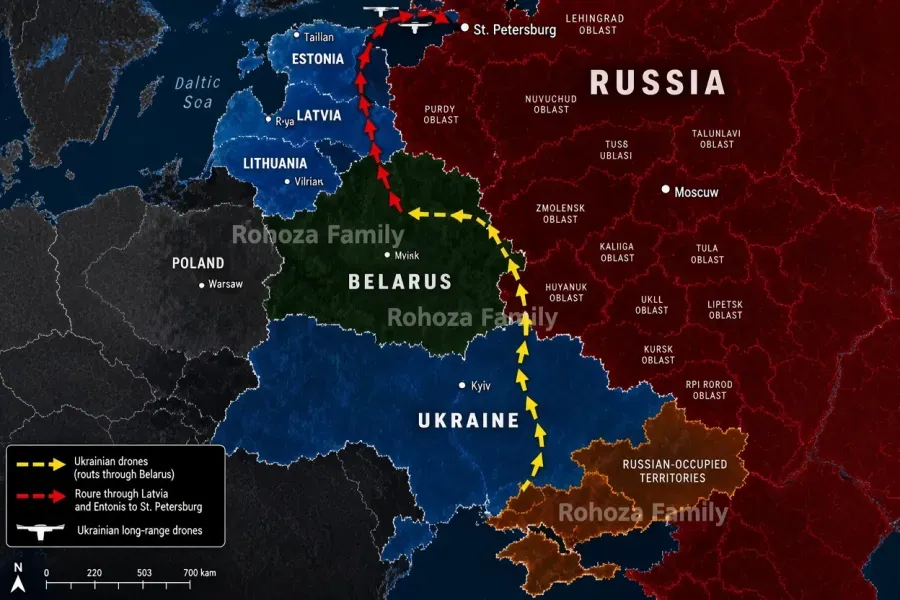
Following the latest drone attacks on St. Petersburg, Russian military bloggers and military-focused Telegram channels have circulated a new claim that has stirred controversy.
TodayPress TV reports that these sources allege Ukrainian drones entered Russian territory through the airspace of Latvia and Estonia, claiming that the two countries provided an “air corridor” for attack drones.
Strikes against critical infrastructure deep inside Russian territory, including in a city such as St. Petersburg, represent a significant military and psychological blow to Moscow.
The reaction from Russian military channels and pro-war bloggers, who have linked the incident to the Baltic states, may be an attempt to deflect attention from gaps in Russia’s air defence systems and their failure to prevent the attacks. Rather than acknowledge military setbacks to the domestic audience, Russian officials have often found it advantageous to promote the narrative that “we are fighting not only Ukraine, but NATO directly”.
At the same time, singling out Latvia and Estonia could be part of the Kremlin’s effort to intensify hybrid threats in the Baltic region, increase psychological pressure and divert Western attention from aid to Ukraine towards protecting NATO’s eastern borders.
However, turning these allegations into a direct military confrontation would carry extremely high risks for Moscow. The Baltic states are covered by NATO’s collective defence guarantee under Article 5. Therefore, the Kremlin’s move appears more likely to be an attempt to manoeuvre on the information front and lay the groundwork for potential future hybrid provocations than a preparation for a large-scale military attack.
Jala Rovshan