
Iran’s Yemeni foothold hit: Houthis attacked on all fronts
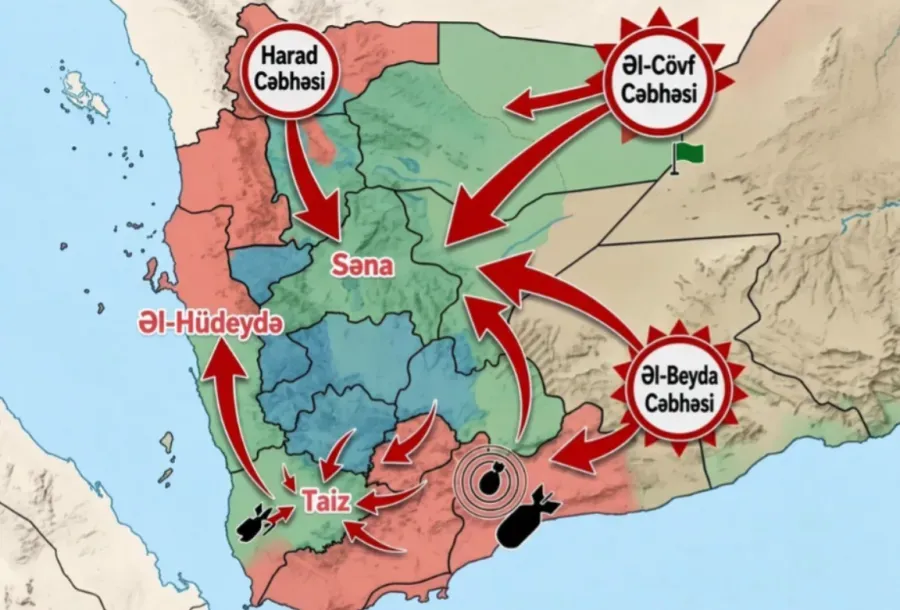
Front lines that had remained frozen in Yemen for a long time have recently become active. Forces aligned with the Yemeni government are applying pressure simultaneously in the Taiz, Hudaydah, Al-Jawf, Marib and Al-Bayda areas.
Airstrikes and unmanned aerial vehicles (UAVs) are also targeting Houthi positions, command centres and military equipment. The main objective of this approach is to place excessive strain on Houthi manpower and reserves by creating threats along several fronts at the same time. Every reinforcement sent to one front weakens other directions and creates potential gaps.
In Taiz, government forces have retaken some of the territory previously captured by the Houthis and seized control of a number of strategic positions. In Hudaydah, government-aligned forces say they have fully regained control of the Hayran area and are advancing toward neighbouring districts. In Al-Jawf, a broad northern front has opened around the strategic Al-Labanat military camp. This directly threatens Houthi positions around Al-Hazm and diverts the group’s resources away from western areas of Yemen. In the Marib area, fighting and airstrikes are putting additional pressure on Houthi positions west of government-controlled territory. In Al-Bayda, meanwhile, heavy airstrikes and ground operations have created a new front axis.
The Houthis still maintain control over Sanaa and large parts of Yemen’s densely populated northwestern regions. Therefore, claims that they are on the verge of collapse appear premature. Nevertheless, the strategic situation is becoming increasingly complicated. Iran’s most important ally on the Arabian Peninsula is being forced to defend several fronts simultaneously. This is placing strain on its manpower, logistics and reserves. In particular, at a time when Iran’s support and supply capabilities are facing growing international pressure, this multi-front war represents a serious test for the Houthi military structure.
If the current multi-front pressure continues, the Houthis’ defensive capabilities could gradually weaken.
They will be forced to mobilise their reserves to protect key areas, which could lead to local setbacks on other fronts. The likelihood of a complete collapse remains low for now, as the Houthis retain control and internal mobilisation capabilities in the northwestern regions.
However, if Iranian assistance becomes further restricted and government forces maintain air superiority, significant setbacks for Houthi positions are expected in the coming months.
This process may develop as slow erosion rather than a rapid collapse.
Jala Rovshan