
China objects to G20 statement – Is Beijing defending Iran or its own interests?
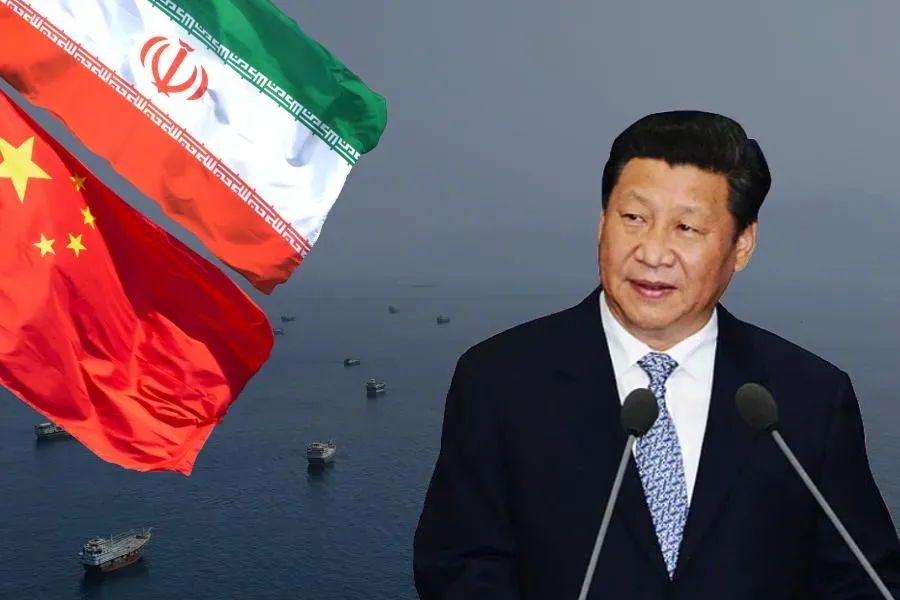
G20 finance officials held a meeting on August 1 in Asheville, North Carolina. The officials called for “free, safe and predictable navigation” through the Strait of Hormuz.
A statement issued following the meeting expressed concern over ongoing disruptions to energy trade and stressed that safe navigation in the Strait of Hormuz and around the world is essential to maintaining sustainable economic growth.
All G20 members attending the meeting supported the statement. China was the only country to object to the paragraph containing references to the Strait of Hormuz, as well as three other sections.

Speaking to TodayPress TV on the issue, political analyst Rashad Bayramov said that the fact that 19 G20 countries supported the call for free, safe and predictable navigation through the Strait of Hormuz while China objected to the paragraph may appear contradictory at first glance.
According to the expert, the security of energy shipments and maritime trade is critically important for China, one of the world’s largest economies. He believes that the essence of Beijing’s objection is not related to the safety of navigation itself, but rather to what political outcome this wording could serve in the context of the ongoing war. In other words, the disagreement is not over safe navigation, but over who should ensure that security and within what political and legal framework.
“China has already taken a sufficiently clear position on this issue at the UN. Beijing has stated that it does not support Iran’s attacks on Gulf countries or the blockade of the Strait of Hormuz and that the safety of shipping routes must be ensured. At the same time, China believes that the fundamental cause of the problem in the strait is the military operations conducted by the United States and Israel against Iran. A lasting solution, meanwhile, lies in a ceasefire and diplomacy,” the political commentator explained.
According to R. Bayramov, Beijing’s logic is that restoring security in the Strait of Hormuz requires addressing not only Iran’s actions but the conflict as a whole. Otherwise, a call for “free navigation” could turn into a formula that legitimizes US military pressure against Iran and, at a later stage, creates a political basis for naval operations, escort missions or other military mechanisms.
The political analyst believes that China’s relations with Iran also play an important role in this context:
“It is known that Iran is not merely a diplomatic partner for China; it is also a country of strategic importance in terms of energy and geopolitics. Moreover, the current war has dealt a serious blow to Iran’s oil exports, and as a result, China’s position as the main buyer of Iranian oil has also come under threat.”
The political commentator said that Beijing’s policy therefore pursues two parallel objectives:
First: not allowing Iran to become completely isolated.
Second: preventing the United States from turning the issue of the Strait of Hormuz into part of its military-political strategy.
“On the other hand, China does not defend all of Iran’s actions. Beijing also considers the security concerns of the Gulf countries legitimate and calls on Iran to stop attacks against states in the region. This is China’s distinctive balancing policy: on the one hand, it defends Iran but does not support all of Iran’s actions; on the other hand, it criticizes the United States but does not accept the closure of the Strait of Hormuz either. In this regard, China’s objection at the G20 can be viewed as a continuation of this diplomatic line. China’s fundamental approach is this: the Strait of Hormuz must remain open, but the problem should be resolved not through military intervention, but through a ceasefire and diplomatic dialogue,” the expert concluded.
Aysel Matlab