
A spectre is haunting Europe – German fascism
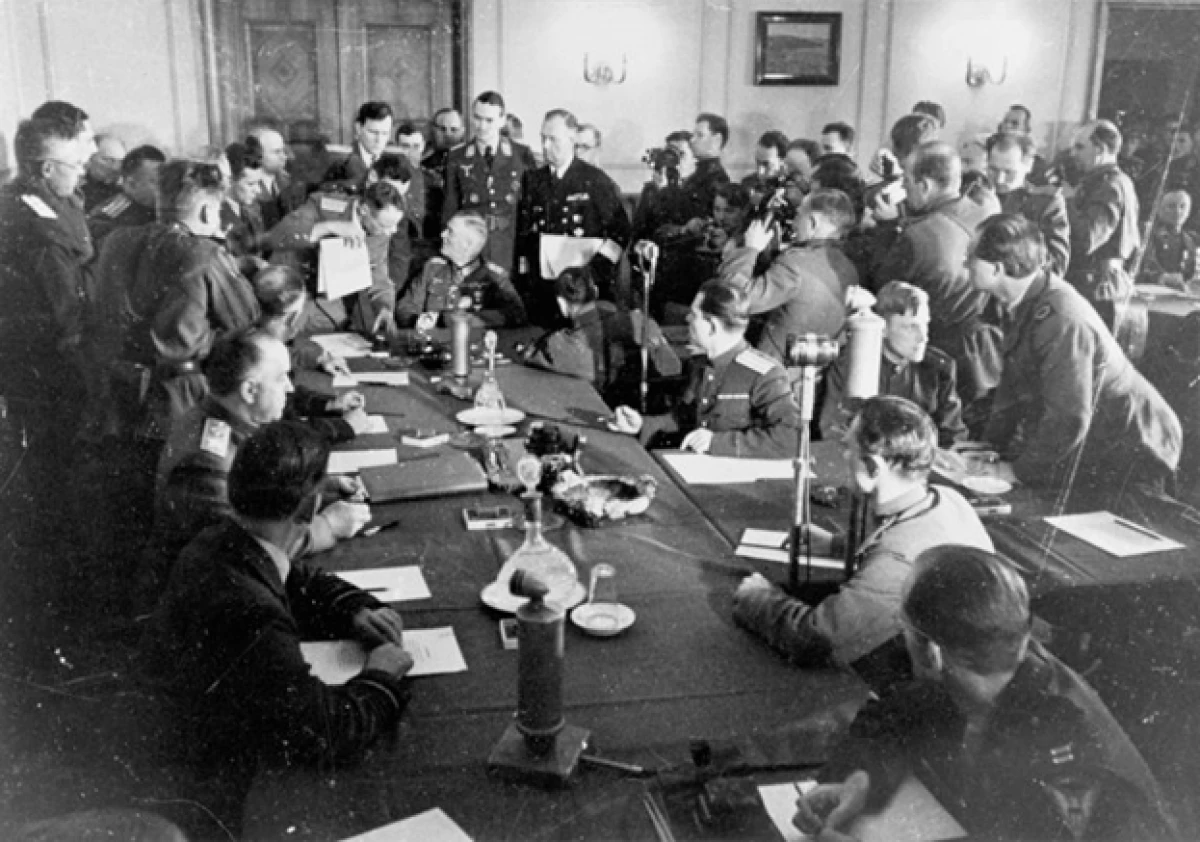
On May 9, 1945, photographers at the Wehrmacht headquarters in Berlin-Karlshorst documented the signing of the German Instrument of Surrender by Field Marshal Keitel.
It has been exactly 81 years since the last fascist signature was placed on behalf of the German state at that ceremony.
After the imperial death of the Third Reich, many walls were erected across Europe. The barriers built to prevent attacks by barbarian tribes coming from north of the Roman Empire had never been stronger. On the two sides of the Berlin Wall, the same people, who fiercely hated one another, lived under different systems and lifestyles. Perhaps Hugo Waterloo described this kind of hostility and hatred between peoples most perfectly in his writings.
But although the fire of German nationalism that dragged all the peoples of Europe and the world into the merciless flames of hell was extinguished, its ashes have continued to remain.
It is possible to see in any analysis of social media that nostalgia for fascism and the longing with which Hitler is remembered are signs that a suppressed sentiment continues to exist and could spread its wings at the first favourable opportunity.
Those very possibilities are now taking shape amid today’s regional and global conditions.
It is true that Marx said this at the time about the internationalists, who were cousins of the National Socialists, but danger is danger, and regardless of how different its perpetrators may be, “a spectre is haunting Europe...”
Russia–Ukraine war disrupted the political order
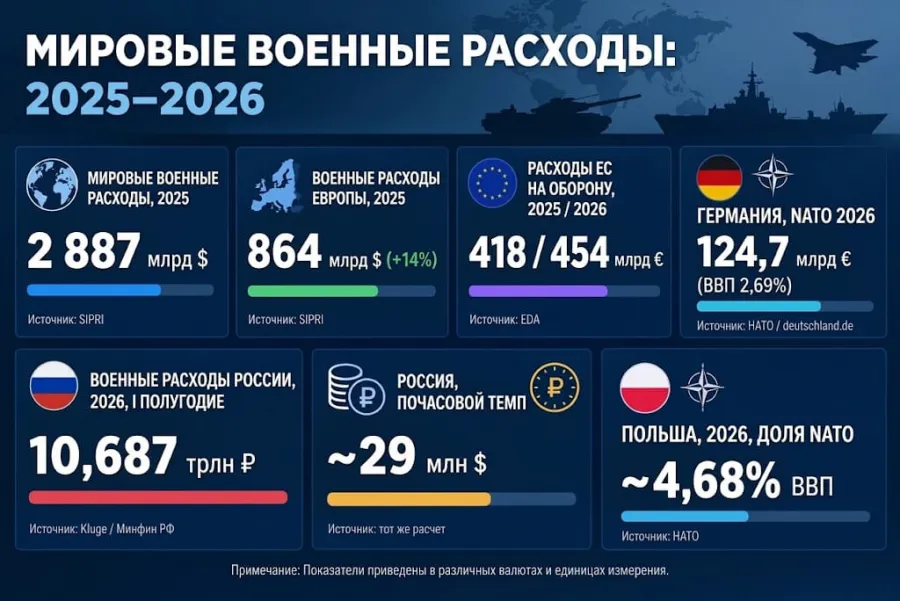
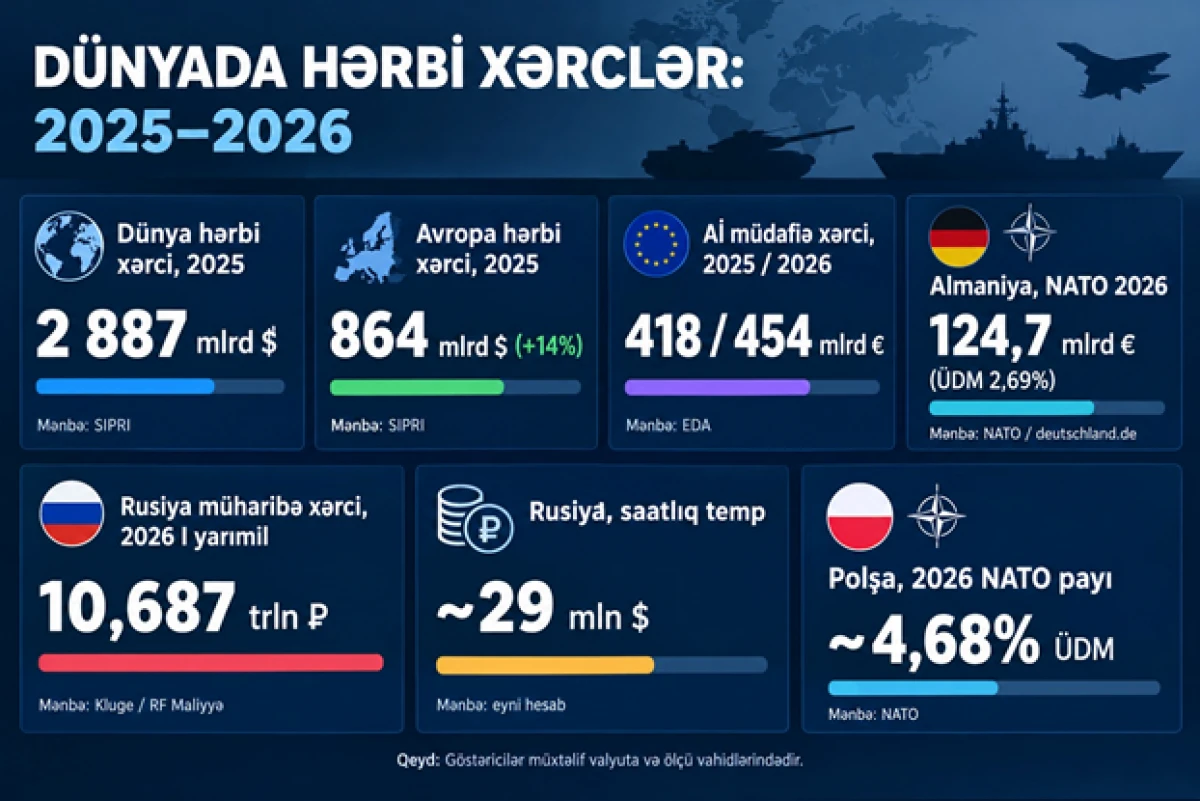
Since 2022, Europe’s security architecture has, for the first time since the Cold War, been turned so openly into a weapon. According to SIPRI, global military spending reached $2.887 trillion in 2025, marking the 11th consecutive year of growth. Europe alone spent $864 billion, an increase of 14% in one year. The EU’s 27 member states spent €418 billion in 2025, with the 2026 projection standing at €454 billion.
Russia, meanwhile, has placed the war at the centre of its state apparatus. Military spending in 2025 was estimated at approximately 7.5% of GDP, or around 16 trillion rubles. In the first half of 2026, federal spending related to the war amounted to 10.687 trillion rubles (approximately $123 billion), equivalent to roughly $29 million per hour. This accounts for 43.8% of federal budget expenditure and nearly 57% of its revenue. The state is not financing the war. The state is becoming the war.
Is the Russia weakened by Ukraine in the crosshairs?
Our view is that Ukraine is not destroying Russia; it is making it expensive and exhausted, and an exhausted empire becomes the next target. The figures show exhaustion, not the next target. Moscow has increased military spending more than fivefold compared with 2021, but the economy is heading toward decline, the deficit is growing and human resources are being depleted. There is weakening. There is no automatic “map of the next attack”.
Will Poland be targeted next?
Since 1945, the forcible alteration of borders had been a taboo in Europe. That taboo was shattered after February 2022. Over four years, the war has rewritten the economics of warfare. According to a January 2026 report by CSIS, total casualties on both sides of the war are approaching 2 million. Russia alone has suffered 1.2 million casualties, including as many as 325,000 deaths. These are figures no major power has experienced since World War II. Ukraine is estimated to have suffered 500,000–600,000 casualties, including up to 140,000 deaths.
The figures on the economic front are also stark. Russia spent approximately half of its state budget in 2025, more than $276 billion, on the military. At the same time, growth fell to 0.6%, while production is declining. CSIS describes this as an “extraordinary price for minimal gains”.
A weakened Russia is the target, Poland is the next stop, and the final blow will come from Germany
This thesis has been repeated in discussions on European security in 2023–2025. The logic is as follows: Russia is being exhausted in Ukraine, while the West is strengthening NATO’s eastern flank by weakening it. In spring 2026, CSIS noted that Russia was suffering 30,000–34,000 casualties per month, while it was able to recruit only 27,000 new soldiers. In other words, losses exceed recruitment.
Poland plays the role of a “shield” in these narratives. Germany, meanwhile, becomes the destination of the “final blow” metaphor because of its economic and technological weight. However, to draw the historical parallel correctly, it should be remembered that in 1939 Hitler first signed the Molotov-Ribbentrop Pact with the USSR and then launched an attack in 1941. In other words, alliances are temporary, while interests are permanent.
Poland is the side arming itself. According to NATO data, Poland’s defence spending in 2026 is approximately 4.68% of GDP. Lithuania is at 5.33%, Estonia at 5.10%, and Latvia at 4.92%. The eastern flank is a zone fortifying its borders in anticipation of an attack. Although there is no visible military plan to write Poland down as the “next victim”, what does exist is fear and mobilisation.
Will the Germans deliver the final blow?
What Germany is doing is not preparing for an attack, but closing a 30-year gap. The figure reported to NATO for 2026 is €124.7 billion — 25.5% more than the €99.3 billion recorded in 2025, and equivalent to 2.69% of GDP. Germany has the largest defence expenditure in the EU after the United States. Defence-related spending plans for 2026–2030 are measured in hundreds of billions. Although there is no evidence of a “New Reich”, we can see the delayed revival of the Bundeswehr following the war in Ukraine.
Will the Germans set out with the Jews this time?
After 1945, the official policy of the German state was built around opposition to antisemitism, while support for Israel was presented for many years as a “reason of state”. This is a historical irony, but it does not automatically mean “a new alliance, an old spirit”. Election results, nostalgia on social media and foreign policy are not the same thing. Although it may be difficult to merge them into a single sentence, the emergence of Jews as a strong force on the German side in Europe, particularly, may change the tradition, but it keeps fascism intact as it is.
Fascism is winning, but not Germany
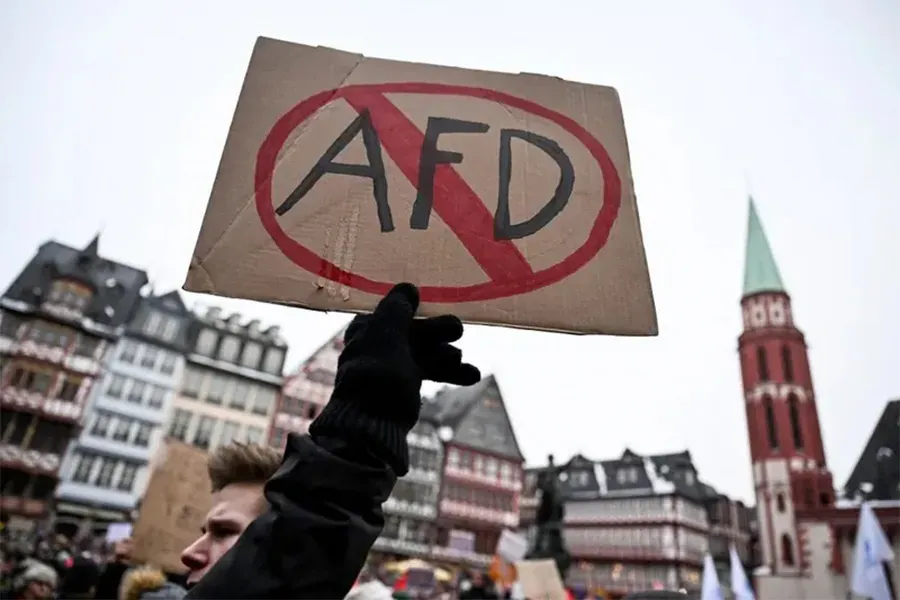
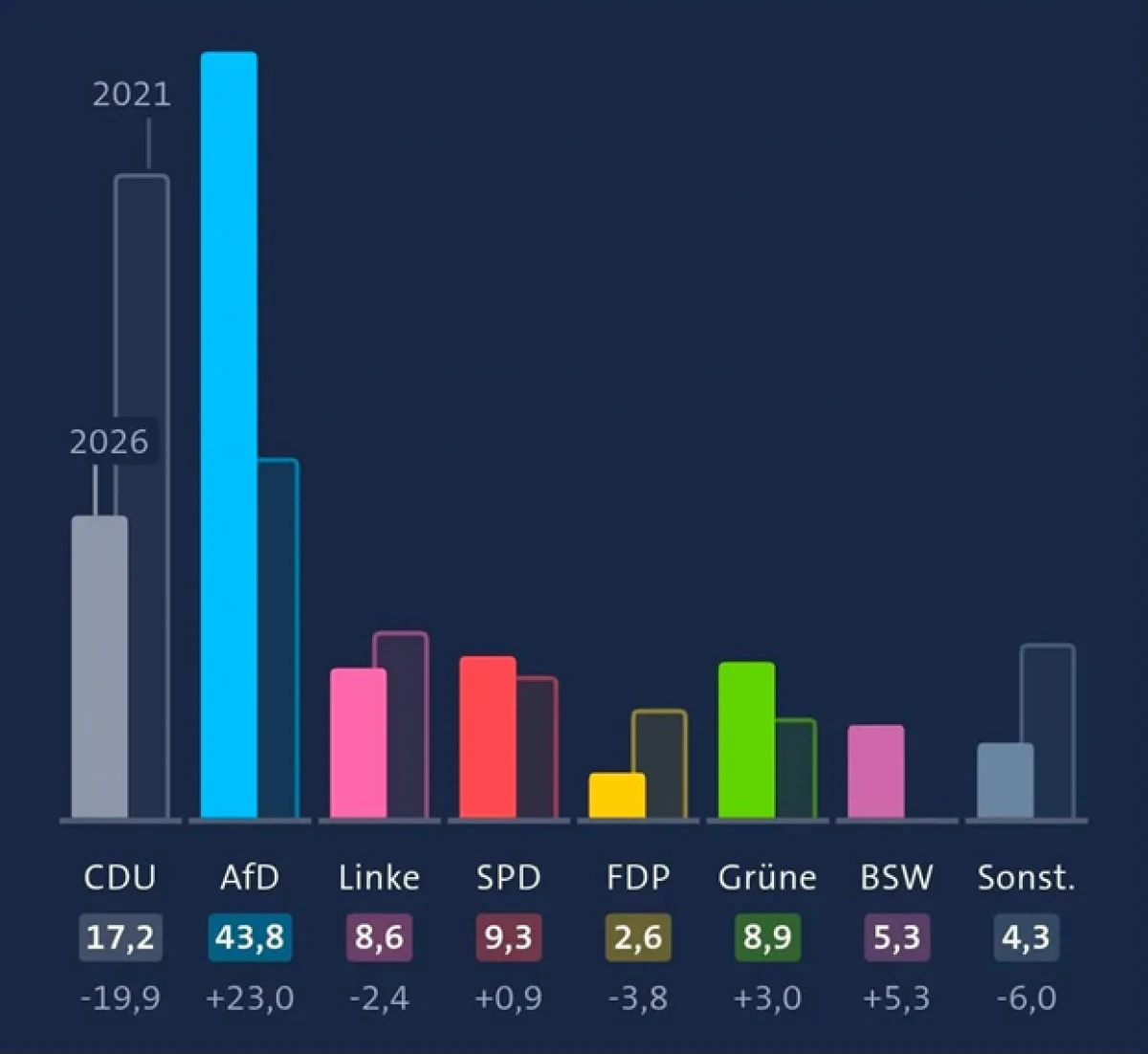
In Saxony-Anhalt, the AfD received 43.8% of the vote and won 38 of 41 constituencies, but with 39 of the 83 seats, it still failed to form a government on its own. We can see the historical taboo being shaken.
The political and personal identity of AfD leader Alice Weidel is also highly controversial.
She is opposed to homosexuals, although she herself is a lesbian.
She is opposed to immigration, although her partner is an immigrant.
She is opposed to homosexuals adopting children, although she herself has two adopted daughters.
She acts as a German nationalist, although she lives in Switzerland.
There is another interesting conclusion:
The Germans started World War I.
Nazi Germany started World War II.
With the support of the wealthy and America, they are bringing the Nazis back to power and pushing the world toward World War III.
The German state, which has a Nazi past and claims to have confronted its history, is once again being reshaped by new political waves.
Will history fail to forgive this time?
Yes, with Russian support, the nationalists are on the verge of opening a path to power. The Russians, who are bringing this wave of separatism to governments across Europe, aim to divide the front facing them. The AfD leader is currently saying that first we should provide our own nation with gas and then think about Europe. What is there that we have not been able to divide with Russia?
After all, we saw a similar experience in the Molotov-Ribbentrop Pact; just two years later, the Germans launched their blitzkrieg toward Moscow.
Today, we can already see that the AfD will most likely change sides.
Germany will deliver the deadly blow to Ukraine, Poland and Russia.
But how close are we to a world war according to the figures and data? After looking at them as well, we can make our judgement once again:
Aziz Alibayli
Researcher in international relations
PHOTOS