Pashinyan’s alleged five-year plan concerning Baku comes under scrutiny
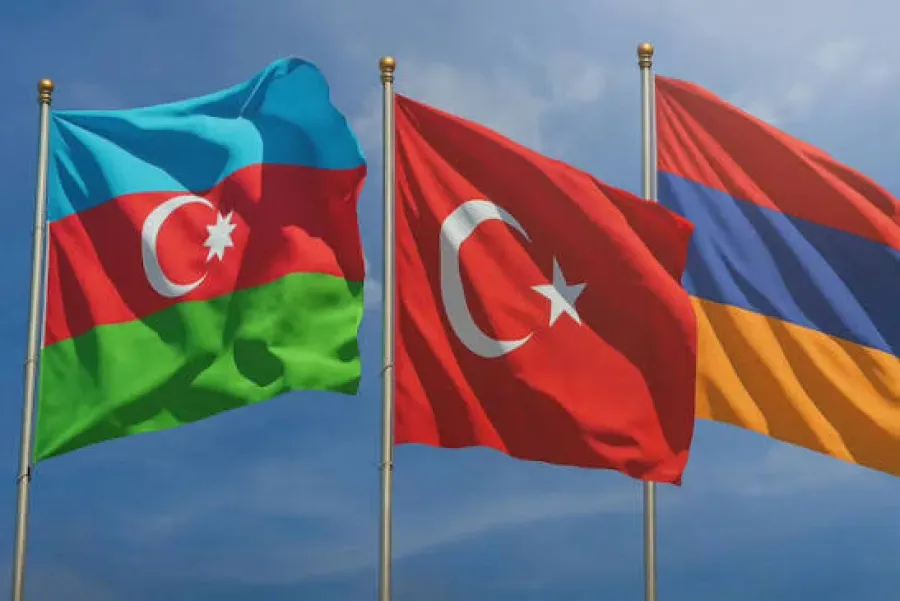
Foreign Minister Ararat Mirzoyan’s repeated suggestions that the border with Türkiye could open at any moment, alongside Prime Minister Nikol Pashinyan’s plan to defer the signing of a peace agreement with Azerbaijan until 2031, are presented in this analysis as interconnected parts of the same strategy. The author argues that Armenia’s leadership wants to open its border with Türkiye before reaching an agreement with Baku, thereby gaining economic breathing room and weakening Azerbaijan’s leverage in negotiations.
As for rumours and artificial excitement on social media, the idea that a few statements or provocations could undermine the Türkiye–Azerbaijan partnership — a relationship that even an empire such as the Soviet Union failed to divide — is, in the author’s view, nothing more than wishful thinking. Given the Shusha Declaration and the two countries’ shared strategic interests, the assumption that Ankara would sideline Baku and embrace Yerevan independently is portrayed as another unrealistic expectation on Armenia’s part.
The issue, the author argues, is not whether the brotherly relationship will withstand a test, but how to interpret Yerevan’s moves, which are described as attempts to buy time.
Let us examine what may be happening behind the scenes.
Why did Pashinyan put forward the date of 2031?
At a Cabinet meeting, Pashinyan identified the signing and ratification of a peace treaty as a key objective of the government programme for 2026–2031. Shortly beforehand, he had promised to hold a referendum and move towards peace immediately after the election. The author identifies three main reasons for this shift and the extension of the timeline to 2031.
Constitutional obstacle and fear of a referendum
Baku’s demand, as described in the article, is clear: references in Armenia’s Constitution to the Declaration of Independence, which the author interprets as containing territorial claims to Karabakh, must be removed. This would require a nationwide referendum.
The author argues that Pashinyan understands that holding such a referendum within the next year or two could allow the opposition and revanchist groups to derail the process. Losing the referendum, the article claims, could spell the end of both the peace process and his government. For this reason, the author suggests, Pashinyan is attempting to buy time under the pretext of preparing public opinion.
Border and enclave manoeuvring
According to the article, Yerevan is deliberately complicating the process by advancing conditions such as ensuring that no enclaves remain and postponing land exchanges until after delimitation.
The author characterises the prolongation of such technical issues as a diplomatic attempt to stretch the process out for years.
An election strategy aimed at the domestic audience
The author argues that Pashinyan’s 2031 target is intended primarily for voters at home rather than foreign audiences. The message, according to this interpretation, is: “I need another term in office to complete the peace process.”
The article suggests that, rather than resolving the peace issue immediately, Pashinyan intends to turn it into a guarantee of his own political survival.
What is behind Mirzoyan’s urgency over opening the border “tomorrow”?
Foreign Minister Mirzoyan’s repeated assertion that “we could wake up one morning and find that the border has opened”, along with his references to contacts in Kars and the historic Ani Bridge, is presented as deliberate rather than coincidental.
The logic, according to the author, is straightforward.
If the peace process and the reopening of communications with Azerbaijan are delayed until 2031, Armenia does not want to remain isolated and face further economic pressure. Yerevan is therefore seeking an alternative economic outlet, which it hopes to secure through an early opening of the border with Türkiye.
The author argues that Armenian diplomacy believes that even partial normalisation with Türkiye before reaching a peace agreement with Azerbaijan could reduce Armenia’s economic and political dependence on Baku. Through this approach, Yerevan is allegedly seeking to signal to both Baku and Moscow that it has alternative routes available, thereby strengthening its position at the negotiating table.
The article concludes that there is no unexpected development here. Rather than abandoning peace altogether, the author argues, Pashinyan’s team is attempting to gain time and reshape the terms of a settlement to its own advantage.
The alleged plan is to delay a final agreement with Baku until 2031 to secure room for manoeuvre at home, while using Mirzoyan’s statements to persuade Ankara to open the border unilaterally. However, given Ankara’s stated principle that full normalisation with Yerevan cannot take place without an agreement with Baku, the author considers it unlikely that Armenia’s strategy will work as intended.
Ismayil Shahli