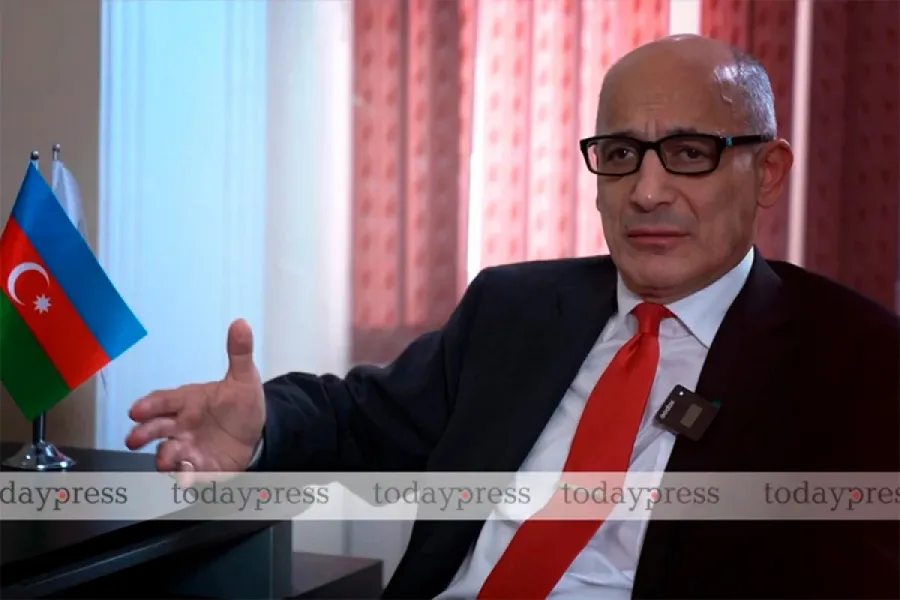

“The Caucasus is not a Russian sphere of influence” — Ramis Yunus
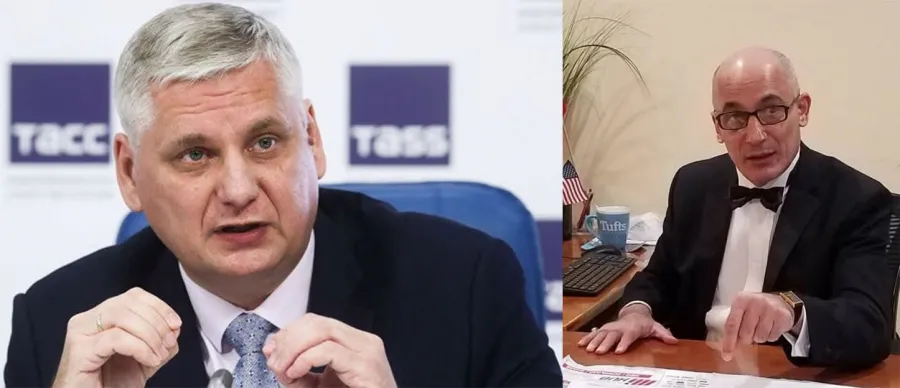
A Response to Markedonov and Those Who Still Live in an Empire
Sometimes, in order to understand a state’s true intentions, there is no need for secret documents, diplomatic leaks, or hours-long meetings of analytical think tanks. It is enough for someone from the political establishment to momentarily abandon the customary caution and say aloud what is usually wrapped in diplomatic packaging.
In my view, that is precisely what happened with Russian political analyst Sergei Markedonov in his recent interview with one of the Armenian television channels.
Mr. Markedonov, known for his pro-Kremlin positions, speaking about relations between Russia and Azerbaijan, stated that there are “systemic disagreements” between the two countries because Azerbaijan allegedly seeks to “occupy Russian spheres of influence.” He then uttered a phrase that, in essence, transforms his remarks from an ordinary political-science commentary into a political warning.
I quote: “From my point of view, if I were the head of state, I would advise Ilham Aliyev not to be too stubborn on this path, because the Ukrainian crisis, the conflict, will end one way or another anyway, and Russia will have more time and attention for the Caucasus, etc., and there may be some unpleasant surprises here".
There you have it. A Russian political analyst is advising the president of a sovereign state “not to be too stubborn” because at some point Russia will have more time for the Caucasus, after which “unpleasant surprises” may follow.
But let us pause for a moment and ask a simple question: what exactly is the President of Azerbaijan supposed to stop doing?
Is he supposed to stop defending his country’s sovereignty, pursuing an independent foreign policy, protecting Azerbaijan’s national interests, developing relations with Türkiye, supporting Ukraine, strengthening Azerbaijan’s position in the South Caucasus, or perhaps ask Moscow for permission regarding what foreign policy his own country should pursue?
This is precisely where the main meaning of Markedonov’s statement becomes apparent.
Moscow’s problem is not at all that Azerbaijan is “occupying Russian spheres of influence.” The problem is that Azerbaijan no longer recognizes Russia’s right to control these “spheres of influence".
Now let us examine the expression itself — “Russian spheres of influence.” What is a Russian sphere of influence in the Caucasus, who gave it to Russia, and where is the document according to which the South Caucasus constitutes a Russian sphere of responsibility? And most importantly, why does a Russian political analyst speak about the Caucasus in the language of ownership?
This is where the very imperial grimace emerges, sometimes concealed behind polished phrases about “geopolitical interests,” “historical responsibility,” “traditional ties,” and “regional security".
The Caucasus is not a Russian sphere of influence, Azerbaijan is not a Russian sphere of influence, Armenia is not a Russian sphere of influence, and Georgia is not a Russian sphere of influence.
These are independent states with the right to determine their foreign-policy priorities, alliances, and relations with other centers of power independently. And if Moscow considers the emergence of independent states around its borders to be a “problem,” the problem does not lie in those states. The problem lies in Russian political philosophy itself.
Markedonov effectively let slip something else.
He said that Ukraine would “one way or another” end its conflict with Russia, after which Russia would have “more time and attention for the Caucasus.” This is a remarkable formulation because, quite inadvertently, it reveals the underlying logic: the Caucasus is regarded as a direction Russia will deal with once its resources are freed up after Ukraine.
But the Caucasus is not the next item on Russia’s foreign-policy agenda, nor is it territory that Moscow can put on pause and then reopen when it has more time.
The Caucasus states have their own history, their own interests and, most importantly, their own agency. And it is precisely the word “agency” that appears to be particularly irritating to the Russian political elite today.
More than three decades have passed since the collapse of the Soviet Union. Yet some representatives of the Russian political establishment still think as though the USSR never disappeared.
Forms change, words change, the names of leaders change, and even the political system changes, but the attitude toward neighboring countries remains the same.
Under Gorbachev it was called one thing, under Yeltsin another, under Putin a third, but at its core the same idea remains: Russia has special rights over the space surrounding it.
This is precisely why I have written for many years that Russian imperialism runs far deeper than the specific figure of Vladimir Putin, because it was not Russia’s current president who invented the Russian empire; he merely gave it a modern form.
This is also why I have always been cautious toward that segment of the Russian liberal milieu which, after emigrating to the West, attempted to present itself as the complete opposite of the Kremlin.
Of course, there are different people and different views among Russian liberals. But historically, a significant part of the Russian political environment — governmental, liberal and academic alike — has been united by one fundamental assumption: the former territory of the Russian Empire or the Soviet Union should remain an area of Russia’s special interests.
The difference is often merely in the method used to achieve this goal.
Some prefer tanks, others diplomatic pressure, others information influence, while still others speak of “historical responsibility” or employ academic terminology.
But if all of this rests on denying a neighboring state the right to determine its own future independently, then we are dealing with the same imperial logic. And here Markedonov proved extremely useful because he removed the academic packaging and said plainly: if Russia is currently occupied with Ukraine, it will later have more time for the Caucasus, and therefore the President of Azerbaijan should “not be too stubborn".
That is no longer political science; it is the language of a superior addressing a subordinate.
But there is one problem, Mr. Markedonov: Azerbaijan is not subordinate to Russia and never will be again.
Today’s Azerbaijan is no longer the Azerbaijan that the Russian political elite was accustomed to seeing in the 1990s or early 2000s.
Over the past decades, our country has come a very long way.
Azerbaijan has strengthened its state institutions, economy, military, diplomatic standing, transport infrastructure and international ties. And following the restoration of Azerbaijan’s territorial integrity, the geopolitical architecture of the South Caucasus itself has changed.
The Russian peacekeepers who arrived in Karabakh following the 2020 agreement left the region in 2024. This occurred after Azerbaijan restored control over its internationally recognized territory, and after that it became definitively clear that the previous configuration of the South Caucasus no longer exists.
But Moscow apparently still does not want to come to terms with this. Hence the talk of “Russian spheres of influence", the irritation over Baku’s independent policy, the painful reaction to the strengthening of Azerbaijani-Turkish relations, attempts to explain to Azerbaijan what foreign policy it should pursue, and finally, today’s information campaign.
I have written repeatedly about how the Kremlin’s information machine operates.
First, the most vocal and irresponsible representatives of the propaganda establishment are sent forward — the very people who have long been perceived in the Russian information space as “Nightingale droppings”, people who can allow themselves virtually anything: threats, insults, calls for pressure on Azerbaijan, and sometimes statements that cross every boundary of elementary political decency.
Then, when the state and public reaction from Azerbaijan becomes too strong, people of a different type appear — more respectable, more cautious, bearing academic titles, using the proper terminology, and wearing the expression of someone who is supposedly merely “analyzing processes".
And that is when a “warning” appears instead of a direct threat.
Not “we are threatening you,” but “I would advise you not to be too stubborn”; not “Moscow will exert pressure,” but “after Ukraine, Russia will have more time and attention for the Caucasus”; and not “there will be problems,” but “there may be some unpleasant surprises".
But if the diplomatic packaging is removed, the substance remains the same, because this is a warning. And it is addressed not only to the President of Azerbaijan but also to Azerbaijani society as a whole: while Russia is occupied with Ukraine, you may allow yourselves too much, but once Ukraine ceases to be the main direction of Russian policy, Moscow will remember the Caucasus again.
And here I would like to ask Mr. Markedonov one simple question: what exactly is supposed to happen to Azerbaijan after the war in Ukraine ends?
Should Azerbaijan abandon its own foreign policy, stop supporting Ukraine, give up its strategic partnership with Türkiye, and once again recognize Russian mediation as a mandatory condition of regional policy — or simply cease to be an independent state?
If the answer to these questions is yes, then everything becomes perfectly clear.
Moscow’s problem is not specific actions by Baku, but the very existence of an independent Azerbaijan. And here we approach the most painful point for Russian imperial thinking.
Azerbaijan today is no longer an object of someone else’s geopolitics; it is becoming a subject of geopolitics. These are fundamentally different things.
A small state tries to survive between centers of power, whereas a middle power, such as Azerbaijan, is already capable of influencing the regional architecture. And this is precisely why Azerbaijan’s transformation from a small post-Soviet state into an independent regional actor is perceived so painfully by some Russian politicians.
When Azerbaijan was weaker, this did not particularly concern anyone, because Moscow considered itself the principal mediator in the Karabakh issue, and this was regarded as normal.
When Russian peacekeepers were stationed in Karabakh, this was presented as a natural component of regional security.
But when Azerbaijan restored its territorial integrity, the Russian peacekeepers left, and official Baku began independently shaping a new regional architecture, it suddenly emerged that Azerbaijan was supposedly “occupying Russian spheres of influence.”
No, Mr. Markedonov!
Azerbaijan is not driving anyone out of someone else’s home; it has simply stopped regarding someone else’s home as its master’s. And that is an enormous difference.
There is another point that cannot be overlooked, and that is the tragedy involving the Azerbaijani civilian aircraft AZAL.
Let me remind you that on December 25, 2024, an Azerbaijan Airlines passenger aircraft operating the Baku–Grozny flight was shot down by Russian air defense forces and crashed near Aktau. Thirty-eight people were killed and 29 survived. Azerbaijan insisted on establishing responsibility, holding those responsible accountable, receiving an apology and obtaining compensation.
The Russian side resisted this persistently for a year and a half, and throughout this period a genuine anti-Azerbaijani hysteria unfolded in Russia. Yet, ultimately, Russia acknowledged its responsibility, apologized and paid compensation. Despite this, relations between Baku and Moscow have been experiencing a serious crisis since the tragedy.
And instead of calmly and responsibly addressing Azerbaijan’s questions, a significant part of the Russian information space continues to activate its familiar machinery of pressure. Yet it is precisely in such situations that a state’s attitude toward its neighbor is tested.
One can speak endlessly about the friendship of peoples, recall a shared history, and talk about centuries-old ties, but genuine friendship is tested not by ceremonial speeches, but by the ability to respect the dignity of another state when a serious conflict arises between you.
And this is precisely what Azerbaijan is demanding today: respect for itself as a sovereign state — not special treatment, not privileges, not concessions, but respect. And this, it seems, is the most difficult thing for some representatives of the Russian political establishment.
Because respect for a neighbor’s sovereignty automatically means abandoning the imperial right to give it instructions. This means having to acknowledge one simple fact: the era when Moscow could determine the fate of the South Caucasus without the consent of the Caucasian states themselves is over.
And this is not an anti-Russian position; it is simply the reality of the 21st century. Moreover, Russia itself should have been the first to understand this reality, because the full-scale aggression against Ukraine became a tragic demonstration of what happens when an attempt is made to force a neighboring country back into one’s sphere of influence.
When a state does not recognize the agency of its neighbor, it inevitably begins to perceive that neighbor’s independence as a threat, attempts to restrict that independence, and then wonders at the resistance.
History has already demonstrated the price of such a policy.
Does anyone really think that after everything that has happened between Russia and Ukraine, my native Azerbaijan should be frightened by the statement that Russia will have “more time for the Caucasus” after Ukraine?
No. On the contrary.
Such statements only strengthen the conviction that an independent policy is necessary, because a state that is openly told, “Do not be stubborn, otherwise there will be surprises,” has only one reasonable response — to strengthen its independence even further.
And here I would like to address Mr. Markedonov directly: You said that if you were the “boss,” you would advise Ilham Aliyev not to be stubborn. But, Sergei Alexandrovich, you are not President Aliyev’s superior, Moscow is not Baku’s superior, and the President of Azerbaijan is not obliged to obtain Russia’s permission regarding the foreign policy his country should pursue.
This is not a question of President Aliyev’s character, nor a question of his “stubbornness,” nor a matter of emotions. It is a question of state sovereignty. And if Russian political analysts still call this “stubbornness,” it means they simply have failed to notice that the historical era has changed.
Azerbaijan no longer asks for permission, and apparently this is what irritates the Kremlin most.
But there is something even more important.
Azerbaijan does not seek to become an anti-Russian, anti-American or anti-Western state, nor does it need to become “pro-someone.”
Azerbaijan needs to remain pro-Azerbaijani, and this is the essence of modern Azerbaijani foreign policy.
Baku can cooperate with Moscow wherever this serves Azerbaijan’s interests; it can cooperate with Washington, Brussels, Ankara, Beijing, Tehran and Kyiv.
But none of these centers of power should be granted the right to dictate Azerbaijan’s foreign-policy course, because multi-vector foreign policy is not about moving back and forth between other people’s camps; it is the ability to choose one’s own direction. And this is precisely why Azerbaijan today represents a far greater challenge to the old Russian geopolitical model than Azerbaijan did twenty or thirty years ago.
Because a strong and independent Azerbaijan undermines the very idea of Russia’s monopolistic presence in the Caucasus, and it is precisely this monopoly that Markedonov effectively calls “Russian spheres of influence".
But history does not ask permission from empires. They may spend a long time convincing themselves that the surrounding world is their “sphere of interests,” write analytical reports, broadcast television programs, send propagandists forward, and then send political analysts after them with more academic formulations.
But there comes a moment when reality becomes stronger than rhetoric. For the South Caucasus, that moment has already arrived. And if Moscow genuinely wants to maintain normal relations with Azerbaijan, it will have to understand one simple thing.
Baku can no longer be addressed through hints of “surprises”; it must be addressed in the language of equality. Not because Azerbaijan seeks confrontation with Russia, but because Azerbaijan is no longer the state that can be presented with a choice: submit or face consequences.
Today, the choice lies on the other side.
It is Moscow that must decide whether it wants relations with Azerbaijan as relations between two sovereign states — or whether it will continue to speak to it as though it were a former part of an imperial space. The first path leads to cooperation; the second leads to permanent crisis.
And if Mr. Markedonov genuinely wants to engage in political analysis, I would advise him to begin not with the question of why Azerbaijan is “being stubborn,” but with another question: why does Russia still believe it has the right to demand submission from neighboring states?
This is a question to which the Russian political elite has long needed to provide an honest answer, because until that answer is given, all talk of “Russian spheres of influence,” “traditional interests,” and “unpleasant surprises” will merely appear to be the modern vocabulary of an old imperial policy.
And an old empire can be dressed up as a modern political analyst as many times as one likes, yet it can still be recognized by one defining characteristic. An empire always regards the freedom of its neighbor as its own geopolitical problem. And perhaps this is the principal lesson of the entire story.
Azerbaijan is not obliged to prove to Moscow that it is strong enough to be independent. It is Moscow that must finally prove to Azerbaijan that it is capable of respecting its independence. The era of imperial “spheres of influence” has passed, and the era of sovereign states has arrived.
As the great Victor Hugo wrote: “One can resist the invasion of armies, but one cannot resist the invasion of ideas whose time has come.”
Ramis Yunus
Professor of Political Science Khazar International University