
Is Russia losing Armenia? Pashinyan may take the case to court
Geopolitical fault lines in the South Caucasus are shifting once again, and this time the focus of tensions is the region’s strategic transport arteries.
With growing diplomatic and economic support from the West, Yerevan has recently brought its efforts to end Moscow’s long-standing management of Armenian Railways, operated by the Russian company South Caucasus Railway, into the open. Scenarios involving the termination of the concession agreement or the transfer of control to a third party are being considered, but the Kremlin has no intention of relinquishing this strategic lever.
This confrontation is not merely a legal or economic dispute. It represents another phase in Armenia’s attempt to move out from under Russia’s security and economic umbrella. Could the deepening dispute over railway control become the final breaking point in Russian-Armenian relations? What options does Moscow have to respond to Yerevan’s moves, and which economic, political and security levers could the Kremlin use?
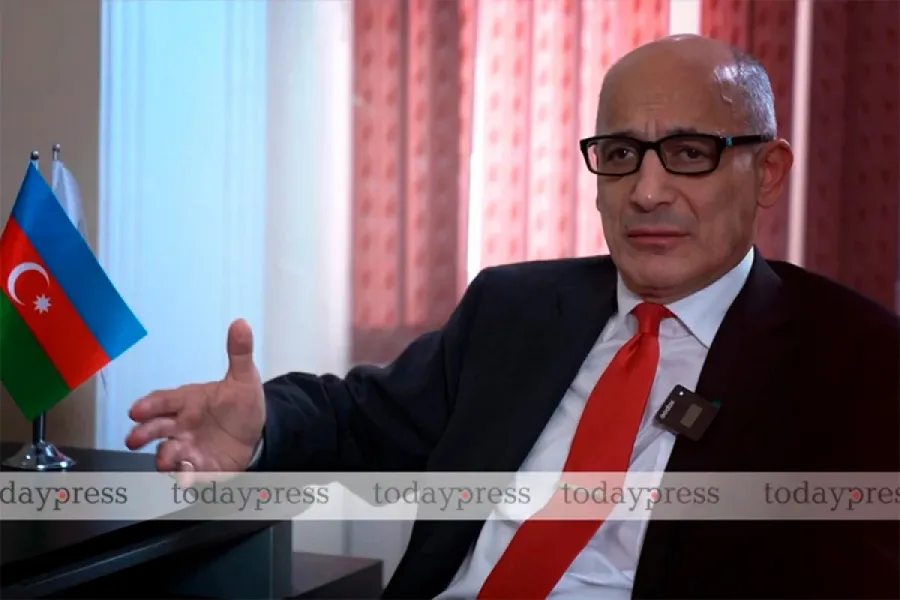
Commenting on the issue to TodayPress TV, political analyst Yusif Bagirzade said that the disagreement over the management of Armenia’s railways reveals the geopolitical dimension of relations between Moscow and Yerevan, in addition to their economic aspects.
“As is known, since 2008, Armenia’s railway network has been operated by Russia’s South Caucasus Railway company under a 30-year concession agreement. The agreement is due to expire in 2038. In October 2026, Armenian Prime Minister Nikol Pashinyan stated that legal grounds existed for terminating the agreement, while emphasising that he preferred to resolve the issue amicably. He proposed transferring management rights to a third country acceptable to both sides.
“The essence of the issue lies in Armenia’s efforts to end its dependence on Russia in certain sectors. Armenia wants to strengthen its transport sovereignty and derive economic benefits from new regional routes. One of Yerevan’s concerns is that international transport projects may be implemented while bypassing Armenian territory. At the same time, Russian management creates difficulties related to sanctions. Particularly in the context of planned transport links between Azerbaijan and Nakhchivan, Armenia is interested in integrating its railway infrastructure into the regional transit system. Under these circumstances, transferring management to an alternative partner such as Kazakhstan, the United Arab Emirates or Qatar could expand Yerevan’s economic and political room for manoeuvre.”
According to the analyst, Moscow does not view the initiative merely as a change to a commercial agreement. The Russian side says it has fulfilled its obligations under the concession and made substantial investments in railway infrastructure. Russian officials have therefore opposed transferring management rights to another country and warned that any infringement of Russian companies’ interests would not go unanswered. This position demonstrates that the railway issue is directly linked to Russia’s economic standing in Armenia and its influence over the South Caucasus transport architecture.
“As for the possibility that this issue could become a breaking point in relations between Russia and Armenia, such a scenario cannot be ruled out. However, it would be wrong to regard it as inevitable at the current stage. Despite tensions in their relations, neither Armenia nor Russia is interested in a complete rupture of ties. Armenia has not yet developed an alternative capable of replacing its economic and security dependence on Russia. Moscow, meanwhile, is compelled to act cautiously, recognising that a complete breakdown in relations could accelerate Armenia’s integration with the West,” Bagirzade noted.
He also believes that an initial step could be to invoke the legal terms of the agreement, seek compensation and take the dispute to arbitration.
“Russia could take such action on the grounds that it has fulfilled its obligations under the concession. Armenia, in turn, could also approach an arbitration tribunal, arguing that Russia has failed to meet its obligations. Armenia’s position is that the situation is not as Russia portrays it. Official Yerevan says Russia has not made the investments in railway infrastructure that it claims and is currently failing to implement the planned measures to diversify the railway network. In July this year, Pashinyan himself said that, for these reasons, they would apply to an international arbitration tribunal and demand $2 billion in compensation from Russia for each year,” he said.
The analyst highlighted economic pressure as a second potential avenue.
“Russia is one of Armenia’s main trading partners, and the two countries are interdependent in areas such as energy, exports and labour migration. Moscow could consider ways to exert pressure on Yerevan through trade restrictions, tighter technical and customs procedures, and the terms of energy cooperation. Nevertheless, I reiterate that, despite the circumstances outlined, it is impossible to claim in advance that specific measures will be taken.
“Another instrument is the ability to influence political and security relations. Moscow could raise other issues within the framework of bilateral dialogue and adopt a tougher diplomatic stance against Armenia’s rapprochement with the West. However, there is no basis for claiming that the railway dispute would automatically lead to the suspension of military cooperation or the severing of all bilateral ties.
“Overall, the railway dispute demonstrates a further weakening of strategic trust in Russian-Armenian relations. Yerevan is seeking to expand its transport independence and access to Western markets, while Moscow is trying to protect its contractual rights and regional position.”
Bagirzade also noted that the head of Russian Railways is expected to visit Armenia in the coming days, with the issue likely to be discussed extensively during the meetings. In other words, the parties are still keeping communication channels open in an effort to manage the confrontation through negotiations. Their next steps will depend on the outcome of those talks.
Giymat Mahir