
“Difficult times” — Ramis Yunus writes...
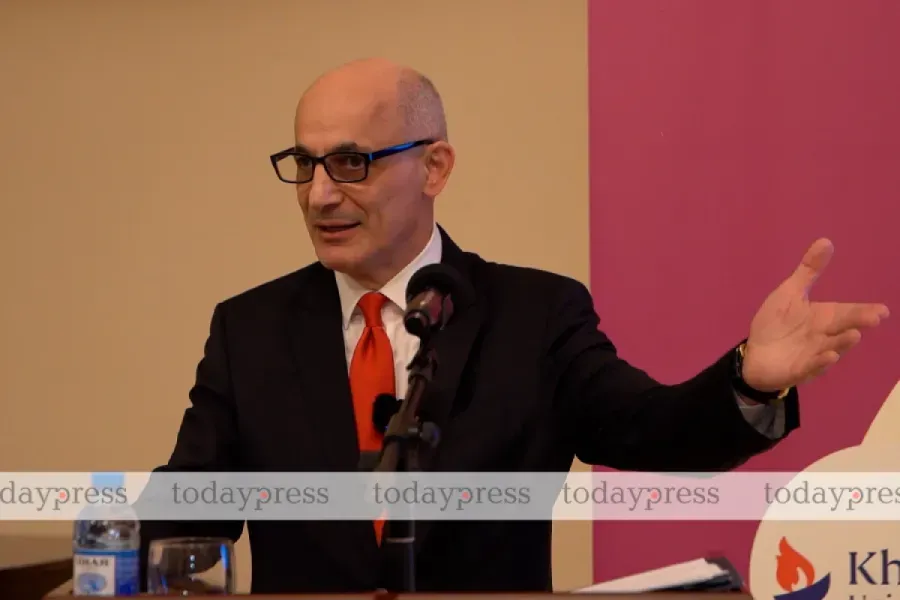
When the powerful forget their principles, the people are forced to prove that their fate is not for sale.
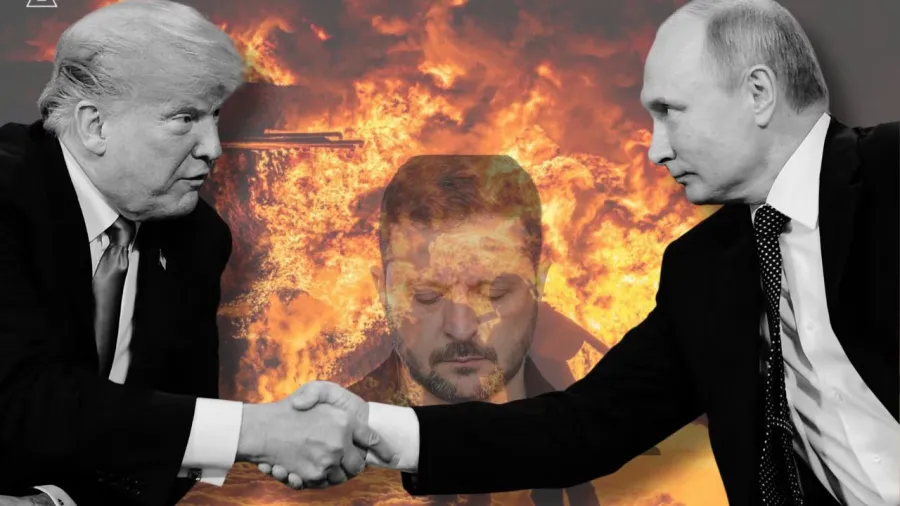
There are moments in history when political statements become something far more consequential than ordinary diplomatic rhetoric. They become a test of resilience—for states, their leaders, and entire nations. Ukraine finds itself at precisely such a moment today, following yet another series of sharp attacks by Donald Trump against Volodymyr Zelenskyy and his statement that Ukraine needs a new leader.
At first glance, this may appear to be another episode in the complicated relationship between Washington and Kyiv. In reality, however, the issue runs much deeper. It is not merely about the personal relationship between two presidents, military assistance, or the terms of a possible end to the war. It is about Ukraine’s right to determine its own political future.
Who should lead Ukraine? When should elections be held, and under what conditions? What compromises are acceptable to end the war, and which ones would merely turn peace into a postponement of the next conflict? These are questions that the Ukrainian people themselves have the primary right to answer, in accordance with their Constitution and laws. No foreign leader, however influential, can claim that right for himself.
The United States is one of Ukraine’s most important partners, and American assistance has played a significant role in Ukraine’s resistance to Russian aggression. Partnership, however, does not confer the right to determine another state’s fate. At a certain point, military, financial, or political dependence must not be allowed to become dependence in matters of national choice.
This is precisely where the fundamental dividing line between allied support and external pressure lies.
Ukrainians may disagree over Volodymyr Zelenskyy and criticise his domestic policies, government decisions, personnel appointments, and mistakes made during wartime. In a democratic society, such criticism is natural and necessary. A president does not become infallible simply because his country is at war. But none of this means that the right to decide who should lead Ukraine passes to the president of the United States.
Criticising their own president is the Ukrainians’ right; appointing a different one for them is not Washington’s prerogative.
It is particularly important for Ukrainians themselves to remember this simple truth today, because external pressure becomes far more effective when it exploits divisions within society.
Ukraine is not an American corporation in which the largest shareholder can decide to replace the chief executive. It is an independent state waging an extraordinarily difficult war to preserve its territory, statehood, and right to make its own choices. Its sovereignty cannot be assessed according to the rules of the real estate market, even if a politician such as President Trump, accustomed to major deals, views international relations primarily through the prism of bargaining.
A country’s territory is not a real estate asset to be traded; a state is not a business project; and a people are not a party that can be presented with predetermined terms and ordered to sign an agreement simply because it suits someone abroad.
Yet there is another dimension to this story that must not be overlooked when discussing strong leaders.
Two years ago, before Donald Trump returned to the White House, I asked myself whether he would prove to be the kind of strong individual described in a well-known aphorism traditionally attributed to Plato: someone capable of navigating difficult times, changing the course of events, and creating the conditions for a more sustainable peace.
Today, that question demands a different answer. A state’s strength and a politician’s leadership qualities are not measured by the volume of their declarations, their confidence in their own infallibility, or their ability to force others to back down. They are measured by their willingness to accept responsibility, withstand pressure, and understand the consequences of their decisions.
When foreign policy becomes a succession of contradictory signals and strategic principles give way to short-term calculations, a legitimate question arises: where does the art of the deal end, and where does responsibility for the fate of millions of people begin?
This question is particularly acute in the case of Ukraine.
If we are to speak of strong leaders in difficult times, February 2022 was the defining test for Ukraine. During the years of its independence, the country had experienced political crises, internal confrontations, economic upheavals, and severe challenges to its statehood. But with the launch of Russia’s full-scale invasion, Ukraine faced a threat to the very existence of its independent state.
And at that moment, President Volodymyr Zelenskyy made a choice that cannot be erased from history.
According to reports at the time, when the American side, led by President Joe Biden, offered him an aircraft and the opportunity to be evacuated from Kyiv, President Zelenskyy did not leave the country. He remained in the capital, demonstrated his willingness to share the danger faced by his people, and took the lead in Ukraine’s resistance to the Russian invasion.
This act had significance far beyond the president’s personal safety. In the first days of the war, when the country’s fate remained uncertain, the head of state’s presence sent an important political and psychological signal: the leadership was not fleeing, the state was not capitulating, and the resistance would continue.
No single person won the war, nor did any one individual alone sustain Ukraine’s resistance. Behind it stand the courage of Ukrainian servicemen and women, the selflessness of volunteers, the work of state institutions, assistance from allies, and the resilience of millions of citizens. Yet, at a critical moment, a leader can either strengthen society’s resolve or weaken it. In February 2022, President Zelenskyy chose to stay and lead the struggle.
This is a historical fact of political significance that must not be diminished because of subsequent disputes over his record in office.
One may assess President Zelenskyy’s decisions before and after the outbreak of the war in different ways, criticise him, and demand answers to difficult questions. But one cannot pretend that, at the decisive moment, he failed to demonstrate personal courage or to assume responsibility for his country.
A strong leader is not someone who never makes mistakes, but someone who does not evade responsibility at a critical moment.
That is why current calls for the replacement of Ukraine’s president cannot be considered outside the context of the events of February 2022. Political memory must not be selective: a person’s actions should not be forgotten simply because their decisions are now unwelcome to some or their continued presence obstructs the political plans of others.
But something else is even more important: Ukraine does not need blind faith in a single politician. It needs confidence in its own state and an understanding that its national destiny cannot depend on the mood of whichever foreign leader happens to be in office.
This is where the question of Ukrainian unity arises.
In recent years, Ukrainian society has experienced numerous internal conflicts. Serious disagreements exist between Zelenskyy’s supporters and opponents. Some people support the president, while others consider his policies mistaken. These differences are real, and there is no point in pretending otherwise.
However, political disputes have a boundary beyond which the question of national interest begins. One can oppose President Zelenskyy while also opposing Russia’s invasion. One can criticise the Ukrainian government while rejecting attempts by outside powers to decide who should lead it. One can demand political change while defending the right of Ukrainians themselves to determine when, how, and under what conditions such change should take place.
Such unity does not mean abandoning democracy. On the contrary, it means protecting the very possibility of democratic choice.
The recent crisis in Polish-Ukrainian relations has already demonstrated how important it is, in difficult times, to distinguish domestic political disputes from national interests. Even when Ukrainians disagree over their own president, external circumstances can remind them that there are issues on which their country must stand as one.
Today, that issue is Ukraine’s right to determine its own future.
If Ukrainians allow external actors to exploit their disagreements in order to impose political decisions, this will establish a dangerous precedent, regardless of who ultimately holds power. Today, external pressure may be directed against President Zelenskyy; tomorrow, it could target any other Ukrainian leader whose position displeases a foreign partner of the day.
Sovereignty cannot depend on the surname of the president. It either belongs to the people or gradually becomes a mere formality.
President Donald Trump’s conduct in relations with Russia also deserves particular attention. His statements, efforts to promote his own model for resolving the conflict, and signals suggesting a possible easing of restrictions on Russian energy supplies raise legitimate questions.
The apparent inconsistency of potential agreements to purchase Russian diesel fuel is especially striking against the backdrop of the sanctions policy against Moscow that Trump himself has supported, including initiatives associated with the late Senator Lindsey Graham. When Washington speaks simultaneously of increasing pressure on Russia while allowing measures that could generate additional revenue for it, this only reinforces the impression that American policy is chaotic and inconsistent.
Here, it is important not to substitute assumptions for facts. Specific decisions concerning supplies, sanctions exemptions, and the substance of negotiations must be assessed on the basis of documents and actual actions, rather than politicians’ statements alone. Nevertheless, the underlying problem is clear. If pressure on Ukraine becomes greater than pressure on the state that launched the war, questions arise about the fairness and sustainability of the proposed settlement.
Peace cannot be built solely on the premise that the victim of aggression must make ever-greater concessions while the aggressor is given an opportunity to consolidate the gains achieved through the use of force. Such an agreement may halt hostilities for a certain period, but it does not, in itself, eliminate the causes of the next crisis.
President Trump’s decisions are undoubtedly influenced by domestic political calculations in the United States. As the midterm congressional elections approach, economic indicators, public opinion, and promises made to American voters become increasingly important. The US president needs to demonstrate results, and ending a protracted international conflict could become part of his political strategy.
However, the interests of the American president and those of the Ukrainian state do not always coincide. What may appear to Washington to be a favourable deal could entail long-term security risks for Kyiv. What the American administration might present as a diplomatic success must still be assessed by Ukrainians in terms of territorial integrity, security guarantees, and the ability to prevent renewed aggression.
This does not mean that Ukraine should reject negotiations or disregard the positions of its allies. On the contrary, diplomacy is essential. But negotiations are meaningful only when Ukraine remains an active participant in the process, rather than an object of agreements concluded by others behind its back.
Ukraine has the right to seek compromises. However, a compromise that deprives a state of the ability to determine its own destiny ceases to be a mere compromise and becomes a threat to its sovereignty.
And here we return once again to the question of strong leaders.
Strength is not the ability to humiliate a partner, confront them with an ultimatum, or force them to make a decision under pressure. Strength means understanding that a short-term political gain may turn into a long-term strategic mistake. It means seeing the real consequences for millions of people behind the language of diplomacy.
If President Trump genuinely wishes to enter history as a leader who helped bring sustainable peace closer, he will have to consider more than his own political timetable and his conception of a favourable deal. He must acknowledge a simple truth: Ukraine is not a bargaining chip in relations between Washington and Moscow. It is an independent state whose people have already paid an enormous price for the right to remain independent.
Ukrainians, too, face a serious choice today. It is not a choice between unconditional support for President Zelenskyy and categorical rejection of his policies. Nor is it a choice between abandoning criticism and succumbing to political division. Rather, it is a choice between preserving their own right to determine their country’s destiny and voluntarily surrendering that right to external powers.
Perhaps this is precisely the moment when Ukrainians need to remember once again that national unity does not arise from complete agreement on every issue. It emerges from an understanding that certain values transcend party loyalties and personal disagreements.
People may debate what the next stage of Ukraine’s development should look like. They may discuss the government’s mistakes, the future of the political system, and the timing of elections. But these discussions must take place according to Ukrainian rules and in accordance with Ukrainian law—not at the demand of a foreign president.
Ukrainians have already demonstrated that they are capable of fighting for their country independently. They have proved this on the front lines, in cities that have endured shelling, through the work of volunteers, doctors, energy workers, and all those who continue to sustain the life of the state under wartime conditions. Their right to determine their own future requires no external permission.
Difficult times do indeed demand strong people. But they require not only strong leaders; they also require strong societies capable of distinguishing political disagreements from threats to national interests.
And if Ukraine is facing yet another test today, its strength should lie not in abandoning a critical assessment of those in power, but in its readiness to defend its right to decide for itself who should exercise that power.
There is a well-known aphorism traditionally attributed to Plato: “Hard times create strong people. Strong people create good times. Good times create weak people. Weak people create hard times.”
Perhaps the central problem of our time is that some politicians confuse strength with the right to dictate to others, and a diplomatic deal with a historic victory.
For Ukraine, however, the principal question today is not who speaks the loudest about strong leaders. The real question is whether the country will be able to preserve its own strength, independence, and right to determine its destiny.
Because sometimes the true mark of strength is not forcing another nation to submit to your will, but recognising its right to choose its own future.
Ramis Yunus
Professor of Political Science
Khazar University