
These European countries depend on Azerbaijan
Following the war in Ukraine, alternative energy routes have become vital for the European Union (EU), which is seeking to minimise its dependence on Russian gas. In this process, the Southern Gas Corridor and Azerbaijan’s natural gas reserves have become one of the key energy sources for countries in South-Eastern and Central Europe.
A total of 10 European countries – Italy, Greece, Bulgaria, Hungary, Romania, Serbia, North Macedonia, Slovakia, Slovenia and Croatia – currently receive Azerbaijani gas through pipeline infrastructure extending from Baku to Italy and interconnectors in Bulgaria.
Official statistics indicate that the geographical reach and volumes of gas exports are expanding. According to official data, Azerbaijan exports natural gas to a total of 16 countries, 10 of which are in Europe.
Preliminary figures for January–September 2026 show that the country’s total gas exports increased by 0.5% compared with the same period of the previous year, reaching 18.4 billion cubic metres. Of this volume, 8.6 billion cubic metres went to Europe, 7 billion to Türkiye, 1.6 billion to Georgia and 1.2 billion to Syria. According to customs declarations, total gas exports amounted to 20.654 billion cubic metres in January–October 2026
EU energy statistics show that the bloc’s gas imports from Russia fell from 150.2 billion cubic metres in 2021 to 36 billion cubic metres in 2025. During the same period, Norway, with 89.3 billion cubic metres (30.9%), and the United States, with 75.6 billion cubic metres (26.2%), became Europe’s main gas suppliers. Azerbaijan supplied 11.3 billion cubic metres in 2025, accounting for 3.9% of the EU’s total gas imports. Although this figure represents approximately 4% of the overall European market, stable pipeline supplies are an important element of energy security for the Balkan and Central European countries.
Since the Trans Adriatic Pipeline (TAP), the European segment of the Southern Gas Corridor, began commercial operations, it has delivered more than 60 billion cubic metres of natural gas to Europe by July 2026, including over 50 billion cubic metres to Italy alone. In addition, the first phase of the pipeline’s capacity expansion has been fully commissioned, providing an additional annual transport capacity of 1.2 billion cubic metres.
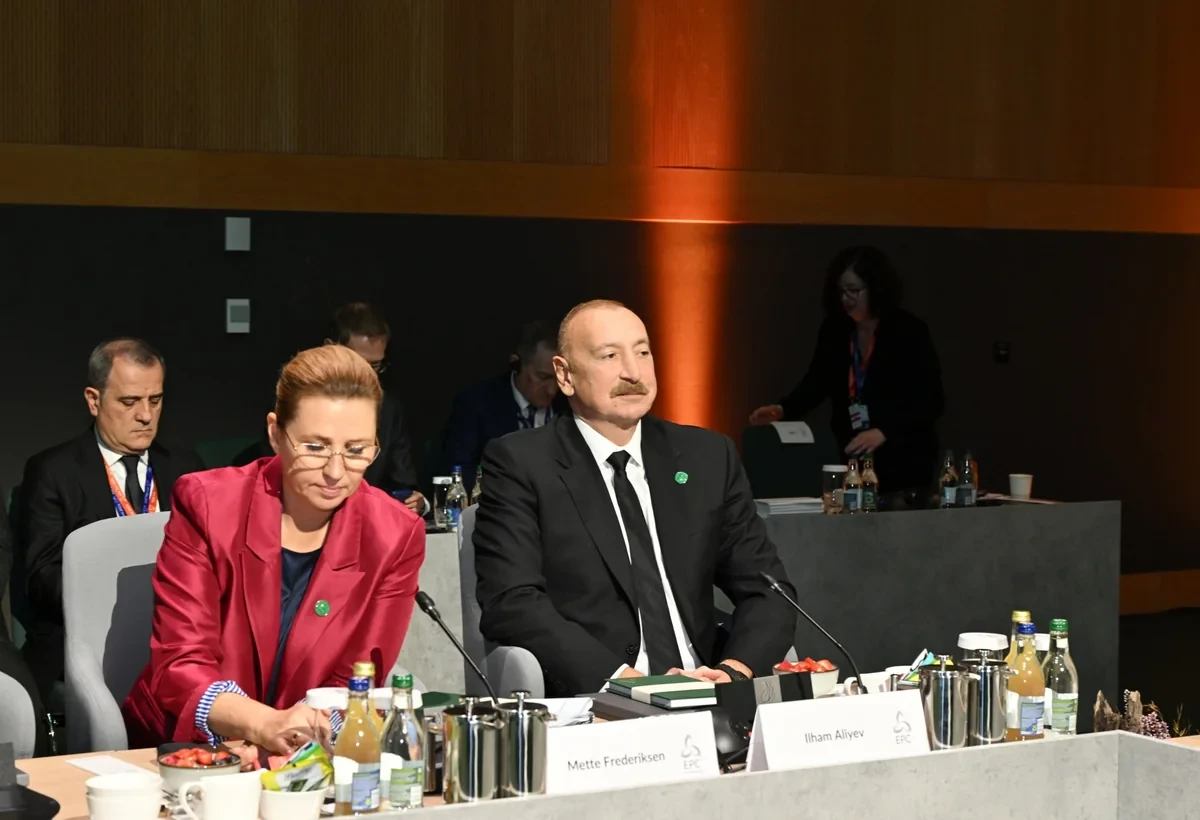
At the 9th European Political Community Summit in Dublin, President Ilham Aliyev stated that the gas pipeline stretching from Baku to Italy was currently operating at full capacity. He also said that Azerbaijan did not intend to limit itself to the existing 10 European countries and planned to further expand and diversify its energy supplies to the continent.
This process is also accompanied by Azerbaijan’s expanding role in Europe’s energy infrastructure. SOCAR’s strengthening position in the Italian market and TAP’s next development phase are increasing Azerbaijan’s importance for Europe’s energy security. Furthermore, in line with the strategic partnership document signed with the European Union in 2022, feasibility studies have been completed on transmitting not only natural gas but also green energy to European markets via Georgia, Türkiye, Romania and Hungary.
Energy cooperation, which began with the supply of Azerbaijani gas to European countries, could cover an even wider geographical area in the near future through new gas routes and renewable energy corridors.
Jala Rovshan