Everyone is talking about COP – What is COP and what is discussed there?
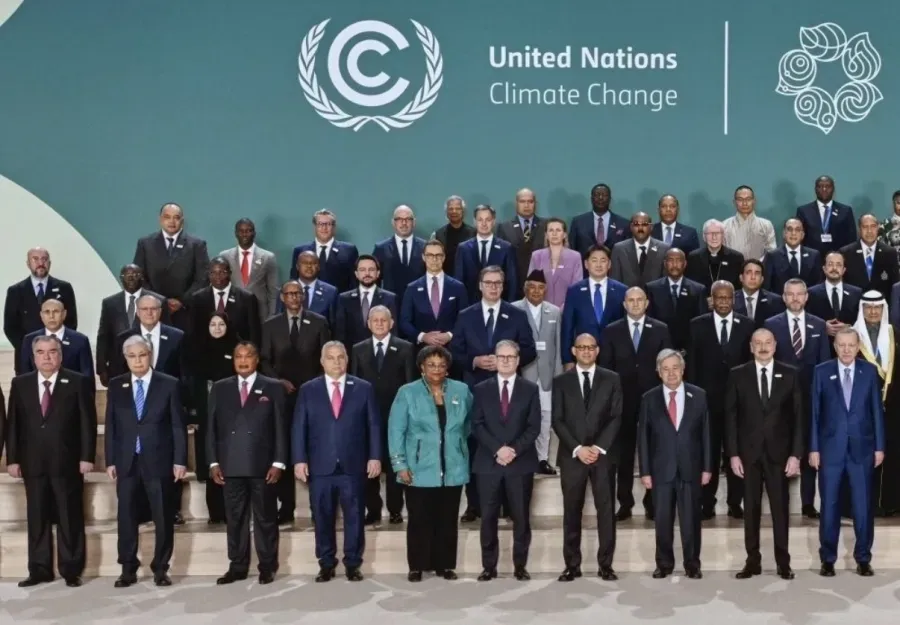
COP is an abbreviation of the English expression Conference of the Parties. It translates into Azerbaijani as “Conference of the Parties”. Here, the term “parties” does not refer to individuals attending the conference, but to countries and regional economic integration organisations that are parties to the United Nations Framework Convention on Climate Change (UNFCCC).
The full official legal name of COP is:
The Conference of the Parties to the United Nations Framework Convention on Climate Change.
The emergence of COP was the result of decades of scientific research, environmental warnings and international negotiations.
1979 – The climate issue enters the international agenda
The First World Climate Conference was held in Geneva, Switzerland, bringing the climate issue into international discussions.
This event is considered one of the main starting points for international discussions on climate change.
At the conference, scientists discussed changes in the atmosphere, the possibility of rising temperatures and the impact of human activities on the climate system.
As a result, climate issues began to move beyond the field of scientific research and become part of the international political agenda.
Organised by the World Meteorological Organization (WMO), the gathering was the first international scientific summit to formally recognise climate change caused by human activities as a global threat. For the first time, governments were advised to take measures to “prevent human-induced climate change”.
1985 – The Villach Conference in Austria
The Villach Conference was held in Austria. It is considered a historic turning point in bringing global climate change and the greenhouse effect into the international political arena.
Held in the Austrian city of Villach from October 9 to 15, the conference is regarded as a foundation for today's UN climate conferences and global climate policy.
The decisions adopted at the Villach Conference subsequently paved the way for the establishment of the Intergovernmental Panel on Climate Change (IPCC) in 1988 and the adoption of the United Nations Framework Convention on Climate Change in 1992.
1991 – The first steps towards the Climate Convention
The first meeting of the Intergovernmental Negotiating Committee for the preparation of the Framework Convention on Climate Change was held in 1991.
Following the negotiations, the text of the United Nations Framework Convention on Climate Change was adopted in New York on May 9, 1992.
Later that year, from June 3 to 14, the United Nations Conference on Environment and Development, also known as the Earth Summit, took place in Rio de Janeiro, Brazil.
Article 7, paragraph 4 of the Convention provided for the holding of the first COP session and established the periodic nature of subsequent meetings.
Thus, the first official COP was held in Berlin in 1995, hosted by the German government.
The session began on March 28 and continued until April 7.
Why is the frequency of these meetings important?
There are practical and diplomatic reasons for holding COP sessions regularly.
The pace of the climate crisis: Climate change is not a process that can be discussed only every four or five years. Rising temperatures, natural disasters and emissions figures change every year.
Rotating the host location: COP is not held in one permanent location, such as the UN headquarters in New York or Geneva. Instead, it travels around the world in accordance with the UN's principle of rotation.
Climate change is a global problem. Rotating the host location every year gives every region the opportunity to help shape the global climate agenda, regardless of whether it is wealthy or poor.
When a summit is held in an African country, such as Egypt, which hosted COP27, the agenda tends to focus more on drought, water scarcity and the damage suffered by poorer countries.
When a summit takes place in Europe, the focus is more likely to be on reducing industrial emissions and developing green technologies.
When it is held in South America, as in Brazil, greater attention is directed towards protecting the Amazon rainforest and biodiversity.
Under the United Nations Framework Convention on Climate Change (UNFCCC), the COP presidency and hosting arrangements rotate among the UN's five official geographical groups:
African Group
Asia-Pacific Group
Eastern European Group
Latin American and Caribbean Group (GRULAC)
Western European and Others Group (WEOG)
Every year, countries within the geographical group whose turn it is to host put forward their candidacies. Once all countries within the group reach an agreement, the host city is officially selected.
Why was COP not held in 2020?
COP26 was postponed because of the COVID-19 pandemic. The conference was subsequently held in Glasgow, Scotland, in 2021.
For this reason, there is no separate COP session numbered for 2020.
COP officially has 197 sovereign states as members.
However, since the European Union (EU) also participates in the Convention as an independent entity representing a regional economic organisation, the total number of Parties is 198.
COP consists of two main zones
Blue Zone: Managed by the United Nations. Heads of state and government, along with official delegations, conduct negotiations on legal texts here.
Green Zone: Open to representatives of civil society, NGOs, scientists, young people and the private sector. It hosts green technology exhibitions, panel discussions and networking events.
What actually happens at COP? Why do so many people attend?
This is one of the most important questions about COP.
From the outside, visitors see a large conference hall, speeches by heads of state, flags of different countries and numerous delegations. However, the main work of the event goes far beyond speeches.
Several areas of activity take place simultaneously at COP.
Countries hold negotiations
The main work of COP consists of negotiations between national delegations.
For example, one country may propose reducing the use of coal by a certain date. Another country may argue that its economy still depends on coal and demand that the deadline be changed.
Similar disputes arise over oil, gas, finance, emissions targets, technology and climate adaptation.
At the end of the negotiations, the parties seek to agree on a common text that everyone can accept.
Climate finance is one of the most contentious issues at COP
Imagine an island nation facing the threat of losing inhabited areas because of rising sea levels. The country does not have sufficient funds to build coastal protection systems or relocate its population.
In such a situation, a key question arises:
Who should pay to prevent this damage or address its consequences?
The responsibilities of developed countries, international financial institutions, private investors and other parties are discussed in this context.
This was also one of the main issues at COP29.
COP is not limited to political negotiations
Technology exhibitions, business meetings and investment discussions are also held at the conference.
These include presentations of:
Solar panels;
Wind power plants;
Green hydrogen;
Electric vehicles;
Energy-efficient buildings;
Carbon capture and storage technologies;
Water resource protection systems.
Companies present their technologies, while governments explore potential investment and cooperation opportunities.
The importance of COP lies in its ability to bring together different groups of participants.
Thus, alongside intergovernmental diplomacy, COP also serves as a platform for global public discussion.
Climate change does not simply mean drying forests or rising temperatures. It affects agriculture, food prices, water resources, healthcare, the economy, migration and national security.
For example, prolonged drought in one country can reduce agricultural production. This may lead to higher food prices, fewer jobs and people being forced to move to other areas.
The country hosting COP attracts the attention of international media and organisations. Governments present their economic and political priorities, strengthen ties with other countries and put forward their positions in international negotiations.
Zahra Mammadova