
Damascus caught between two fires: Billions in aid or the Kremlin?
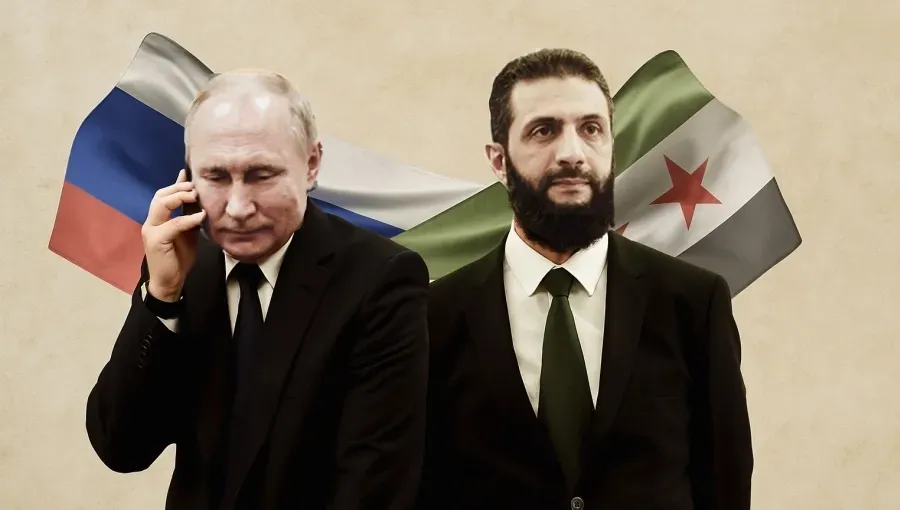
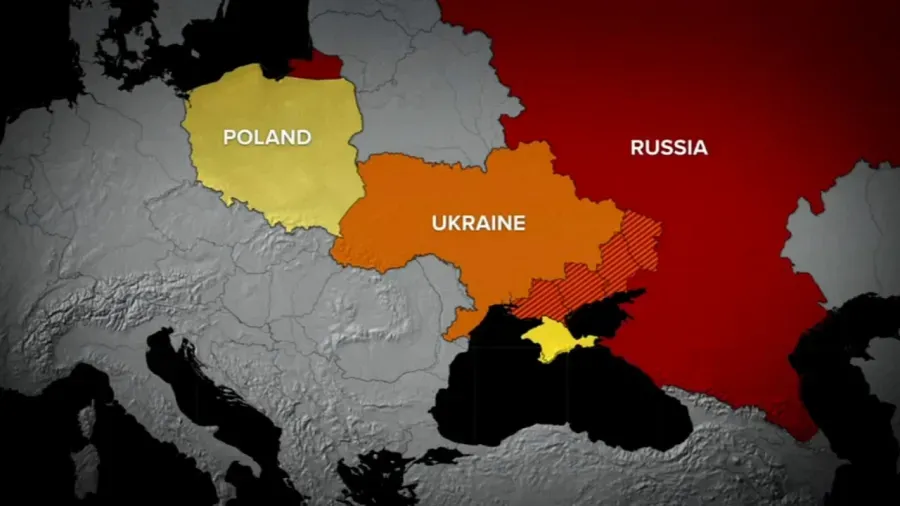
The European Union has set a specific condition for normalising relations with Syria's new leadership. Brussels is demanding that Damascus revoke decisions made under Bashar al-Assad recognising the independence of Donbas, Abkhazia and South Ossetia. EU foreign policy chief Kaja Kallas has also discussed the issue directly with Syrian President Ahmed al-Sharaa. The move suggests that the West is seeking to capitalise on the change of power in Syria to deliver another blow to Russia's influence in the region.
But is Ahmed al-Sharaa's administration prepared to risk a complete breakdown in relations with Russia in exchange for Western economic support and the lifting of sanctions?
Commenting on the issue to TodayPress TV, political analyst Tamilla Gulami said the European Union's demand that Syria's new leadership reverse decisions made during Bashar al-Assad's rule concerning Donbas, Abkhazia and South Ossetia was part of a broader geopolitical strategy rather than simply an effort to normalise diplomatic relations.
"Brussels views Syria's new leadership as important not only in the context of the country's political transformation but also in terms of weakening Russia's position in the Middle East. Kaja Kallas's discussions of these issues with Ahmed al-Sharaa demonstrate that Europe has a considerable interest in shaping Syria's future foreign policy direction.
"Nevertheless, it should be noted that the European Union is currently keeping this demand separate from the signing of the 2008 Association Agreement and has indicated that the issue could be addressed in the framework of a modernised agreement in the future.
"The choice facing Ahmed al-Sharaa is also quite complicated. After nearly 15 years of war, Syria is seeking to rebuild its economy, attract foreign investment, strengthen its international legitimacy and benefit from Western financial resources. In this regard, closer relations with the European Union promise Damascus significant economic and political dividends.
"However, we should not forget that Russia remains an important actor in Syria's post-war security architecture. Moscow's presence at the Tartus naval facility and Hmeimim airbase provides Russia with significant operational capabilities for its military and logistical activities in the Mediterranean, the Middle East and towards Africa. For this reason, a sharp deterioration in relations with Russia could conflict with Syria's security interests."
The analyst stressed that Ahmed al-Sharaa completely sacrificing relations with Russia does not appear to be a realistic option at this stage.
"The more likely scenario is the pursuit of a multi-vector foreign policy: expanding economic and diplomatic cooperation with the West while preserving certain strategic ties with Moscow. The Syrian leadership could make a political gesture towards the West by reversing controversial decisions concerning territorial integrity. However, this would not necessarily mean severing all ties with Russia.
"At the same time, c does not want to lose Syria entirely. For Russia, Syria is not merely a former ally; it is also strategically important in terms of access to the Mediterranean, military presence and regional influence in the Middle East. Therefore, the Kremlin may seek to make certain concessions to maintain relations with Damascus's new leadership.
"Overall, developments in Syria are part of a broader struggle not only over the country's integration into the Western system but also over the redistribution of Russian influence in the Middle East. The West is offering Syria economic recovery and international legitimacy, while Russia is seeking to preserve its military and political influence.
"Ahmed al-Sharaa's main objective will not be to choose one of these two power centres, but rather to expand his room for political manoeuvre in relations with both. For a country emerging from war and whose institutions remain fragile, gaining as many partners as possible is far more vital than becoming a party to a new geopolitical confrontation."
Tamilla Gulami concluded by recalling that the European Union had already lifted most of its economic sanctions against Syria in May 2025.
"The current discussions primarily concern new economic cooperation, investment, the Association Agreement and political conditions. I would also like to recall that the European Union has pledged €620 million in support for Syria for 2026–2027."
Giymat Mahir