The only country capable of signing strategic agreements with the world’s major power centres - Baku’s masterclass
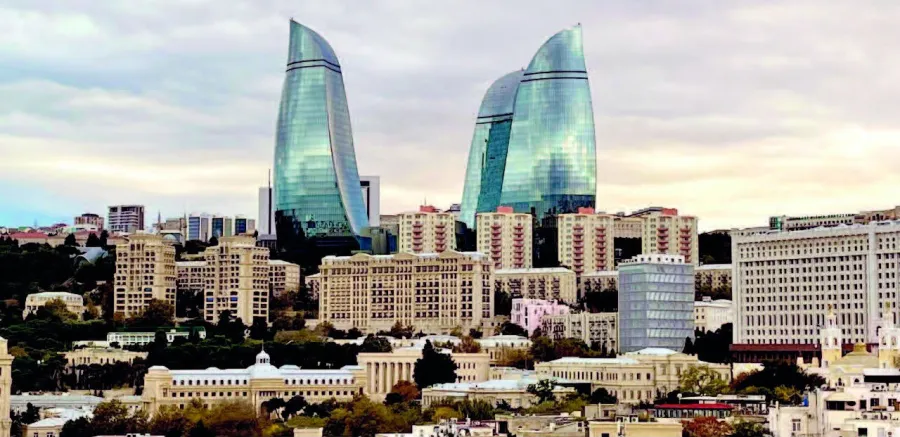
Building a partnership with just one major power inevitably allows that power to dictate a country’s foreign policy direction and creates serious problems. Azerbaijan, however, pursues a policy of balanced partnerships with all sides. Its main goal is to balance security, avoid being caught between two major powers, and reduce the economy’s dependence on oil.
A closer look at Baku’s recent moves reveals the essence of this strategy: agreements with China are centred on technology and the Middle Corridor; relations with the United States are built around energy and security; cooperation with the United Arab Emirates focuses on investment and green energy; while financial and educational ties are at the forefront of relations with the United Kingdom.
This is precisely the perspective from which these developments should be viewed. Azerbaijan is moving beyond the oil era and reinventing itself as a transit hub, seeking to serve as a bridge between China and Europe. This is why Baku has signed strategic documents with four major global power centres: the United States, China, the United Kingdom and the United Arab Emirates.
So, what does the strategic partnership with the United Kingdom change, and how does it differ from the previous period? Until now, cooperation with Britain had been built mainly around BP and the oil sector, with occasional political dialogue. Now, however, three new areas have been added to the cooperation agenda: defence and security, trade and investment, as well as education and innovation. A strategic dialogue will also be held annually at the state level, with the participation of the two countries’ foreign ministries.
What opportunities does this new phase create for Azerbaijan?
- Economically: British banks will find it easier to invest in Azerbaijan.
- Geopolitically: This partnership provides Azerbaijan with additional support within NATO and the broader Western political landscape.
The United Kingdom’s unique status also plays an important role here. Having left the European Union, Britain remains geographically and politically part of Europe, while no longer being an EU member. It is seeking new partners that share both European and broader Western values. From this perspective, Britain is an ideal partner for Azerbaijan.
The impact of this partnership on relations with Europe and the South Caucasus is also relatively clear. High-level relations with Britain, one of Europe’s strongest military and political powers, also serve as a point of reference for the European Union. Europe has a significant need for Azerbaijani gas, green energy and transit opportunities, while the partnership with Britain makes Azerbaijan an even more attractive partner in the European arena.
As for Azerbaijan’s position in the South Caucasus, this move is particularly important in terms of the peace process with Armenia and maintaining a balance between Russia and Iran. In any case, from the perspective of becoming the West’s key partner in the South Caucasus, Azerbaijan has also moved ahead of Georgia in the region through this strategic move.
Aziz Alibayli
International affairs expert