European leaders line up: Who will be the first to shake Aliyev’s hand?
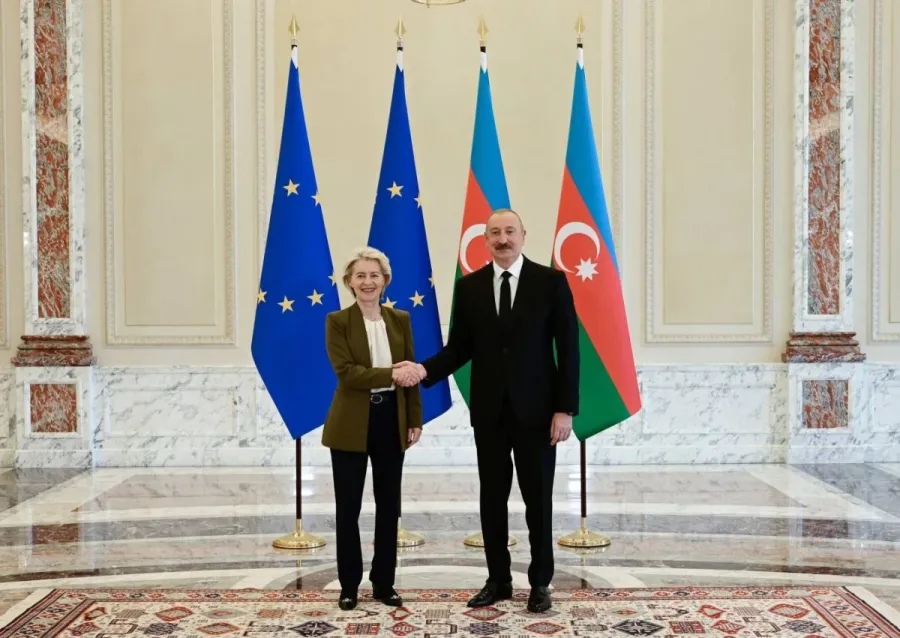
Over the past two or three days, Azerbaijani diplomacy has delivered what may well be one of the most remarkable performances in its history. This is particularly evident from the fact that across Europe, governments had been waiting for the arrival of Azerbaijan’s leadership and diplomatic corps. A summary of the events attended by the President just yesterday shows that he held meetings with representatives of more than 10 European countries, including the leaders of more than eight states. Each of these countries, in its own way, is eager to cooperate with Azerbaijan and has been putting forward proposals. There is no doubt that this is an important platform and moment in which Azerbaijan’s considerable economic, diplomatic and political opportunities are being demonstrated.
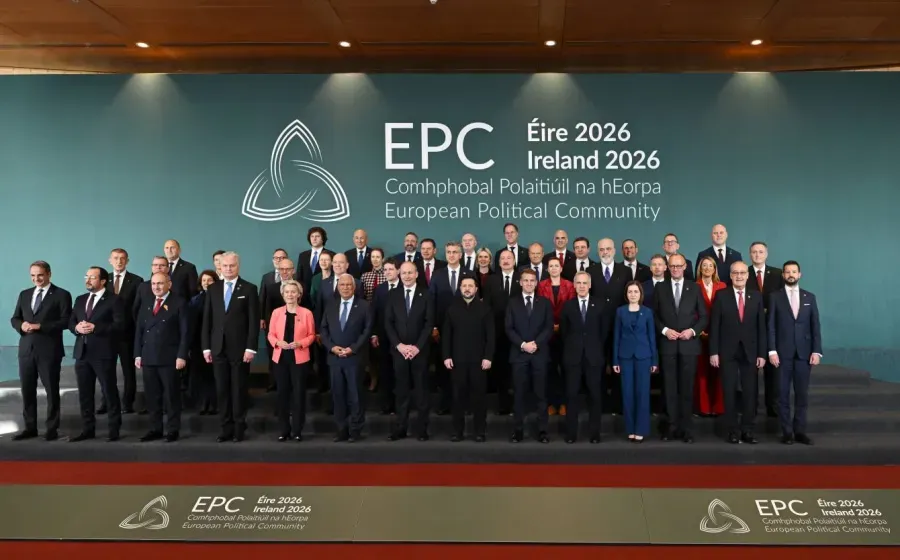
The first point to note is that the European Union has taken a very timely and appropriate step. Amid the current global power struggle involving China, the United States and Russia, the EU immediately began looking for a new format to maintain its position, particularly in the context of the Russia-Ukraine war. We saw that, following these developments, the establishment of the European Political Community and the organisation of its meetings and conferences represented an attempt to bring European countries together as a unified force, including those outside the European Union. This initiative also demonstrated how limited the EU’s ability to project power could be without the participation of countries beyond its membership.
Looking at the central theme of the event in Dublin, we can see that security, connectivity and energy corridors are particularly prominent. The key opportunities this presents for Azerbaijan are as follows:
First, the security challenges at the heart of the European Union’s agenda cannot be addressed without Azerbaijan. Today, Azerbaijan supplies energy resources to 10 EU member states. Security is a recurring theme in the agendas of EU-wide events, and energy security, which forms a major part of this broader issue, is impossible to ensure without Azerbaijan.
Second, there has been a particular focus on assessing energy policy through the lens of Azerbaijan. Considerable emphasis has also been placed on recognising Azerbaijan’s experience in resolving certain political issues peacefully. Why is this important? Looking at the map of the European Union, we see that the front along its northeastern border with Russia is undermining the bloc’s security architecture. Meanwhile, on its southeastern flank, the Armenia-Azerbaijan conflict persisted for more than 30 years. Today, the peace agreement to be signed between Azerbaijan and Armenia is a central issue on the EU agenda. The Union is interested in resolving these problematic points on the map and intends to draw on Azerbaijan’s experience in addressing the Russia-Ukraine conflict as well. How successful this approach will be is another matter. However, under the current circumstances, Azerbaijan cannot be excluded from discussions on security paradigms.
Winter is approaching. If Azerbaijan does not supply European countries with energy resources, tensions between governments and civil society and the wider public could create a very different situation. This issue has already become highly sensitive in EU member states.
The third important point concerns Azerbaijan’s proposals on logistics and connectivity. Regional connectivity projects that began with the Baku-Tbilisi-Ceyhan pipeline, followed by the development of the Middle Corridor concept and the Zangezur Corridor’s growing prospects of becoming a reality, have helped create a more stable environment, removed from the threat of conflicts in the north and south. This has brought Azerbaijan to the forefront as a bridge state connecting the European Union safely with the economic giants of the East and the Global South. Azerbaijan’s place in Europe’s current political, economic and security architecture is therefore a major opportunity.
It should be openly acknowledged that President Aliyev’s participation in European Political Community meetings, including his support for the outcomes of the meeting in Yerevan, has created significant opportunities for the next summit to be held in Baku. We will see this materialise in 2028.
Another important point is the profound political and philosophical significance of the President’s recent description of Azerbaijan as a “middle power” at an event held at the Academy of Sciences. In terms of its geographical area and population, Azerbaijan is not particularly large. Yet the country occupies a pivotal position in today’s international relations. It is impossible to establish a stable route between East and West without Azerbaijan; the only alternative would be the Cape of Good Hope in Africa. Without Azerbaijan, its foreign policy and its Victory, it would be difficult to make positive predictions about the world’s future or speak with optimism.
Under the current circumstances, Azerbaijan has not only presented itself as a middle power and demonstrated that it meets the relevant criteria, but has also established an image as a reliable state, creating a new value. We have presented this as a fundamental concept of international geopolitical ethics. According to the parameters of global political theory, this is a new phenomenon: the concept of a value-creating state and the theory of trust.
The principle of mutual respect between states has been undermined in global law and the international relations system, and the increase in wars is one consequence of this. As the established order has broken down, the international system and architecture are no longer functioning effectively. Azerbaijan’s foreign policy, by contrast, is directed precisely towards restoring that order.
Today, many states fail to honour the commitments they have made. Every day, we hear statements from various heads of state that are sharply contradictory and directed against one another. Azerbaijan’s statements, however, have consistently focused on building a global order, choosing negotiations as an alternative to war, putting the principle of “win-win” solutions on the table, and creating an environment for mutual economic cooperation and investment.
Ultimately, this approach has been reflected not merely in slogans but in practical policies implemented as part of Azerbaijan’s foreign policy. There are concrete figures demonstrating Azerbaijan’s commitments to supplying energy resources, including oil and gas, to many European countries. These commitments are linked both to international obligations and to the international security environment.
Other oil-exporting countries, including Arab states, are currently unable to supply their partners optimally due to wars and various upheavals. Azerbaijan, by contrast, supplies energy resources and natural gas to 10 EU member states and has implemented projects such as TAP and TANAP. This is a long-term strategy.
The agreement on energy cooperation spanning several decades, signed during European Commission President Ursula von der Leyen’s visit to Baku, also demonstrated the considerable confidence placed in Azerbaijan over the long term. When economic projects are developed with Azerbaijan and major investments are made, there is confidence in their outcomes. This is precisely where Azerbaijan’s reputation for reliability comes into play.
At the same time, the image of President Aliyev as a leader who stands by his words, turns his statements into action and keeps his promises is not characteristic of many countries in international politics today. This is both surprising and convincing. Unfortunately, a new generation of politicians often struggle to rise above the technical level of politics and sometimes find it difficult to understand the kind of conduct demonstrated by our country's leader.
All of this stems from the President’s personal political performance, the country’s state policy and the existence of a strong foreign policy apparatus capable of making the most of Azerbaijan’s strategic geographical position.
Aziz Alibayli
International affairs expert