
What is the real purpose behind the principles vetoed by Baku? – Details
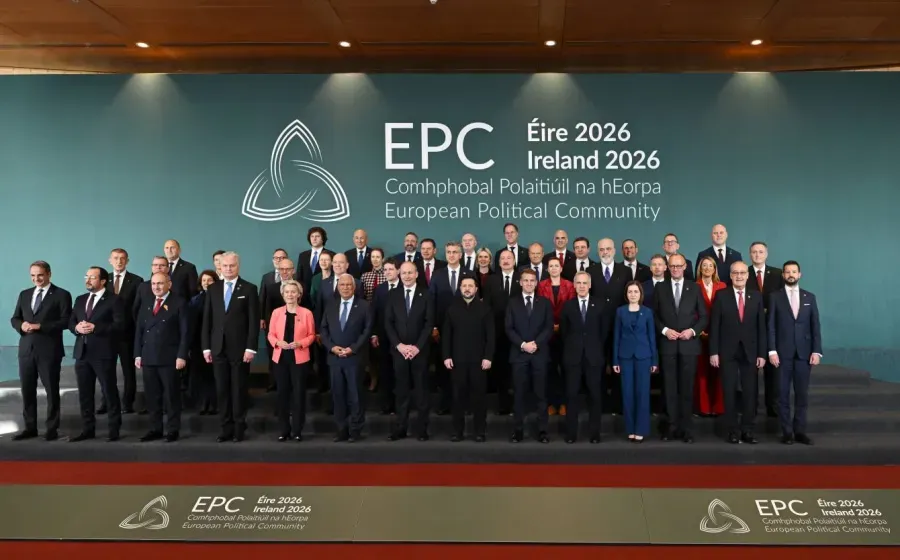
Azerbaijan’s decision not to join three documents proposed at the initiative of several countries during the 9th European Political Community (EPC) Summit in Dublin on November 12 has sparked considerable debate. The documents in question were the “Declaration on the Basic Principles of European Security”, the “Statement on Migration” and the “Declaration of the European Coalition Against Drugs”.
The remarks made by Azerbaijani Foreign Ministry spokesperson Aykhan Hajizada on the issue reflect the independent foreign policy doctrine Azerbaijan has developed in recent years and its pragmatic approach to international platforms.
To understand the essence of the matter, it is first necessary to examine why and under what circumstances the European Political Community (EPC) was established.
Amid the current global power struggle involving China, the United States and Russia, at a time when the existing international order is under strain and the Russia-Ukraine war has undermined Europe’s security architecture, the European Union began seeking a new format to maintain its position. The EU recognised that its ability to project power was considerably limited without countries outside its borders that are nevertheless vital to the continent’s security and energy supplies.
The European Political Community emerged from this need as an informal platform for dialogue aimed at promoting mutual trust and cooperation among countries. Azerbaijan’s participation in this format is intended to facilitate exchanges of views on matters of common interest, discuss approaches to shared challenges and expand opportunities for cooperation with partners.
However, documents proposed at the initiative of individual states during the summit go beyond the platform’s original informal philosophy and impose additional legal and political commitments on participating countries. Official Baku is firmly opposed to turning a forum for dialogue into a mechanism for unilateral obligations or artificially expanding the platform’s mandate.
The issue must also be viewed through the lens of Azerbaijan’s new status in the modern international relations system – its “middle power” strategy.
Although Azerbaijan is not among the world’s largest countries in terms of territory or population, it now occupies a pivotal position in global politics and the economy. It is impossible to establish a stable and secure route between East and West without Azerbaijan; the only alternative is the distant and risky route around Africa’s Cape of Good Hope.
For a country in such a strategic position, becoming an instrument of any geopolitical bloc’s security or political agenda would run counter to its national interests.
The “Declaration on the Basic Principles of European Security” presented at the Dublin summit essentially reflects the perspectives adopted by the Western bloc amid the current military and political confrontation.
Azerbaijan now supplies energy resources to 10 EU member states, making it one of the key guarantors of the continent’s energy security. As winter approaches, the stability of European societies is directly linked to these supplies.
However, this deep strategic partnership in the energy sector does not mean that Azerbaijan must abandon its balanced policy on regional security issues. Signing a security declaration put forward by any one side could undermine the delicate balance Baku has maintained in its relations with neighbouring states, as well as its role as a reliable bridge on the global stage.
The same logic applies to the “Statement on Migration” and the “Declaration of the European Coalition Against Drugs”.
The migration crisis is currently one of the most pressing and unresolved issues in the domestic politics of EU member states. In an effort to ease their internal socio-economic burdens, Western countries are seeking to involve third countries in the process and impose additional political and legal obligations on them concerning the management of migration flows and return mechanisms.
Azerbaijan has its own established border protection and migration policies, and official Baku has no intention of assuming responsibility for Europe’s internal crises.
As for the fight against illicit drug trafficking, Azerbaijan is among the most active and uncompromising countries in the region and the world. However, cooperation in this area is already being carried out at a high level through relevant UN bodies and bilateral agreements. Joining new, locally established coalitions and creating additional accountability mechanisms would offer Azerbaijan no practical benefit.
Aziz Alibayli
International affairs expert