
Armenian products in Azerbaijani market: Will consumers buy them? – ANALYSIS
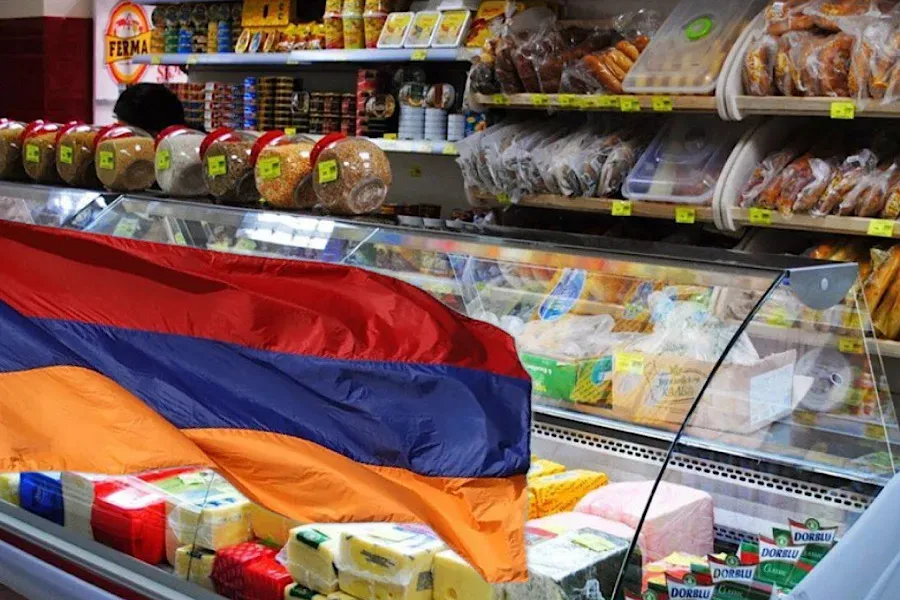
The first export operation from Armenia to Azerbaijan has already taken place, according to an announcement by Armenian Prime Minister Nikol Pashinyan on September 3. However, he did not disclose what product was shipped, saying that the companies themselves would announce the details.
TodayPress TV reports that the announcement may mark the beginning of a new stage in economic relations between the two countries. Azerbaijan and Armenia have effectively had no trade relations for many years. At the beginning of 2026, however, the sides exchanged lists of products for mutual trade, while Armenia also began discussing products it could supply to the Azerbaijani market.
The key question now is: how will Azerbaijani consumers react if Armenian products are put on sale in the local market?

Economist Natig Jafarli believes that trade volumes are unlikely to be large at the initial stage. According to him, the establishment of trade relations between Azerbaijan and Armenia is a positive development both politically and economically. However, several issues need to be resolved for the process to become sustainable.
“Trade turnover between Azerbaijan and Armenia will not be large at the initial stage. Even if trade begins, the volumes will initially be small. However, the emergence of trade is a very positive development in terms of peacebuilding, and this process should continue. For this, issues related to bank transfers, insurance and other infrastructure need to be resolved. Once these issues are settled, trade turnover may increase,” Natig Jafarli said.
According to the economist, the main products Armenia could export to Azerbaijan may include alcoholic and non-alcoholic beverages, agricultural products and fishery products.
In fact, the issue is not limited to the formation of trade statistics between the two countries. Once a product enters the Azerbaijani market, another stage begins: the consumer’s attitude toward it.

Marketing specialist Beylar Alizade believes that several factors will influence Azerbaijani consumers’ choices. According to him, although price and quality will be the main criteria, the Armenian origin of a product may create a certain psychological barrier at the initial stage.
“Consumers will evaluate a product from several perspectives. One of the main factors is quality, while another is price. If consumers pay particular attention to the Armenian origin of products, this could hinder their rapid entry into the market, especially in highly competitive categories. However, more specialized products facing less competition may adapt to the market more quickly,” Beylar Alizade said.
According to him, time will also play an important role in this process. If no new tensions emerge between the two countries, the mutual supply of products continues, and Azerbaijani producers are also able to enter the Armenian market, the psychological barrier may weaken over time.
“This is a sensitive issue. People do not think about it solely as individual consumers; they also approach it from a national perspective. After years of conflict, the sale of products by Armenian producers in Azerbaijan and their earning revenue from this market may not be perceived as ordinary by society at the initial stage. However, if the same process takes place in both directions, meaning Azerbaijani products are also sold in the Armenian market, this could be perceived as the normalization of relations and the use of each other’s markets by the two countries. In this case, irritating factors may gradually disappear over time,” the marketing specialist said.

Sociologist Huseyn Ibrahimov believes it is difficult to make a definitive assessment of consumer behavior at this stage. According to him, it is first necessary to know which products will be imported from Armenia.
He noted that the price and quality of a product are major factors influencing consumer choice. Its Armenian origin may also play a role, but the impact will depend on the type of product and the alternatives available on the market.
“It is not yet known which products will be exported from Armenia to Azerbaijan. Therefore, it is difficult to make an accurate assessment of consumer behavior without knowing the specific products. If a product is reasonably priced and of satisfactory quality, these will be among the main factors for consumers. The extent to which its Armenian origin will matter will depend precisely on the type, quality and price of the product,” Huseyn Ibrahimov said.
According to the sociologist, economic ties may also expand as the process of normalizing relations between Azerbaijan and Armenia continues. He noted that Azerbaijan imports products from various countries, while the safety and quality indicators of these products are checked in accordance with relevant regulations.
Another point is also noteworthy. The arrival of Armenian products in Azerbaijan is not necessarily a one-sided process. Azerbaijan’s exports to Armenia have already reached millions of dollars in 2026. According to data from the State Customs Committee, Azerbaijan exported products worth $17.129 million to Armenia in January-June.
In other words, the economic logic of the process points toward the formation of reciprocal trade. The start of Armenian exports to Azerbaijan is creating a new line of economic relations that previously did not exist between the two countries.
At the initial stage, the market’s reaction will be the key indicator. Will consumers refuse to buy a product because it bears the label “Armenia,” or will they prioritize price and quality? It is difficult to predict this accurately in advance.
One thing, however, is clear: the arrival of Armenian products in Azerbaijan is not merely about new products appearing on supermarket shelves. It is an indication that economic relations between two countries that have been in confrontation for decades are moving into a practical sphere.
How extensive these ties will become will depend not only on companies’ decisions, but also on the stability of political relations, logistics and payment mechanisms, and, most importantly, on how Azerbaijani and Armenian consumers respond to the process.
Kubra Musayeva