
Germany is “falling apart”: Merz loses control — Is everything heading toward the rise of a new Hitler...
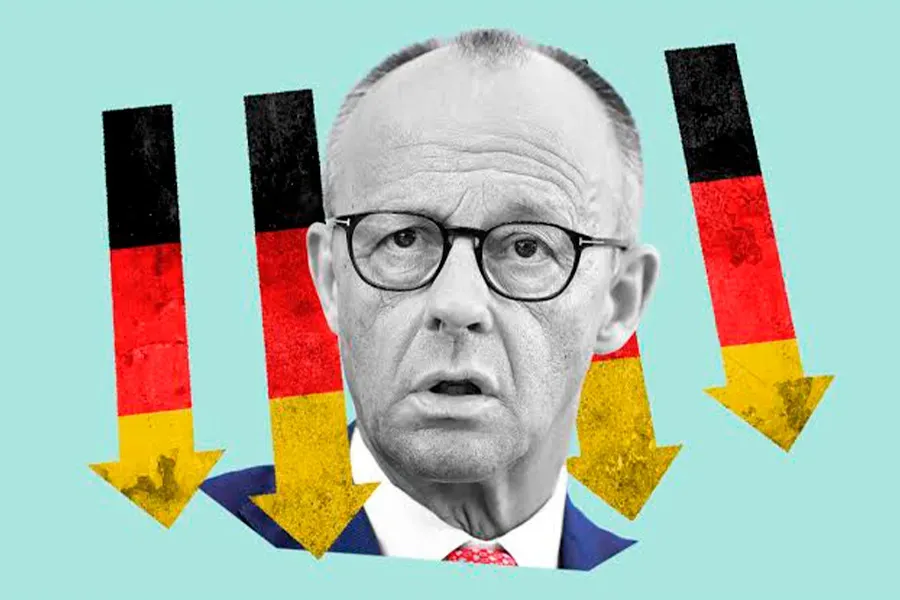
German Chancellor Friedrich Merz has canceled his planned trip to the United States to attend the UN General Assembly. Instead of traveling to New York, he decided to take part in important meetings of the Christian Democratic Union (CDU), which he leads.
According to Bloomberg, Merz’s decision was prompted by the party’s poor performance in the state election held in Saxony-Anhalt in early September and his desire to contain the discontent that emerged within the CDU afterward.
The Chancellor’s Office said in an official statement:
“Contrary to the original plans, the Chancellor will not travel to New York next week because his presence in Berlin is necessary.”
Merz had been scheduled to address the UN General Assembly on September 22 and receive an award established in honor of Henry Kissinger. However, growing criticism within his party prompted him to change his plans.
Why did Merz decide to remain in Berlin?
By canceling his trip, the Chancellor has turned his attention to internal party meetings. According to Reuters, conservatives have called a special meeting for September 20. The aim is to coordinate the party’s position ahead of the upcoming elections in Mecklenburg-Western Pomerania and Berlin, determine its future political course amid record-low support, and demonstrate unity around the party leader. In addition, Merz will attend a CDU leadership meeting on September 21 and a meeting of the parliamentary group on September 22.
What is behind the discontent within the party?
The latest election in Saxony-Anhalt resulted in a major setback for the CDU. The Alternative for Germany (AfD) won 43.8 percent of the vote — its strongest result in the party’s history — while Merz’s CDU secured just 17.2 percent. The official state election results confirm the figures.
Following the defeat, 33 CDU members from the city of Großbeeren near Berlin, including Mayor Martin Vonneberger, reportedly sent an open letter to Friedrich Merz calling on him to fundamentally reconsider his political course.
Adrian Hepp, chairman of the CDU’s Großbeeren branch, assessed the situation as follows:
“We do not need a leadership that explains to ordinary members why its policies are supposedly correct. We need leadership that is prepared to ask why fewer and fewer people believe these policies are right.”
The authors of the letter stressed that although they believed Merz’s promised reforms had not been implemented, they were not calling for his resignation. Instead, they said they were “extending a helping hand” to the Chancellor.
What risks do the upcoming elections pose for the CDU?
The next state elections are scheduled for September 20. Polling indicates that the CDU’s position in the upcoming elections could further intensify internal dissatisfaction with Merz’s leadership.
In Mecklenburg-Western Pomerania, the CDU’s support stands at just 7 percent in recent polling, while 37 percent of respondents support the AfD and 34 percent support the Social Democratic Party (SPD). Conservative lawmakers are now concerned that the CDU may fail to win enough votes to enter the state parliament. CDU parliamentary group leader Thorsten Frei has warned that the party faces the risk of being “reduced to rubble.”
In Berlin, polls put support for the CDU at 21 percent. The party is also trailing the Left Party there. Critics argue that another weak result in the upcoming elections could further increase pressure and dissatisfaction with Merz’s leadership within the governing coalition.
Giymat Mahir