
Khamenei appoints Pezeshkian as economy minister – DE FACTO
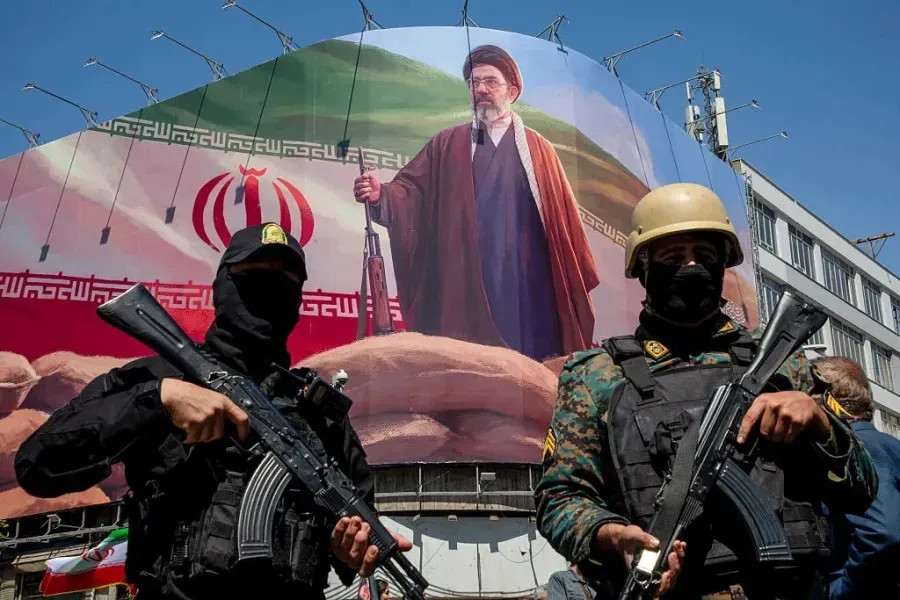
A shift in the balance of power within Iran’s leadership is being alleged. Supreme Leader Ali Khamenei’s latest moves have raised the possibility of new confrontations within the country’s political and military leadership.
Recent personnel upheavals among Iran’s top political and military elites, alongside fundamental changes to decision-making mechanisms, point to a potentially sharp turning point in Tehran’s domestic and foreign policy.
Against this backdrop, the most striking development is the alleged direct intervention by Supreme Leader Ali Khamenei to effectively sideline President Masoud Pezeshkian from the country’s highest levels of government, particularly in matters of security and foreign policy.
Under Iran’s Constitution, the president is considered the country’s second-highest-ranking official. However, according to this assessment, Khamenei’s latest decisions have curtailed Pezeshkian’s executive authority, effectively reducing him to the role of a nominal “economy minister” tasked solely with managing the economic crisis. His responsibilities are said to be limited to dealing with the collapsing financial sector, inflation and social discontent. As a result, he has allegedly been pushed away from the central decision-making process on strategic matters.
At the same time, the influence of General Yahya Rahim Safavi, the former commander-in-chief of the Islamic Revolutionary Guard Corps (IRGC), who for years played a significant role in Iran’s top military decisions, is also said to have been neutralised. Safavi’s alleged reduction to little more than a spokesperson for Khamenei on military affairs is presented as evidence that moderate and balancing figures are being removed from Tehran’s high command.
The alleged suspension of Pezeshkian’s and Safavi’s strategic influence, and their replacement by hard-line, nationalist and radical groups, is described as no coincidence. The growing influence of Mojtaba Khamenei behind the scenes, along with his reported instruction to the military command not to impose “geographical limitations” in potential large-scale confrontations ahead, is said to have given Tehran’s defence doctrine a thoroughly aggressive character.
The underlying logic behind these personnel changes is also being questioned. According to this analysis, the radical faction within the IRGC plans to target the region’s main energy routes and raw-material supply chains in order to drive global oil prices to record levels, trigger a worldwide economic shock and thereby save the regime.
By placing the entire burden and responsibility for the domestic crisis on Pezeshkian, who is informally portrayed as an “economy minister”, Iran’s military elite would effectively have a free hand to pursue a large-scale regional confrontation.
Ismayil Shahli