
Xi Jinping held a low-profile meeting with Pezeshkian in Bishkek — Why did China “close the door” on Iran?
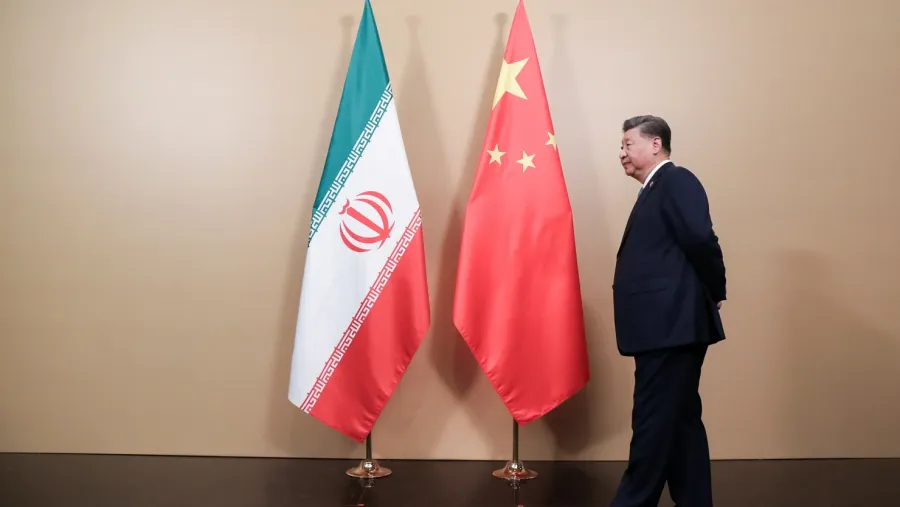
Chinese President Xi Jinping held a brief, low-profile meeting with Iranian President Masoud Pezeshkian on the sidelines of a regional security summit. The two leaders met for several minutes on Tuesday during the Shanghai Cooperation Organization (SCO) summit in Kyrgyzstan.
Iranian state media reported this, TodayPress TV reports.
The meeting came several weeks before Xi Jinping’s planned visit to Washington, signaling Beijing’s cautious approach to its relations with Tehran.
The summit was attended by the leaders of 10 SCO member states, including Russian President Vladimir Putin and Indian Prime Minister Narendra Modi.
According to the Mehr news agency, Xi Jinping and Pezeshkian discussed “bilateral ties aimed at strengthening relations between Tehran and Beijing.” Details of the meeting were not disclosed.
However, Beijing preferred to keep the meeting out of the public spotlight.
While Chinese state media, including the Communist Party’s flagship newspaper People’s Daily, gave extensive coverage on Tuesday to Xi Jinping’s meetings with other leaders, it published no report on his meeting with Pezeshkian.
Indian Prime Minister Narendra Modi, meanwhile, shared photos of his meeting with the Iranian president on social media.
Han Sheng Lin, Managing Director for Greater China at Washington-based strategic consulting firm The Asia Group, said Xi Jinping was maintaining a public distance from Iran while continuing discreet diplomatic contacts with Tehran.
A joint statement adopted by the SCO leaders condemned the military strikes against Iran. The document also reaffirmed the member states’ support for the right to use nuclear energy for peaceful purposes under the Treaty on the Non-Proliferation of Nuclear Weapons.
At the same time, the statement contained no commitment by SCO countries to provide Iran with any specific military or economic assistance.
Lin believes that the absence of the Xi-Pezeshkian meeting from the front page of China’s state newspaper demonstrates that Beijing is “carefully managing the public image” of its relationship with Tehran.
According to him, China is seeking to preserve its strategic ties with Tehran but does not want to create the impression that it is siding with Iran, particularly ahead of Xi Jinping’s planned meeting with US President Donald Trump later this month.
China is the largest buyer of Iran’s sanctioned oil exports. However, since the outbreak of the war, oil flows through the Strait of Hormuz have declined significantly as Beijing sharply reduced its imports and drew on its substantial oil reserves.
The Chinese Embassy in Singapore did not respond to a request for comment on the issue.
It remains unclear whether Beijing will adopt a more open and high-level approach toward its relations with Tehran following Xi Jinping’s visit to Washington.
It has also been suggested that Beijing’s restrained position may reflect deeper dissatisfaction with Tehran.
According to Alfredo Montufar-Helu, Managing Director of Ankura China Advisors in Beijing, Beijing has consistently conveyed its demands to Tehran: an end to the conflict and the reopening of the Strait of Hormuz.
According to him, the Iranian leadership has largely acted in the opposite direction.
“This is an indication of Beijing’s genuine dissatisfaction with Tehran,” Montufar-Helu said.
However, the expert cautioned against attaching too much significance to China’s cooler public stance.
He noted that the fact that Xi Jinping even held an informal conversation with Pezeshkian on the sidelines of the summit shows that Beijing is keeping the door to dialogue with Tehran open.
Giymat Mahir