“Do not insult the liberator of Karabakh!” – A stern message to those plotting against Azerbaijan from a Gadabay-born sheikh in Türkiye
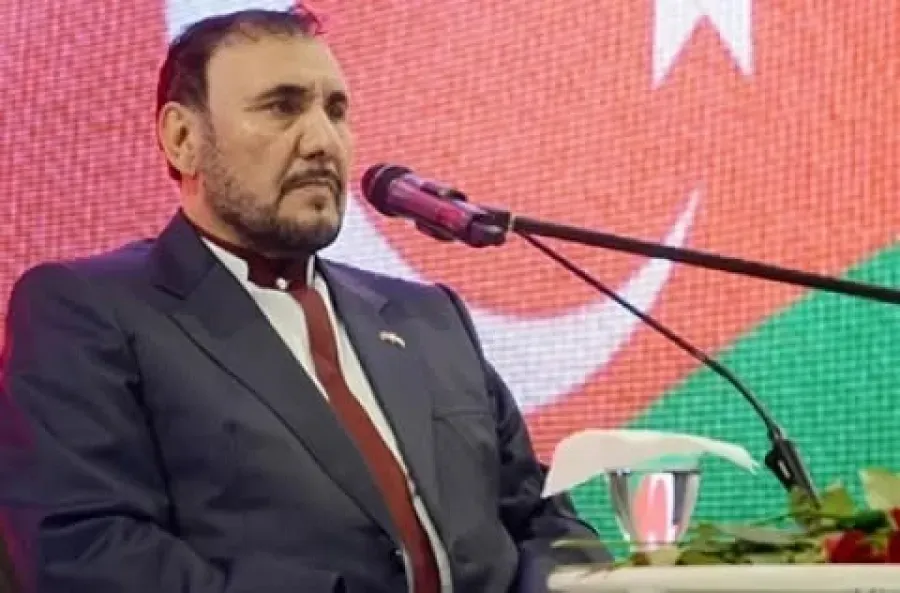
In recent years, statements and positions expressed by some religious figures of Azerbaijani origin operating abroad have sparked serious debate and legitimate questions in Azerbaijan. Against the backdrop of propaganda campaigns directed against the country by certain circles, the latest remarks on Azerbaijan by Salahaddin Özgündüz, known as a leader of the Ja’fari community in Türkiye, stood out for their distinct, state-oriented and principled approach.
Salahaddin Özgündüz was born in 1957 in the Tuzluca district of Iğdır, Türkiye. His family roots are in the Gadabay district of Azerbaijan. After completing his basic religious education, he continued his studies to gain an in-depth understanding of Persian and Islamic sciences. He received extensive training in morphology and syntax, principles of Islamic jurisprudence, philosophy, theology, Quranic exegesis and history in Iran and Najaf, Iraq. After completing his education and returning to Türkiye, he worked in various regions. In 1978, he founded the Zeynebiye Movement in Istanbul’s Halkalı district.
In recent times, Özgündüz has taken a firm position on Azerbaijan along three main strategic lines.
First is the issue of standard school uniforms. In response to what he described as biased propaganda by certain groups, Özgündüz explicitly stated that there is no general ban on headscarves or hijabs in Azerbaijan. The issue at hand, he said, concerns uniform dress requirements in schools and the rules governing secular education. His explanation is consistent with the regulations of Azerbaijan’s Ministry of Science and Education on student dress codes in public general education schools and, according to the article, is grounded in the facts.
Second is Azerbaijan’s trade relations with Israel. Addressing the issue from a religious perspective, Özgündüz recalled that Imam Ali had once earned an honest living by working in a Jewish man’s garden. He cited this example to emphasise that trade relations between states are permissible, or legitimate, from a religious standpoint.
The third issue concerns the liberation of Karabakh from occupation and the restoration of historical and religious monuments. In his remarks, the religious figure addressed what he described as a major reality overlooked by some parties: Azerbaijan’s leadership has rebuilt and restored mosques left in ruins in the liberated territories and returned them to use for worship.
Against the backdrop of Özgündüz’s measured and principled statements, the issue of Borchali has taken on particular significance. During Friday prayers at the Central Imam Ali Mosque in Marneuli, Georgia, some worshippers held placards bearing the slogans “Freedom for the Hijab”, “Hijab Is Not an Obstacle to Education” and “Hijab Is a Woman’s Adornment”. Seyid Dr Mirismayil Asadov, who delivered the Friday sermon, devoted his address to the hijab issue currently being discussed in Azerbaijan. Haji Gurban Murquzov subsequently took the floor and spoke about developments surrounding the hijab around the world.
Marneuli is known as the centre of the historic Borchali region, where ethnic Azerbaijanis live in concentrated communities. Any religious or political demonstration there carries significance beyond its religious dimension. It can also be viewed as a sensitive matter in terms of Georgia’s delicate ethnic balance and the strategic partnership between Baku and Tbilisi. The history of the Imam Ali Mosque, where the demonstration took place, is also noteworthy: built in 1739, it was destroyed during the Soviet era and restored in 1998 through the initiative and support of local residents. Now, however, the article argues, the pulpit of this historic mosque is being used to politicise school regulations that fall entirely within the domestic jurisdiction of a neighbouring country.
Taken together, these developments present two distinctly different approaches.
On one side is the Özgündüz model: despite living abroad, he places his historical roots, Azerbaijan’s state interests, territorial integrity, victory and the revival of religious monuments above all else.
On the other is an approach that seeks to turn a secular education regulation—an internal matter for Azerbaijan—into an international protest issue and an instrument of political pressure, using an event organised at a historic mosque in Georgia.
The first approach, according to the article, is based on sound reasoning and facts. School uniform requirements are not presented as a blanket religious ban applying throughout the country, while the restoration by the Azerbaijani state of mosques that were destroyed after three decades of occupation is treated as an undeniable fact. The second approach, by contrast, is portrayed as setting aside facts in favour of emotional slogans, artificially fuelled controversy and narratives promoted by external circles.
For this reason, Salahaddin Özgündüz’s firm stance has attracted considerable attention and approval among sections of Azerbaijani society in recent times. Despite operating outside the country, he is regarded by supporters of this view as a rare and prominent example of a religious figure who has resisted outside influence and courageously defended what they consider the genuine interests of his people and state.
Ismayil Shahli