
LGBT+ Members and Emigrants United: Who Is Behind the Attacks on Azerbaijan?
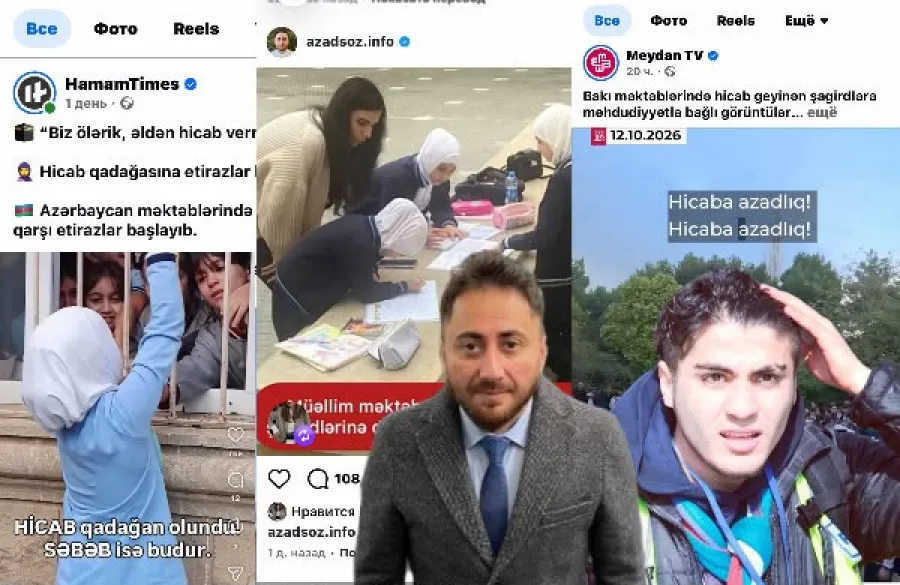
Following the adoption of official decisions on the implementation of a unified school uniform policy in Azerbaijani educational institutions, a targeted campaign of provocation and disinformation has emerged on social media, according to the article's author. Some platforms that present themselves as “independent” or “opposition” media, along with their representatives abroad, are allegedly attempting to mislead public opinion and fuel artificial discontent by promoting slogans about a supposed “hijab ban” that, according to the author, have no factual basis in the adopted regulations.
The unified school uniform policy adopted by the state is intended to ensure social equality among students, strengthen discipline and regulate the educational environment. The decision does not target any religious belief, nor does it introduce a ban on religious attire, the author argues. Nevertheless, the article alleges that opposition media outlets funded from abroad or serving the interests of foreign religious and political circles are attempting to turn the issue into a political tool by exploiting public sensitivities.
Who are the people presenting themselves as “defenders of religious values” on social media today?
One of the most striking aspects of the issue, according to the author, is that those leading this campaign — including Mehman Huseynov, Tural Sadigly and media figures associated with them — have not traditionally been known for their commitment to religious values or moral principles.
The author questions the sudden emergence of these figures as vocal advocates for the hijab, arguing that their previously publicised social media activity and association with secular lifestyles and different value systems contrast with their current positions.
What is their objective? When did figures such as Mehman Huseynov and Tural Sadigly become concerned about religious freedom or the spiritual significance of the hijab? The article argues that their primary interest lies not in religious values, but in exploiting new and politically advantageous issues to attract support from foreign foundations and influential networks.
The author further contends that exploiting such sensitive issues amounts to facilitating external interference in Azerbaijan's domestic stability and religious and moral environment. According to the article, these individuals are seeking to exploit people's sincere religious sentiments and turn them into instruments in their political campaigns.
Azerbaijani society upholds a secular system of government while respecting freedom of conscience and every citizen's beliefs. Portraying a routine administrative decision on school uniforms as “religious persecution” and questioning the credibility of individuals who have only recently begun presenting themselves as champions of morality are issues that, the author argues, deserve public scrutiny.
The article concludes by urging the public not to fall victim to provocation and manipulation.
Jala Rovshan