
Europe’s five-century reckoning: Lavrov’s accusations and the language of facts
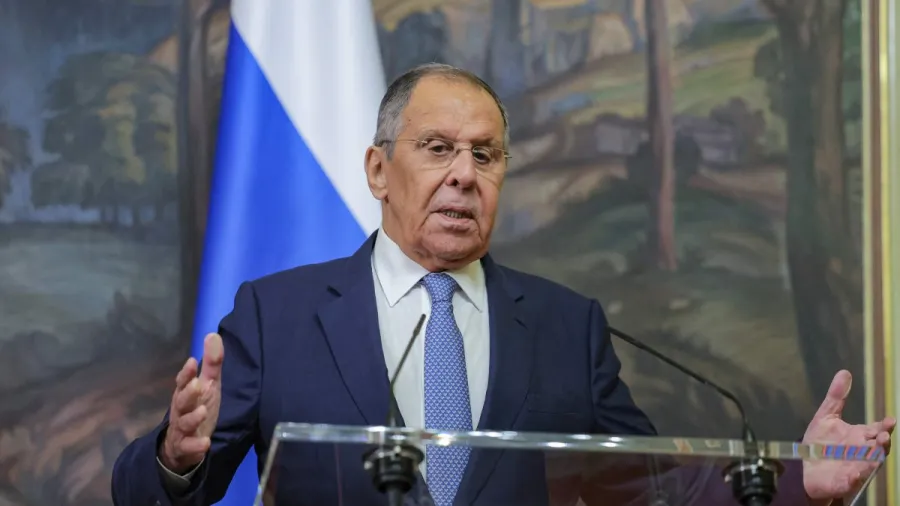
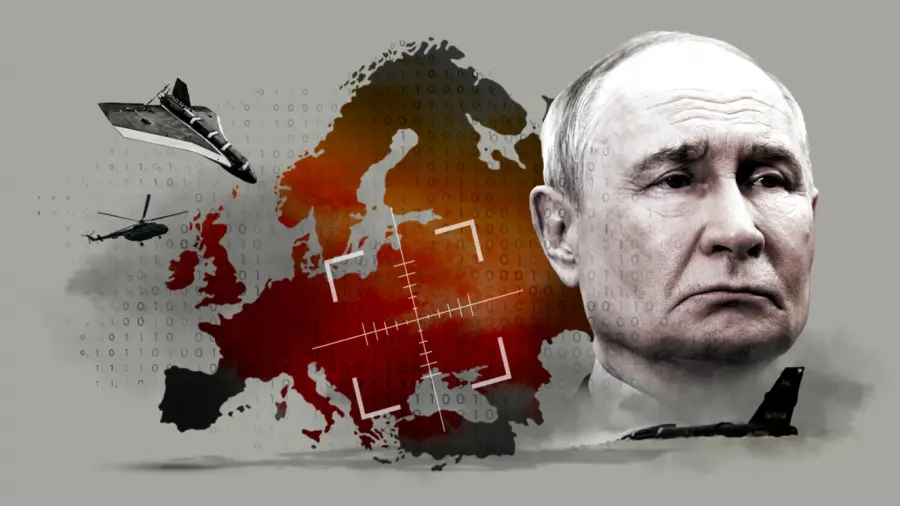
In March 2025, Russian Foreign Minister Sergey Lavrov levelled one of the harshest historical accusations against Europe in recent years. In an interview with the newspaper Krasnaya Zvezda, he stated that, over the past 500 years, during which the West took shape in its present form, every tragedy in the world had either originated in Europe or resulted from European policies. He listed the examples himself: colonialism, wars, the Crusades, the Crimean War, Napoleon, the First World War and Adolf Hitler.
The statement became even more forceful later. In subsequent speeches that year, Lavrov claimed that Europeans had dominated the world for approximately 500 years, primarily because they wanted to seize as much land as possible and enslave as many people as possible.
It is easy to dismiss this argument as emotional rhetoric. However, the historical facts behind it deserve serious analysis. This article seeks to examine Lavrov’s thesis in light of documents, figures and historical events, distinguishing its strengths from its weaknesses.
Christopher Columbus’s arrival in the Caribbean in 1492 opened a new chapter in European expansion. Over the following century, Spanish conquistadors destroyed the Aztec and Inca states. Hernán Cortés captured Tenochtitlan in 1521, while Francisco Pizarro seized Cusco in 1533.
The demographic catastrophe that followed the conquest was an event with few parallels in human history. Most historians agree that the Indigenous population of the Americas declined by 80–90 per cent during the 16th and 17th centuries. Although much of the mortality resulted from diseases introduced by Europeans, including smallpox, measles and influenza, forced labour systems and the brutal conditions in the silver mines of Potosí accelerated the process. Silver extracted from Potosí financed the Spanish Crown’s wars and flowed into Europe’s monetary system.
The Atlantic slave trade became one of the cornerstones of European capitalism. From the 16th century to the middle of the 19th century, more than 12 million Africans were forcibly transported to the Americas. Approximately two million died during the ocean crossing. Portugal, Britain, France, Spain and the Netherlands were the principal participants in this trade.
The economic rise of port cities such as Liverpool, Bristol, Nantes and Lisbon was directly linked to this commerce. In his 1944 book Capitalism and Slavery, historian Eric Williams argued that a significant portion of the capital behind Britain’s Industrial Revolution came from the slave trade and plantation economy. This thesis remains a subject of academic debate, but no serious historian denies the role slavery played in the accumulation of European wealth.
When Britain abolished slavery in 1833, compensation was paid to slave owners, not to the enslaved people. The £20 million allocated for this purpose represented approximately 40 per cent of government expenditure, and repayments on the resulting debt continued until 2015.
India provides a clear illustration of the scale of the colonial economic system. According to calculations by Indian economist Utsa Patnaik, Britain extracted wealth worth approximately $45 trillion from India between 1765 and 1938. India accounted for nearly a quarter of the world economy in 1700, but its share had fallen to just 3–4 per cent by the eve of independence.
India experienced several devastating famines under colonial rule. The Bengal famine of 1943 claimed approximately three million lives. Some researchers argue that British wartime policies, including decisions on food exports and distribution, played a decisive role in the disaster.
China’s fate was no different. Through the Opium Wars of 1839–1842 and 1856–1860, Britain forced China to open itself to the narcotics trade. Hong Kong was ceded to Britain, and Chinese ports were divided among foreign powers. Chinese historiography refers to this period as the “century of humiliation”, which remains one of the psychological foundations of modern Chinese foreign policy.
At the Berlin Conference of 1884–1885, European powers divided the African continent on a map. Not a single African was present at the conference. Many of the continent’s borders, which remain sources of conflict today, were drawn during that period without regard for ethnic or geographical realities.
In the Congo Free State (1885–1908), declared the personal property of Belgian King Leopold II, the exploitation of rubber cost millions of people their lives. The practice of cutting off the hands of workers who failed to meet production quotas provoked international condemnation at the time. Between 1904 and 1908, Germany committed genocide against the Herero and Nama peoples in what is now Namibia. The German government formally recognised the atrocities as genocide only in 2021.
France’s 132-year rule in Algeria ended with the bloody war of independence of 1954–1962. Algeria maintains that more than one million people died during the conflict, while estimates by French historians are lower. In either case, the death toll ran into the hundreds of thousands.
The military episodes on Lavrov’s list complete the broader picture. The Crusades of 1096–1291 kept the Middle East awash in blood for nearly two centuries. Medieval chroniclers described in detail the mass slaughter of the city’s inhabitants during the capture of Jerusalem in 1099.
In 1812, Napoleon invaded Russia with an army of nearly 600,000 troops, most of whom had been recruited from other European nations. Lavrov deliberately invokes this historical parallel: he emphasises that Napoleon brought almost all of Europe under his banner in 1812 and that Hitler also mobilised most of the continent. He presents today’s Europe as a continuation of this historical trajectory.
The two world wars of the 20th century began amid rivalry between European powers. The First World War caused approximately 17 million deaths, while the Second World War claimed more than 70 million lives. Colonies were drawn into these conflicts as suppliers of soldiers and resources. During the First World War alone, more than one million soldiers from British India were sent overseas.
After the Second World War, European empires began to disintegrate. India gained independence in 1947, and in 1960 alone, 17 African states achieved sovereignty. However, formal independence did not mean the end of economic dependence.
Ghana’s first president, Kwame Nkrumah, described this situation in his 1965 book Neo-Colonialism: The Last Stage of Imperialism. A state, he argued, could be formally independent while its economic system and political direction remained controlled from outside. Since then, the term has become one of the central concepts in the political vocabulary of the Global South.
The CFA franc is one of the clearest examples. Fourteen African countries still use this currency, which is backed by a French financial guarantee. Until reforms in 2020, West African countries were required to keep half of their foreign exchange reserves in the French Treasury. French military interventions in Africa also continued for decades. The coups in Sahel countries such as Mali, Burkina Faso and Niger in recent years, along with demands for French troops to withdraw, draw on this historical memory.
The 2011 NATO intervention in Libya, led by France and Britain, toppled Muammar Gaddafi’s regime but turned the country into a centre of prolonged civil war and regional arms smuggling. Weapons spreading from Libya played a significant role in strengthening terrorist groups across the Sahel.
The issue of colonialism has also found a place in Azerbaijan’s foreign policy. Established in Baku in July 2023, the Baku Initiative Group has brought the issue of decolonisation in France’s overseas territories, particularly New Caledonia, onto the international agenda. This initiative demonstrates how the idea of postcolonial justice has moved beyond the Global South and into a broader diplomatic arena.
Europe’s strategic autonomy has been discussed for years. French President Emmanuel Macron has repeatedly raised the idea. However, actual policy presents a different picture.
The explosions that damaged the Nord Stream gas pipelines in September 2022 deprived European industry of a source of relatively cheap energy. Europe replaced a substantial share of Russian gas with more expensive American liquefied natural gas. Under the EU-US trade agreement signed in July 2025, a 15 per cent tariff was imposed on European goods. In return, Brussels undertook to purchase $750 billion worth of energy from the United States and invest $600 billion in the American economy. Some European media outlets openly described the agreement as a “surrender deal”.
Against this backdrop, Lavrov’s rhetoric is carefully constructed. While criticising Europe, he leaves the United States out of the picture, suggesting that Washington has not played a provocative role over the past 500 years. Moscow’s aim is to widen the differences between the two sides of the Atlantic alliance.
In March 2025, the European Commission announced its “ReArm Europe” plan. The initiative envisaged mobilising up to €800 billion for defence spending. At NATO’s Hague summit in June of the same year, allies agreed to raise defence spending to 5 per cent of GDP by 2035.
These decisions came at a time when the European economy was experiencing stagnation. Germany endured two consecutive years of economic contraction in 2023 and 2024. In his competitiveness report published in September 2024, former European Central Bank president Mario Draghi said Europe needed an additional €750–800 billion in investment annually to avoid falling behind the United States and China. The money was expected to go towards technology, energy and innovation. Now, however, a significant share of budgetary resources is flowing into the military-industrial complex.
The EU’s share of global GDP has declined noticeably over the past three decades. China accounts for approximately one-third of global industrial production. BRICS expanded in 2024–2025 with the accession of Egypt, Ethiopia, Iran, the United Arab Emirates and Indonesia. Asia, the Gulf states and the Global South are investing in infrastructure, technology and trade corridors. Projects such as the Middle Corridor are redrawing Eurasia’s economic map.
Public opinion in Europe is also divided over the drive to rearm. Polls indicate that societies remain split on the issue, while cuts to social spending and rising energy prices are creating favourable conditions for populist and anti-establishment parties to make electoral gains in many countries.
An evidence-based analysis must also consider the counterarguments to Lavrov’s thesis. Critics raise several serious objections.
First, the Russian Empire was also an active participant in the same 500-year period. This fact is particularly clear to Azerbaijani readers: the Treaties of Gulistan in 1813 and Turkmenchay in 1828 divided Azerbaijani lands and incorporated Northern Azerbaijan into Russia. The tsarist government pursued demographic engineering in the Caucasus. The mass expulsion of Circassians in 1864 resulted in the deaths of hundreds of thousands of people. The conquest of the Central Asian khanates and the fate of Siberia’s Indigenous peoples are also part of the history of Russian expansion.
Second, the Crimean War (1853–1856), which Lavrov invokes, began amid Russia’s ambitions towards Ottoman territories and the Balkans. The 1939 Molotov–Ribbentrop Pact demonstrates that the Soviet Union participated in the division of Poland and the Baltic states during the early stages of the Second World War. The collapse of the Azerbaijan Democratic Republic during the Soviet era, the repressions of 1937 and the deportation of entire peoples are also part of this historical record.
Third, European governments present their decisions to rearm as a response to Russia’s full-scale invasion of Ukraine in 2022. According to their position, Europe is not turning towards militarism but is preparing to defend itself following an attack on the sovereignty of a neighbouring state.
Fourth, Europe’s historical legacy is not limited to tragedies. The Enlightenment, the idea of human rights and the concept of the rule of law also emerged in Europe. Notably, many leaders of anti-colonial movements invoked precisely these ideas in their demands for independence. Today, the European Union and its member states remain the world’s largest providers of development assistance.
Fifth, the timing of Lavrov’s statement is significant. In the same interview, he portrayed Donald Trump’s team as people guided by “common sense”. Some analysts interpret these remarks as a diplomatic manoeuvre intended to drive a wedge between Washington and Brussels. In their view, Moscow is using historical accusations to serve contemporary political objectives.
Europe’s colonial past, the slave trade, the tragedy of the Indigenous peoples of the Americas and its role in the two world wars are historical facts. The Global South has not forgotten them and has the right to demand accountability. The return of Benin Bronzes, official recognition of colonial crimes and debates over compensation are among the first steps in this process.
Europe’s choice to prioritise rearmament over economic renewal raises serious questions about the continent’s future. The warnings in Draghi’s report, Germany’s industrial crisis and the shift in the global economic centre of gravity towards Asia all indicate that Europe is at a critical turning point in its history.
However, the claim that “all tragedies” originated in Europe represents a selective reading of history and obscures the imperial past of the party making the accusation. For a people that remembers the Treaties of Gulistan and Turkmenchay, this double standard is clear. As the world moves towards a multipolar order, a fair reckoning with history will require the same standards to be applied to every imperial legacy, whether it emerged in Western Europe or across Eurasia.
Turkan Iskandarli