“Ilandagh was harder than Everest” – INTERVIEW with Adviyya Rasullu, who reached an altitude of 5,364 metres
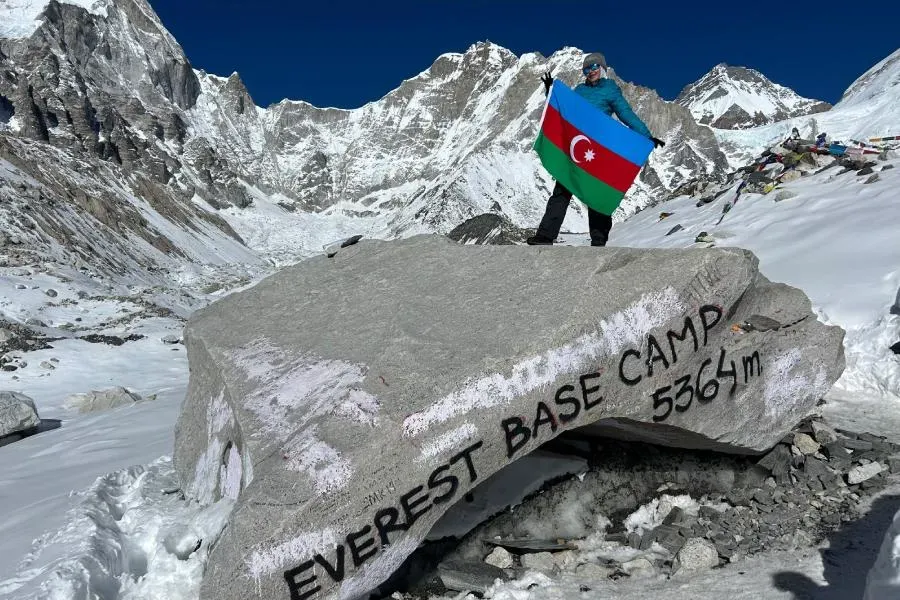
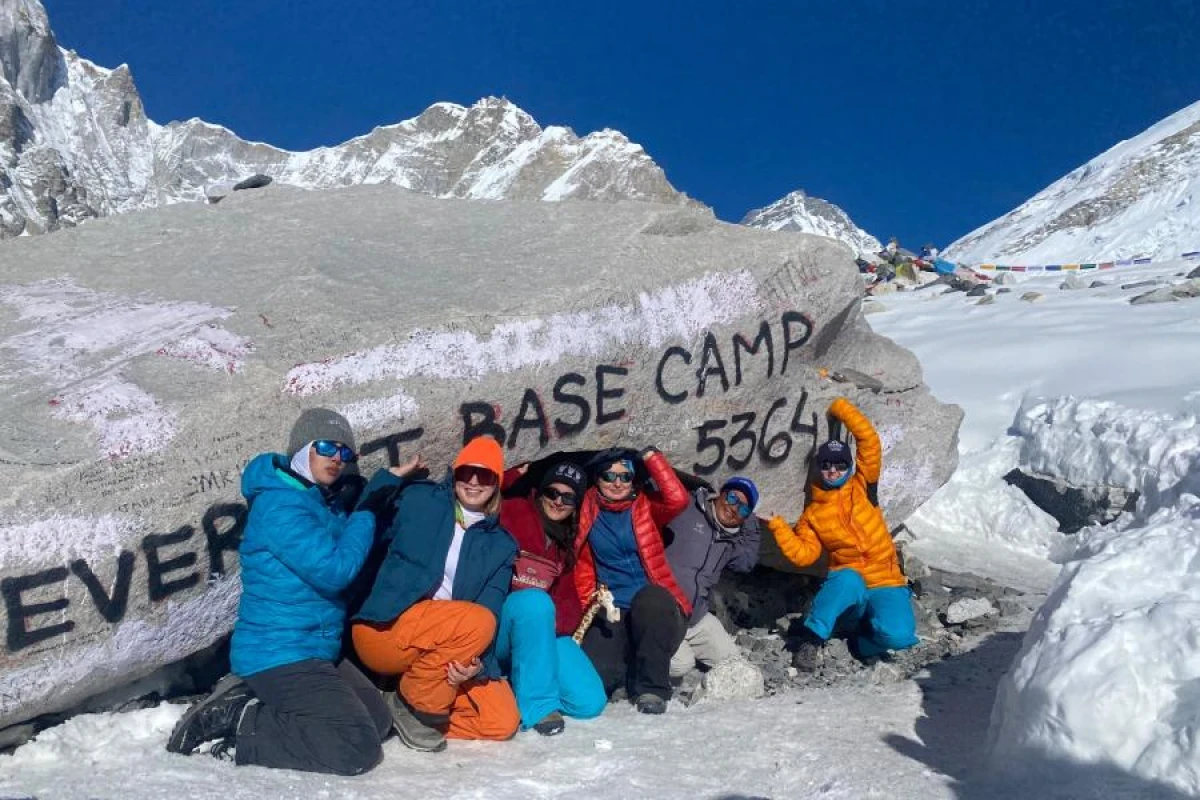
A new chapter has been written in the history of women’s mountaineering in Azerbaijan. On november 5, the first all-female mountaineering group from Azerbaijan, led by mountaineer Elmira Aslanova and comprising Nazrin Asadova, Adviyya Rasullu, Alisa Tvaradze and Yulia Sherstobitova, successfully reached Everest Base Camp at an altitude of 5,364 metres, marking a significant achievement.
One of the team members who accomplished this goal despite extreme cold, physical exhaustion and the challenges of high altitude was Adviyya Rasullu.
TodayPress TV spoke with her about her decision to join the expedition, the difficulties she encountered along the way, her fears, determination and what the experience brought into her life.
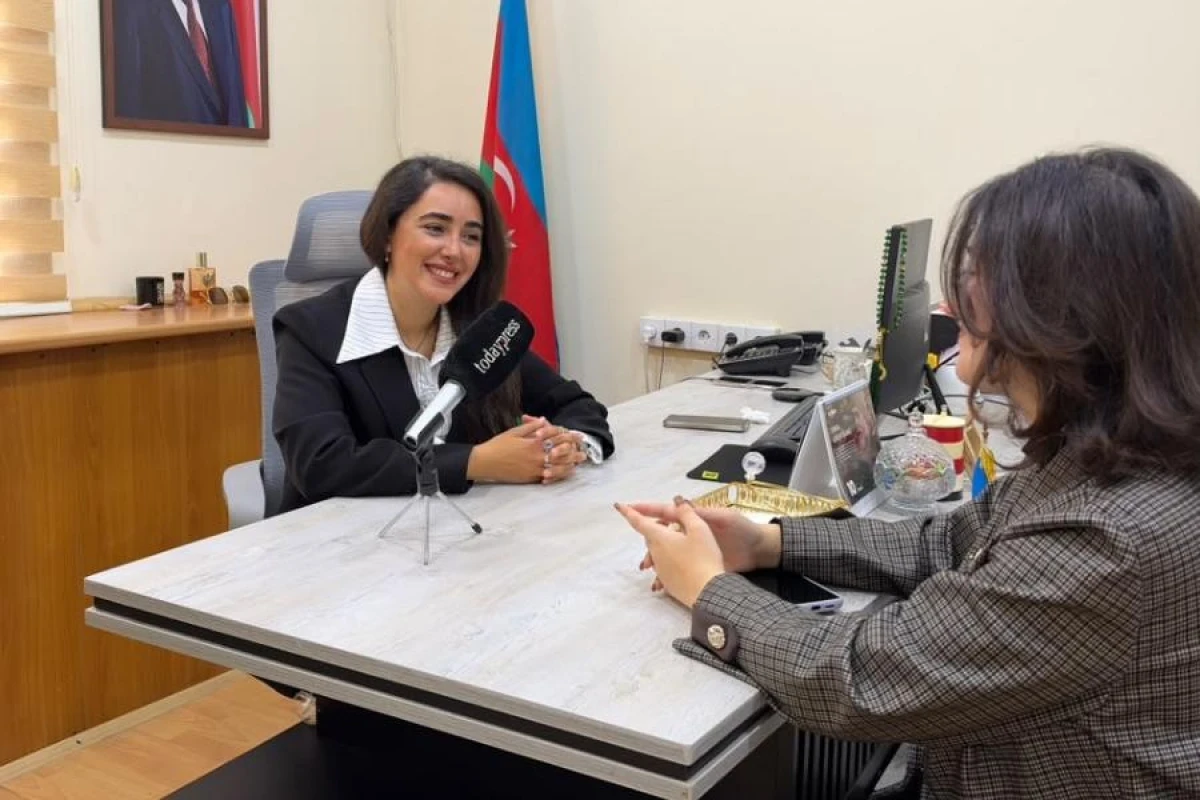
We present the interview below:
— How did you decide to go to Everest Base Camp? What motivated you to join this expedition?
— I don’t know how people will react if I say I never had such a dream, but I really didn’t. Nazrin Asadova and I had previously participated in mountain hikes together. She told me that an all-female group was being formed and that they were planning to go to Everest Base Camp. I immediately agreed and said I would join them. I had absolutely no idea what awaited me along the way or what difficulties I would face. I hadn’t researched any of it beforehand.
Of course, I had always wanted to go to Everest. I’m interested in mountains and regularly participate in hikes. Nevertheless, I’ve always been somewhat afraid of mountains.
In fact, my biggest childhood dream was to climb Ilandagh in Nakhchivan because I grew up seeing it. Ilandagh is one of Nakhchivan’s famous landmarks. I lived in Nakhchivan until I was eight years old, and I loved that mountain very much. Ilandagh became the third mountain I climbed.
If you asked me which was more difficult, the trek to Everest Base Camp or climbing Ilandagh, I would definitely say Ilandagh. For some reason, it was extremely difficult for me. It consisted of huge rocks. Climbing it felt like taking four stairs at a time, while descending was like going down eight stairs at once. The rocks were also very slippery. As soon as I placed my foot on them, the stones would shift. Although it isn’t particularly high, Ilandagh genuinely exhausted me.
— How did the first stage of the expedition go? What made you most nervous when setting off?
— We flew to Lukla on the morning of october 29. Fortunately, the weather was good, so we didn’t have to wait. Normally, flights are suspended when weather conditions are unfavorable. You either have to travel by helicopter or wait for the weather to improve. Luckily, the conditions were favorable, and we were able to fly on the 29th.
That was the most nerve-racking flight I’ve ever experienced. It lasted only 40 minutes, but psychologically it had a profound impact on me. They say it’s one of the most dangerous airports in the world. The aircraft was also very small. During landing, I was suddenly overwhelmed by fear. What if the plane couldn’t stop? What if an accident happened? I think that flight was one of the most frightening moments I’ve ever experienced.
— What difficulties did you encounter during the trek towards Everest? Was there ever a moment when you wanted to turn back and abandon the journey?
— The cold at night was extremely exhausting. The guesthouses where we stayed were located at intervals among the mountains. Some were 9, 10, 11 or even 12 kilometres apart. Sherpas (mountain guides) carried water and gas cylinders to these guesthouses. There are no natural gas pipelines in the Himalayas. The only heating available was a stove in the communal hall where everyone gathered. We could warm ourselves there, but the stove was turned off at 8 p.m.
The sun would set at around 4 p.m. While the sun was shining, you didn’t feel the cold as much, but after sunset, the temperature dropped dramatically. The conditions in the guesthouses, particularly the cold, were extremely difficult for me. I also struggled somewhat with the lack of cleanliness because I’m someone who pays great attention to hygiene.
But overall, no, I never wanted to turn back. When I was cold, I simply wanted to get warm. Waking up in those freezing conditions every morning was also difficult. On top of that, I couldn’t sleep because of the altitude. I experienced shortness of breath at night due to the pressure conditions. I could sleep for only one hour each night. I completed the entire journey on just that one hour of sleep.
— As the first all-female group from Azerbaijan to successfully reach Everest Base Camp, how did you support one another throughout the expedition?
— We had a doctor in our group named Alisa Tvaradze. I call her a “magician”. She motivated people so effectively that it seemed as though everyone she touched was healed. I think having her with us was a tremendous advantage.
In fact, the group was formed on her initiative. Reaching Everest Base Camp had been a major dream of hers. She first discussed it with Elmira and told her about her wish. So the person primarily responsible for bringing our group together was our doctor, Alisa.
Elmira also supported us tremendously. She checked on each of us individually and frequently asked about our health. Every day and every evening, our oxygen levels and heart rates were measured at the guesthouses.
However, one day Nazrin became very ill, which worried us. She was told that if she didn’t recover, she would have to return because continuing the trek in that condition would be impossible. Alisa and Elmira helped her a great deal and supported her recovery.
We were a group of five women, and what makes it remarkable is that all five of us managed to reach Base Camp. Every one of us achieved our goal.
— Was there ever a moment when you feared that a health problem might prevent you from completing the expedition?
— No. The only thing that really frightened me was the shortness of breath I experienced at night. There were moments when I felt as though I was suffocating. I would wake up thinking I had stopped breathing, even that I had died. I genuinely struggled to breathe.
I would sit up and tell myself not to panic because the more anxious I became, the harder it was to breathe. At first, I panicked, but eventually I learned to manage the situation.
— What did the Everest expedition give you emotionally and psychologically? How did this experience change your attitude towards life and difficulties?
— I realized something there: no matter how much advice people gave me or how they told me to act, I couldn’t necessarily adapt everyone’s recommendations to my own needs. I had my own walking pace and physical capabilities.
Although we travelled as a group, in reality, everyone completed the journey individually, relying on their own strength and thoughts and struggling with their own body.
I walked much of the route alone. I was often ahead of the others, trying to enter a more meditative state and spend time with my own thoughts. There were even moments when I felt completely alone, as though neither the guide nor the group was anywhere near me.
In general, I moved very quickly. People told me that I shouldn’t do that, that I needed to walk slowly and allow my body to acclimatize to the altitude. But I noticed that when I walked slowly and took frequent breaks, I became more tired. When I moved quickly, I seemed to gain more energy.
For example, on an 11-kilometre route, three rest stops were enough for me. While someone else might stop five times, I was satisfied with three. Sometimes even three breaks felt excessive. I noticed this difference myself during the expedition.
I believe that if I encounter difficulties in my life in the future, I will be able to overcome them more easily. Even if problems arise within my family or relationships, dealing with them will be easier for me. Experiences like this give people tremendous emotional and psychological strength. Everest gave me precisely that mental strength.
— How was the return journey from Base Camp? What difficulties did you face during the descent?
— I had a terrible headache on the way back. My head hurt severely for two days because the ascent takes much longer, whereas the descent is completed in a shorter period.
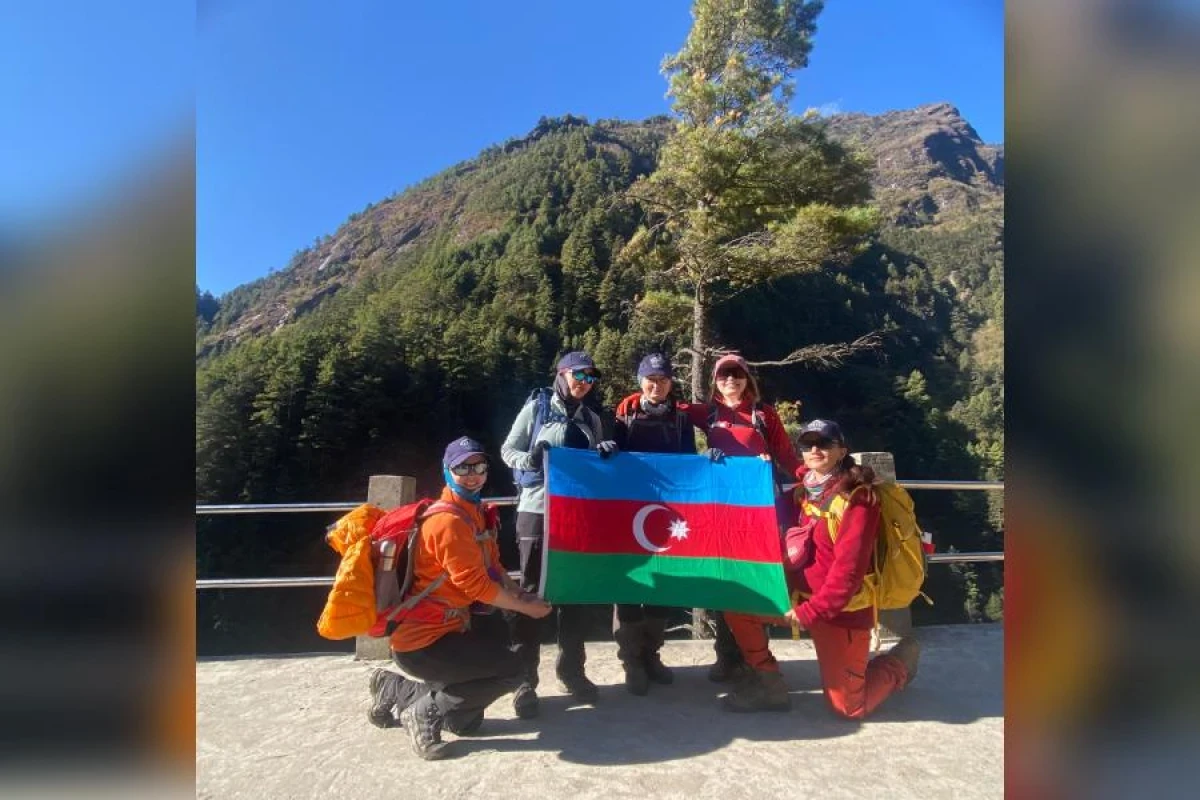
I should also mention that we began our descent on november 6. Along the way, we celebrated Victory Day on november 8 and National Flag Day on november 9 by proudly waving the Azerbaijani flag at high altitudes, filled with a deep sense of patriotism. The Azerbaijani flag deserves to fly on the highest peaks.
— Which moment of the expedition left the deepest impression on you and tested you the most, both physically and emotionally?
— There was a mountain we climbed to acclimatize to the altitude, particularly the reduced oxygen levels. It was 5,050 metres high and was called Nasharjun. We were scheduled to head to Everest Base Camp the following day.
We started climbing that mountain at 7 a.m. and reached the summit at 1:30 p.m. Unfortunately, I hadn’t brought any food with me. I also have insulin resistance. When we began descending, my condition worsened. I knew I absolutely had to eat something.
Thankfully, the other women, especially Alisa, gave me something to eat. But I realized that my legs had no strength left and my body was completely exhausted. There was a lot of snow around us. I kept sinking into it and falling.
I started to panic. But suddenly, I felt an extraordinary surge of strength, and I couldn’t understand what was happening. For me, it was a truly mystical, unusual, even somewhat esoteric moment. I still don’t know how I managed to descend or where that strength came from.
When I reached the bottom, Elmira hugged me, and we cried together. I told her, “Elmira, it felt as though someone was carrying me. It was as if I wasn’t myself”.
She replied, “We couldn’t catch up with you”.
One of our guides had even been following me. Suddenly, I started descending so quickly that the other women were left behind. Yet just a short time earlier, I had been unable to make my way down and was falling behind everyone else.
At some point, a thought had formed in my subconscious: I absolutely had to get down. I needed water, but I had already run out. I had brought one litre with me, and it was gone. I understood that I had to reach the bottom to get food and water.
I started panicking at 2 p.m. I spent about an hour trying to calm myself down and meditated for a while. Then, all of a sudden, I felt stronger and managed to descend in just one hour. I finally reached the bottom at 4 p.m.
It was an incredibly intense and unusual experience for me.
— Is reaching Everest Base Camp your final goal, or do you plan to climb other peaks in the future?
— Of course, I would love to reach the actual summit of Everest. Once you’ve travelled to Base Camp at 5,364 metres and seen Everest’s 8,848-metre summit, you naturally develop a desire to climb it. It becomes the next goal you set for yourself.
— What advice would you give to young people in Azerbaijan, particularly girls, who want to participate in expeditions like this?
— If their health allows it, I would recommend taking part in such expeditions. They simply need to avoid panicking if they experience shortness of breath at night and learn how to manage the situation.
I would tell young people joining these treks not to compete with anyone or try to catch up with someone else. This isn’t a race. If you try to compete, you’ll lose.
The mountain is always there. It stays exactly where it is; it doesn’t move. You can reach that mountain a day later or even two days later. But you must never compete with other people or with the mountain itself. Otherwise, you’ll be the one who loses.
People need to learn to listen to their bodies. For example, if the person beside you feels a certain way, that doesn’t mean you have to feel the same. After all, our bodies are different. Physiologically, everyone has their own characteristics, feelings and sensations.
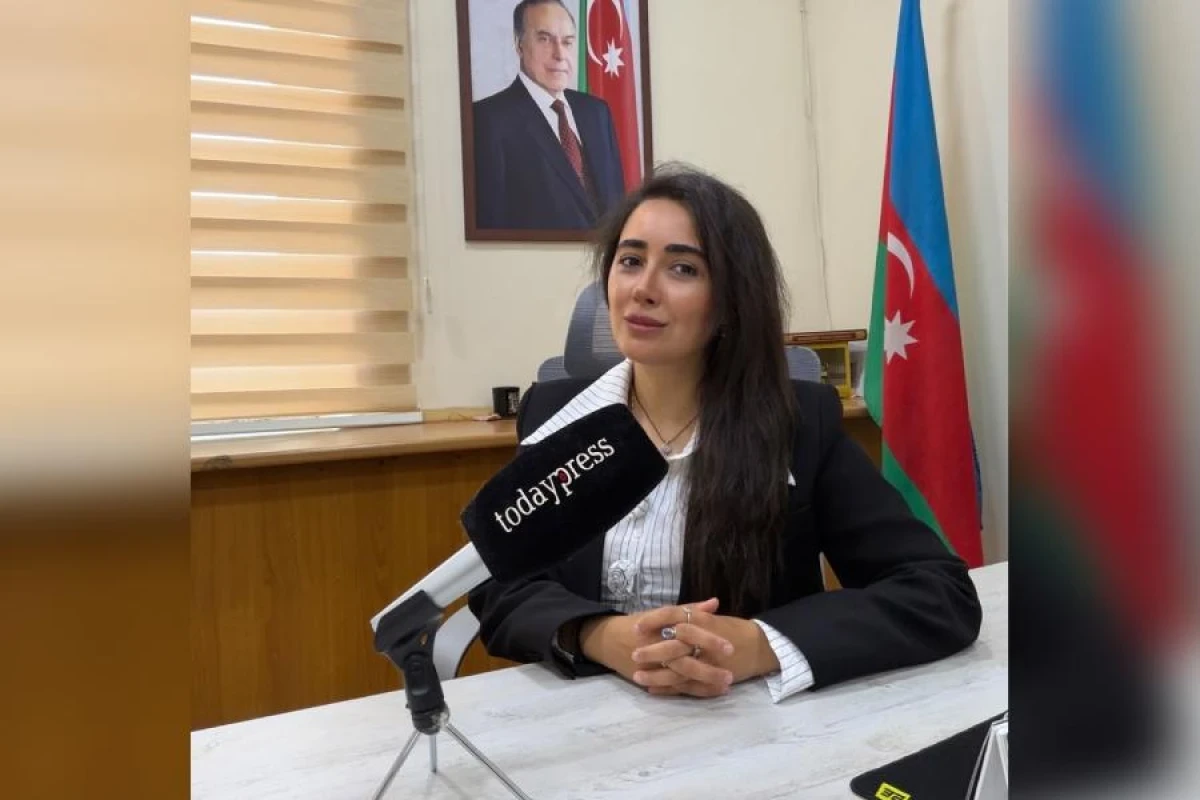
Adviyya Rasullu currently serves as Deputy Chairperson of the Nasimi District Municipality.
Turkan Isgandarli