
The Russia-Poland score remains unsettled: The shadow of 1939 returns
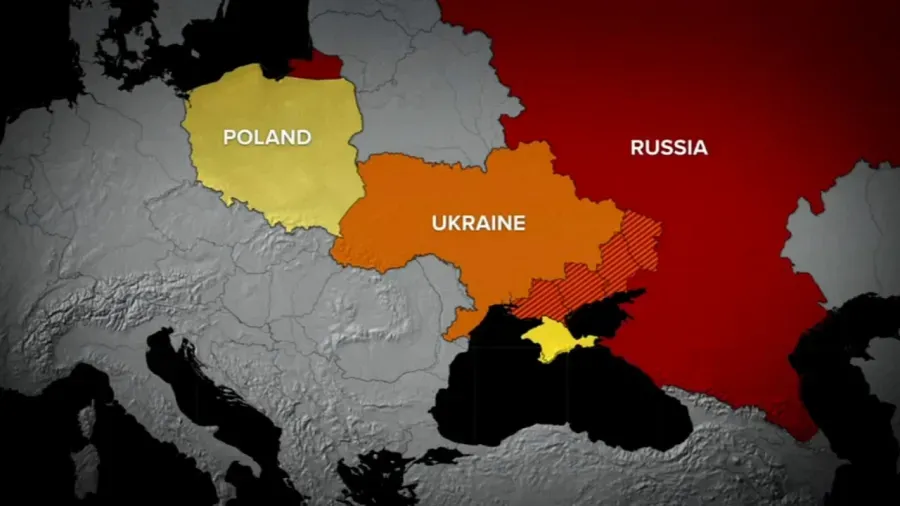
There is little left to discuss between Poland and Russia. Relations between the two countries can no longer be described simply as diplomatic. Warsaw does not trust Moscow, while Moscow sees Warsaw as being on the front line of the hostile camp. The gap between the two sides widens year after year, and an incident on November 20 further deepened these tensions.
For Poles, the partitions of their country, the Katyn massacre, the events of 1939 and the period of Soviet rule are not distant history. That historical memory continues to influence the country's political decisions today. This is why, after 1989, Poland made integration with the West a central pillar of its foreign policy. Membership in NATO and the European Union was not a matter of prestige for Poland, but a key means of ensuring national security.
Now, however, that security system is being put to the test.
On November 20, as Russia launched another large-scale attack on Ukraine, three airborne objects were reported to have fallen on Polish territory. One of them was a Kh-101 missile, which came down near the village of Nowy Lipowiec. Other objects were recorded in the areas of Rudnik nad Sanem and Mołodycz. Initial reports indicated that two of the objects were missiles and one was a drone. Later, prosecutors also raised the possibility that all three could have been Kh-101 missiles. No definitive conclusion has yet been reached regarding the incident.
At the time, a military exercise called "Coalition 2026" was being held at the Nowa Dęba training ground. Led by France and the United Kingdom and involving 11 countries, the exercise was aimed at determining how Ukraine could be supported after the end of the war.
The Russian missiles fell just tens of kilometres from the training ground. Warsaw did not regard the incident as accidental. Prime Minister Donald Tusk described it as a deliberate provocation from the outset. Defence Minister Władysław Kosiniak-Kamysz took the same position, stressing that Russia was attempting to intimidate countries supporting Ukraine.
In fact, this was not the first such move against Poland. In September 2025, nearly 20 drones entered Polish airspace. That incident also triggered alarm in the country, consultations were held within NATO, and the "Eastern Sentry" operation was launched. Therefore, the latest incident was not unexpected for Warsaw. Poland has been facing similar threats for a year, but this time missiles replaced drones.
NATO Secretary General Mark Rutte visited Warsaw a day after the incident and declared that every inch of Polish territory would be defended. Although the statement sounded reassuring, Poland is now expecting concrete action. That is why Warsaw is not content with political declarations on security and is increasing its defence spending.
This year, Poland is allocating 4.8% of its GDP, approximately $53–55 billion, for this purpose. This is the highest figure among NATO member states. Poland is purchasing tanks, artillery, missile systems and air defence equipment while expanding domestic military production. Alongside strengthening its armed forces, the country is also restructuring them. Warsaw does not consider this level of spending sufficient and is urging NATO allies to raise their defence budgets to 5% of GDP by 2030.
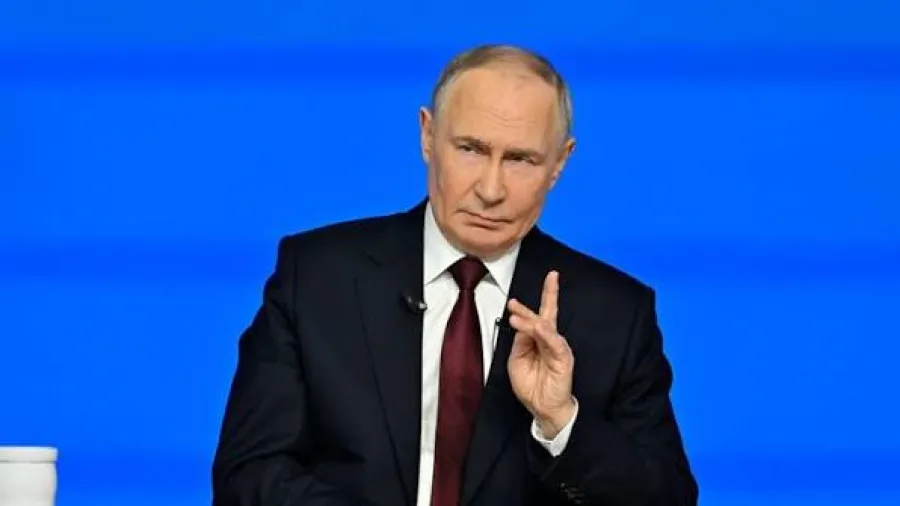
One of the issues causing the greatest discontent is Washington's attitude towards Russia. Just hours before the incident, Trump said that Putin had mistakenly sent drones and "a few small missiles" into Poland. The remarks triggered strong criticism in Warsaw. Tusk openly said that he disagreed with Trump's position. After the US president called Putin a friend in China, the Polish prime minister responded even more firmly: "Putin is not our friend and never will be." This was not an ordinary statement made within the bounds of diplomatic courtesy. Tusk was once again making clear that Poland's position on Russia would not change.
Moscow initially remained silent about the incident, but later used state media to claim that Poland's allegations had not been proven. Such statements no longer come as a surprise in Poland.
The picture is therefore clear. Poland will not back down. Its military build-up will continue. It will demand more from NATO and work more closely with France, the United Kingdom and the Baltic states. If Russia continues these provocations, Warsaw will respond more firmly. Even if peace is achieved, Poland will not feel at ease. In Warsaw, the question is no longer whether the war will end, but whether Russia will continue testing NATO even after the fighting stops.
Poland has already answered that question. That is why it is preparing.
Jala Rovshan