
A new form of silent takeover: Debt-trap diplomacy
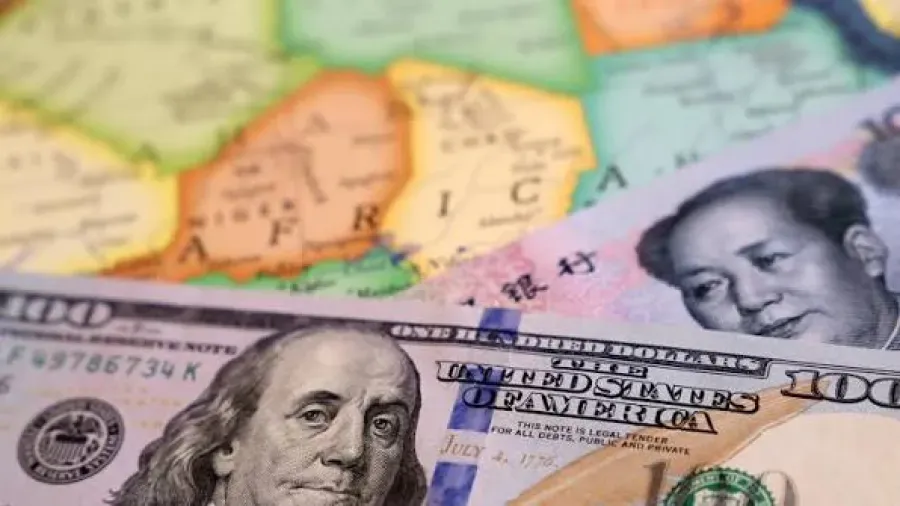
Major powers are no longer relying solely on military means to expand their spheres of influence. They are increasingly turning to a quieter but effective instrument: financial leverage and debt mechanisms. Large-scale loans extended to economically weak or crisis-hit countries may initially be presented as development assistance and support. However, the picture changes when repayment falls due. States unable to meet their financial obligations in cash may find themselves forced to hand over strategic infrastructure, ports, mines and natural resources to creditors in exchange for debt relief.
One example of this mechanism can be observed in West Africa, in Senegal.
In recent years, China has extended substantial loans to finance infrastructure and other projects in Senegal. The interest rates are reportedly very high, while China was fully aware that these loans might never be repaid in full.
When Senegal was unable to service its debt, it was forced to grant licences to Chinese fishing companies, which now reportedly control a significant share of the country's fishing sector. Today, much of the industrial fishing in Senegalese waters is said to be controlled by foreign fleets. This represents not only economic dependence but also a decline in the livelihoods of local fishermen and a threat to one of the population's main sources of food.
Senegal is far from the only example. Various regions around the world have witnessed a number of notable cases in which debt and investment commitments have become linked to strategic assets.
In Sri Lanka, the debt burden associated with the construction of the strategically important Hambantota Port using Chinese loans became a serious problem for the country. As a result, Colombo granted a Chinese company a 99-year lease to operate the port.
Zambia and the Democratic Republic of the Congo have also faced disputes surrounding foreign debt, natural resources and the mining industry. In these countries, which are rich in copper and cobalt deposits, investment and loan agreements worth billions of dollars have brought issues of extraction and exports to the forefront. In particular, agreements linking infrastructure projects to mineral extraction in the Democratic Republic of the Congo have been the subject of prolonged disputes and renegotiations.
In Laos, amid a growing external debt burden, the influence of foreign partners over the management of the national electricity transmission network has increased. This situation has raised questions about the country's energy security and economic sovereignty.
In Latin America, the examples of Ecuador and Venezuela are also noteworthy. In previous years, these countries entered into agreements allocating a certain share of their oil production to creditors as repayment for loans. As a result, even during periods of falling oil prices, part of the extracted crude was directed towards debt servicing rather than state budgets.
This global trend can currently be observed in one of its most sensitive and complex forms in Ukraine. While the process in Senegal unfolded through infrastructure loans during peacetime, in Ukraine it is taking place against the backdrop of a devastating war and the country's struggle to preserve its statehood.
Ukraine's economy has been severely damaged by the war, while its public debt has risen sharply. Repaying the billions of dollars in financial assistance already received, as well as the funds expected to be allocated for future reconstruction, through conventional means could create serious economic difficulties. At this point, the fishing licences seen in the Senegalese case are replaced, in Ukraine's case, by rare earth minerals, energy infrastructure and agricultural resources.
Ukraine's reserves of lithium, titanium, graphite and uranium are among the country's key strategic resources attracting the attention of Western nations. Access to these assets, which are important for modern technologies and the defence industry, has also become part of discussions surrounding the economic and strategic dimensions of international support for Ukraine. Consequently, the country's mineral wealth is emerging as a major factor in its post-war economic relations.
Another important issue is Ukraine's agricultural sector. The country possesses some of the world's most fertile farmland, and the opening of its land market, combined with the financial difficulties caused by the war, could strengthen the position of major international agricultural corporations and investment funds. This could make the management of agricultural resources and the protection of national interests even more pressing issues in the future.
Interestingly, before the war, China had also sought to expand its position in Ukraine through a similar economic model. The $3 billion 2012 “grain-for-loans” agreement and Beijing's attempt to acquire the strategically important Motor Sich aircraft engine manufacturer are cited as examples. However, following US intervention, Kyiv prevented China from acquiring the company. Today, Western governments and international financial institutions are among the principal actors involved in discussions over Ukraine's reconstruction and the future management of its strategic assets.
There is, however, a fundamental difference between Senegal and Ukraine. While Senegal's challenges are primarily related to economic and financial obligations, Ukraine is fighting an existential war and would face enormous difficulties in preserving its statehood without foreign financial and military assistance.
Nevertheless, whether in Africa, Asia or Eastern Europe, major financial flows are driven by long-term economic and strategic interests. Once the war ends, one of the most difficult challenges facing Kyiv will not simply be rebuilding destroyed cities and infrastructure. Ukraine will also have to protect national control over its strategic resources amid debt obligations and foreign investment agreements.
Otherwise, a country that has paid a heavy price for political independence could find its economic sovereignty dependent on the interests of foreign creditors and investors for decades to come.
Jala Rovshan