
Iran presses the button that has the world worried: Until the end of the year...
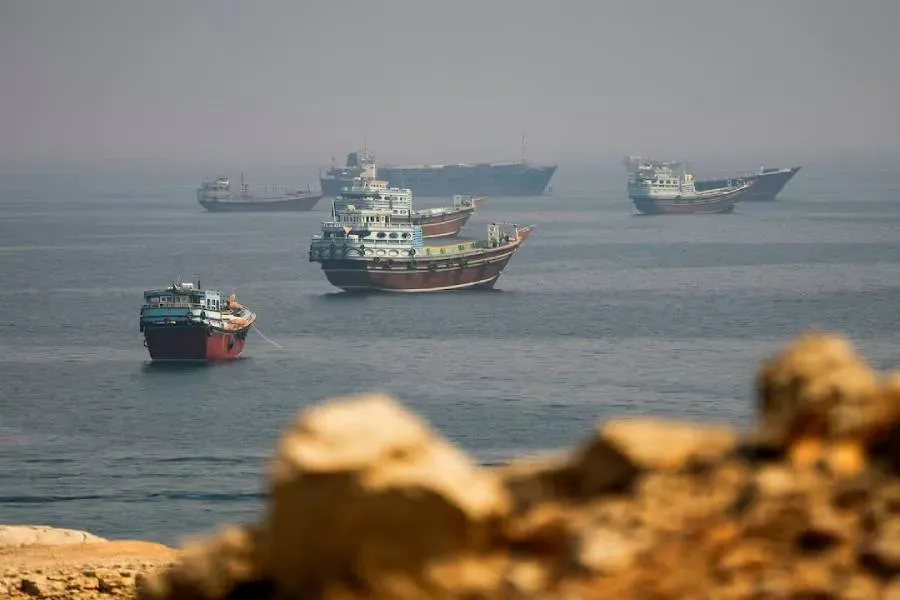
Amid Iran’s complete halt to shipping through the Strait of Hormuz, the possibility that the strait could remain closed until the end of the year has emerged.
Such a scenario could trigger a serious shock in global energy markets, causing oil and gas prices to surge and transportation and insurance costs to rise sharply.
But what military and political capabilities does Iran have to sustain this decision for an extended period? How would a prolonged closure of the Strait of Hormuz affect security in the region?
.jpg)
Political scientist Yusif Bagirzade, who spoke to TodayPress TV about the issue, said that Iran’s prolonged restriction of shipping in the Strait of Hormuz is one of the most dangerous scenarios that could elevate the confrontation in the Middle East from a regional conflict to a global energy crisis:
“The sharp decline in the number of commercial vessels passing through the strait already shows that the risk is no longer theoretical. In early September, daily transit had fallen to an average of 10 vessels, and on some days the figure was only a few ships. Reciprocal attacks by US and Iranian forces related to shipping have made commercial transportation even more dangerous.”
According to the analyst, Iran has certain military capabilities that could allow it to keep the strait closed for an extended period. Tehran can pose a serious threat to shipping through coastal missile systems, unmanned systems, fast attack boats and the risk of mines:
“However, halting shipping and maintaining full, long-term control over the strait are not the same thing. The naval forces of the US and its allies have the potential to limit Iran’s capabilities and eliminate the mine threat. Nevertheless, bringing the strait to a completely safe state is not a rapid process.
“Iran’s main constraint is political and economic. A prolonged closure of Hormuz would deal a major blow not only to the US and the West, but also to China, India and the Gulf states. At the same time, it would restrict Iran’s own energy exports and imports. Therefore, Tehran could use the strait primarily as a tool of strategic pressure, but keeping it completely closed for months could also severely damage Iran’s own economy.
“Therefore, if the strait remains closed until the end of the year, the consequences could be extremely serious. Hormuz is one of the most important straits for global energy trade, and its prolonged closure could create major supply shortages in global oil and LNG markets. As a result, oil prices could rise excessively.”
According to Y. Bagirzade, the more dangerous consequence from a regional security perspective would be the expansion of the confrontation:
“Attacks on shipping increase the risk of direct clashes between US and Iranian forces and turn the Gulf states into potential targets of the conflict. Energy infrastructure, ports and tanker routes are becoming instruments of military pressure. Under such circumstances, countries such as Saudi Arabia, the UAE, Qatar and Kuwait may be forced to take a more active stance to ensure both the security of their territories and the continuity of their energy exports.
“In other words, although Iran’s ability to keep the Strait of Hormuz in a dangerous state for an extended period is real, imposing a complete blockade until the end of the year could also come at an extremely high cost for Tehran. More broadly, the Hormuz issue is no longer merely an element of the Iran-US confrontation. A prolonged closure of the strait could combine energy, logistics and security crises, creating a shock of global proportions. The most dangerous aspect is that the involvement of commercial vessels in the military confrontation increases the likelihood that even accidental incidents could trigger a broader regional war.”
Giymat Mahir
PHOTOS