What if Pashinyan suddenly dies? Three possible scenarios
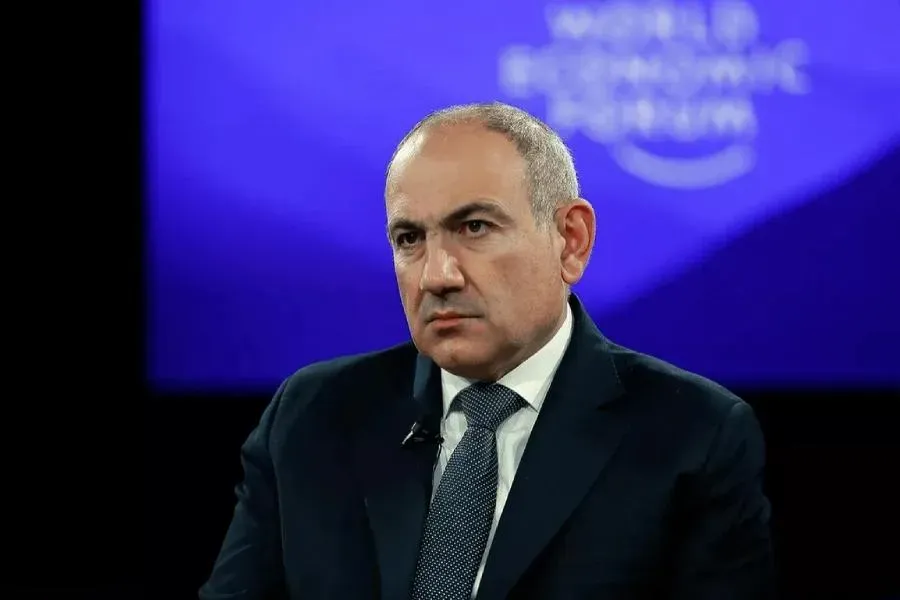
There are several interesting theories about the future of Armenia’s political system if Nikol Pashinyan suddenly dies or voluntarily steps down from power.
TodayPress TV reports, citing Musavat.com, that the departure of Armenian Prime Minister Nikol Pashinyan from power, whether “by one means or another,” would not automatically lead to a change in the country’s political system.
According to an analysis published by Aravot.am, the key issue is not merely a change of leader, but how the institutions established during his tenure would function afterwards.
Comparing Pashinyan with Armenia’s previous leaders, the author writes that Pashinyan does not appear inclined to relinquish power voluntarily. Armenian analyst Aram Abrahamyan suggests that the political and legal consequences the prime minister could face after leaving office may be one reason why he is reluctant to step down.
Abrahamyan examines three main scenarios for how authoritarian systems can evolve following the death of their leaders.
The first scenario involves the preservation of the existing system, with the fundamental principles of governance remaining unchanged after the leader’s death. The author cites the Soviet Union’s political system following Joseph Stalin’s death as an example.
The second possibility is a struggle for power within the ruling elite. Abrahamyan refers to developments in China following Mao Zedong’s death. In his view, such a struggle may lead to certain policy changes but does not guarantee a transformation of the overall system of governance.
The third scenario is that the leader’s death creates an opportunity for political reform. The author cites Spain’s democratic transition following the death of Francisco Franco as an example of this outcome.
One of the key points in Abrahamyan’s analysis concerns the state of government institutions after a change of power. According to the author, a system of governance centred on a single leader for an extended period can hinder the emergence of independent political forces and alternative leaders.
Under such circumstances, a leader’s departure does not automatically strengthen state institutions. Instead, the new leadership may face internal power struggles, a governance crisis and institutional weakness.
The author highlights the risks that the personalisation of power poses to the future of a political system. Aram Abrahamyan is sceptical about the possibility that Russia could pressure Pashinyan into leaving office. The author argues that, in theory, such a scenario could also be linked to the position taken by the West.
In his view, Europe and the United States could take a tougher stance on political freedoms, repression, corruption and the confrontation between the government and the Armenian Apostolic Church under certain circumstances. However, the author stresses that this would require a change in the international political environment.
The analysis concludes that Pashinyan’s departure from power would not resolve all questions surrounding Armenia’s political future. The key issue is whether a change of leadership would strengthen state institutions, broaden political competition and pave the way for democratic reforms.