

Russia “rakes through the ashes” in the Caucasus: What are they looking for?
Monitoring Russia’s main news resources shows that the news agenda has been quite busy.
Throughout the week, leading media outlets such as Izvestia, RIA Novosti, TASS, RT, Kommersant and others focused primarily on the BRICS summit, the situation on the Ukrainian front, drone attacks on Russia and economic decisions.
In recent days, the main topics on the international agenda have been Vladimir Putin’s visit to India and the BRICS summit. His meeting with Narendra Modi, messages concerning a multipolar world, Western policies, energy and economic cooperation have received extensive coverage. Russian media have presented the summit as evidence of Moscow’s strengthening ties with partners outside the West and the consolidation of its international position.
Meanwhile, the flow of news concerning Ukraine has been more dynamic. Reports from the Russian Defense Ministry have highlighted advances on the front and Ukrainian army casualties. At the same time, mass drone attacks on Russian territory during the nights of September 10–12 have received extensive coverage. Incidents in Bryansk, Kursk, Belgorod, Tula and other regions have become some of the main topics of daily news coverage.
Vladimir Putin’s phone conversation with Donald Trump was also given particular prominence on the diplomatic agenda. Discussions concerning Ukraine and possible diplomatic contacts were presented against the backdrop of possible directions for the peace process.
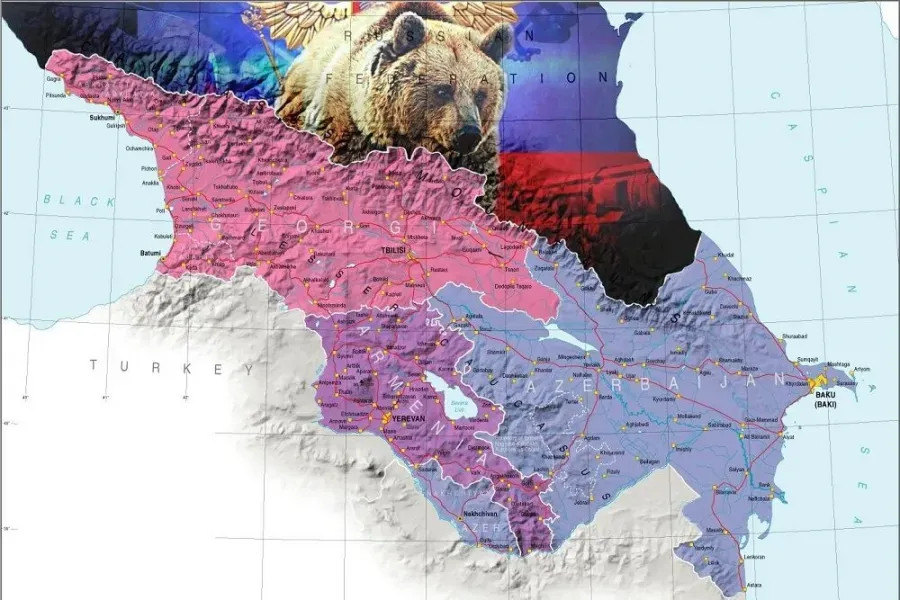
Alongside the broader agenda, a noteworthy line of coverage has also emerged in reports concerning Azerbaijan and the South Caucasus.
In particular, the emphasis on a negative information backdrop surrounding Azerbaijan-Russia relations is hard to overlook. Azerbaijan’s Ambassador to Russia Rahman Mustafayev has also spoken about insulting and provocative materials concerning Azerbaijan and the country’s leadership in the Russian information space, saying that the issue has already become a problem in the context of bilateral relations.
A similar line can be observed regarding the Karabakh issue. Some Russian media outlets have once again raised materials concerning cultural heritage in the region, the condition of Armenian monuments and claims about allegedly destroyed memorials. At the same time, the selection of reports concerning political activists in Azerbaijan and domestic political processes indicates that topics capable of affecting the country’s international image are being brought to the forefront.
In the South Caucasus’ geopolitical agenda, the main focus has been on the Zangezur Corridor and the TRIPP project, Armenia’s rapprochement with the West and the changing role of Russia in the region. Reports have highlighted views that Moscow is being sidelined, Armenia’s cooperation with the US, and the possibility that new transport routes could alter the regional balance.
At the same time, the emphasis on the “3+3” format in Russia-Iran contacts has been presented as an attempt by Moscow and Tehran to coordinate their positions in the South Caucasus.
Another noteworthy line concerning Armenia involves discussions that the country could become a potential new geopolitical platform in the US-Iran confrontation. This approach is presented in the context of changes in the regional security balance and the expansion of Armenia’s military and political ties with the West.
Azerbaijan-Türkiye energy cooperation has also received separate attention against this backdrop. Reports on energy cooperation, electricity interconnections, the green energy corridor and transport opportunities along the Zangezur route between Baku and Ankara have been covered from the perspective of the growing role of the Azerbaijan-Türkiye tandem in regional and European energy security.
Thus, based on the findings of our monitoring, three main lines stand out in the Russian media:
BRICS and Moscow’s international position; the war in Ukraine and security issues; as well as domestic economic stability.
In the Azerbaijan and South Caucasus coverage, clearer contours of an information struggle can also be seen alongside these themes. The emphasis on a negative information backdrop in Azerbaijan-Russia relations, the revival of disputed narratives concerning Karabakh, and reports about Russia’s declining influence in the region against the backdrop of Zangezur/TRIPP are particularly noteworthy in this regard. The fact that a large portion of the reports rely on official statements also shows that Moscow’s position remains dominant in the overall information landscape.
Jala Rovshan