
“While our own are fighting each other” — Ramiz Yunus writes
There are things that are difficult to discuss even in a friendly conversation, but there are moments when remaining silent is no longer a sign of tact, but of irresponsibility.
For many years, I have spoken about Ukraine, and throughout all the years of Russian aggression I have tried to stand on its side — in the Ukrainian information space, on television and in public discussions. That is precisely why today I want to tell Ukrainian society something that some people may find unpleasant to hear.
I say this as a friend, and a true friend is not obliged to say only pleasant things.
Ukraine is at war. Not metaphorically, not for another percentage point in the polls, not for a ministerial seat, not for a place in parliament, and not over who will be the first to appear in front of television cameras. Ukraine is fighting for its existence, its sovereignty, its statehood and its right to determine its own future.
And at this very moment, I look at what is happening within Ukraine’s political and information space and ask one very simple question:
Can Ukraine really afford the luxury of fighting itself as well?
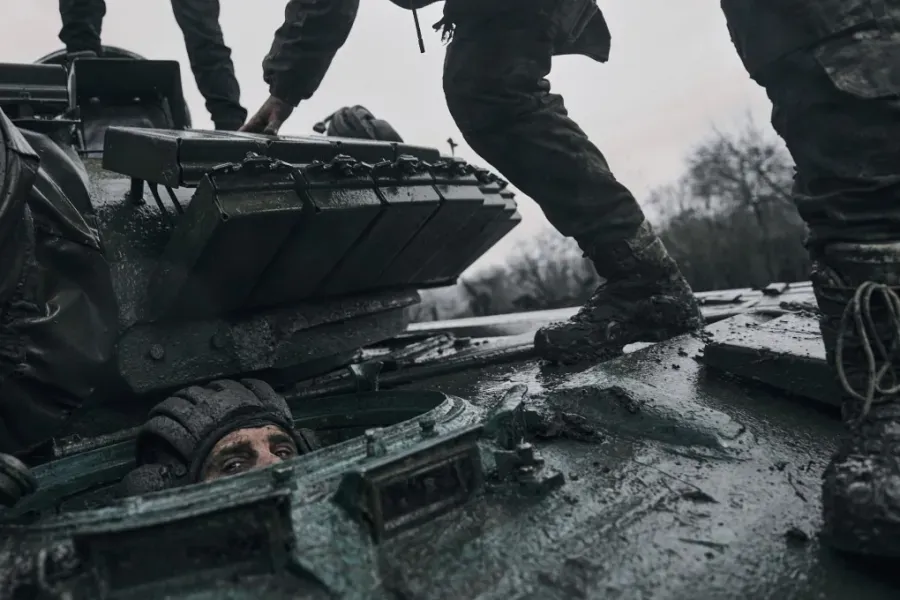
While Russian missiles and drones strike Ukrainian cities, energy facilities and civilian infrastructure, while Ukrainian soldiers remain in trenches and understand the price of this war every minute, political scandals, mutual accusations, public conflicts and struggles over the country’s political future continue inside the country.
There is fierce confrontation between the authorities and the opposition in the Verkhovna Rada. In the information space, there are endless mutual accusations. One side argues that the others are to blame, while their opponents respond in kind. Political camps are becoming increasingly divided, and the information environment is turning into a field of continuous internal warfare.
And I keep thinking about one thing: what is Russia doing at this time?
It is watching and taking advantage.
Because there is no better gift for an adversary than a divided society that begins to destroy trust in its own state.
The war has long been fought not only with missiles and tanks, but also for people’s minds, their trust, their fears, their disappointments, and their ability — or inability — to believe in their own country.
And if Ukrainian society itself produces internal hatred, mutual distrust and a sense that the state is completely incapable of dealing with problems every day, all Russia has to do is pour gasoline onto an already burning fire.
And Russia is doing exactly that.
The Russian information machine understands perfectly well that sometimes it is not necessary to defeat an opponent on the battlefield; it is enough to help that opponent defeat itself.
What is particularly dangerous is that people and political forces outside Ukraine are also becoming involved, trying to influence European voters by convincing them that supporting Ukraine is too expensive, that Ukraine is allegedly tired, that continued support is pointless and that it is time to “seek a compromise.”
We understand perfectly well that the information war has long gone beyond Ukraine, and that is why Ukrainian society particularly needs internal political maturity today.
I am not calling for democracy to be abolished. But democracy must have the capacity to protect the state that is itself defending that democracy.
Opposition, a free press and criticism of the authorities are essential to democracy. But there is an enormous difference between criticizing the authorities and politically destroying the state itself.
In peacetime, political struggle can be endless. But in wartime, there is a point beyond which internal conflict begins to work in favor of the adversary, and that line must not be crossed.
For many years, we were told that the main dividing line in the global confrontation was between “democracies and autocracies.”
This formula is heard today in virtually every Western political office and has indeed become one of the main political formulas of our time.
But then uncomfortable questions arise.
If everything is so simple — democracies versus autocracies — why, for decades after the collapse of the Soviet Union, did enormous economic interests exist between the democratic West and authoritarian Russia, and why did European businesses make profits on the Russian market for years?
Why did Europe purchase Russian energy resources for decades, while Western companies invested in Russia, built businesses there and signed multibillion-dollar contracts, only beginning to reconsider this model on a mass scale after Russia’s full-scale invasion of Ukraine?
And even today, after a huge number of sanctions, trade between the European Union and Russia has not disappeared. In 2025, trade in goods amounted to €58.1 billion, compared with €257.5 billion in 2021. Yes, this is a dramatic decline, and sanctions have significantly changed the structure of relations, but trade between Europe and Russia continues, as do certain economic ties with it.
As of July 23, 2026, the European Union had already adopted its 21st package of sanctions against Russia. This represents serious pressure, and it would be wrong to deny it. But the very existence of a 21st package also demonstrates something else: sanctions policy is a complex, lengthy process in which economic interests, political decisions and security concerns constantly collide.
That is why I do not like beautiful political formulas when real life disappears behind them.
The history of the past 35 years has shown post-Soviet countries a very unpleasant truth: in international politics, everyone primarily protects their own interests, and if a state is unable to protect its own interests, no one else will do it for them.
One can place as much hope as one wants in international law, rely on allies, sign agreements, join international organizations and speak for years about European integration, but ultimately a state must have its own state machinery, its own institutions, its own army and its own ability to make decisions.
I am not saying this from a textbook. I saw it, and I saw it in my native Azerbaijan.
At the beginning of Azerbaijan’s independence, I was inside this system and held senior positions both in the government and in the country’s parliament. Therefore, I remember very well what happened to our country after the collapse of the Soviet Union.
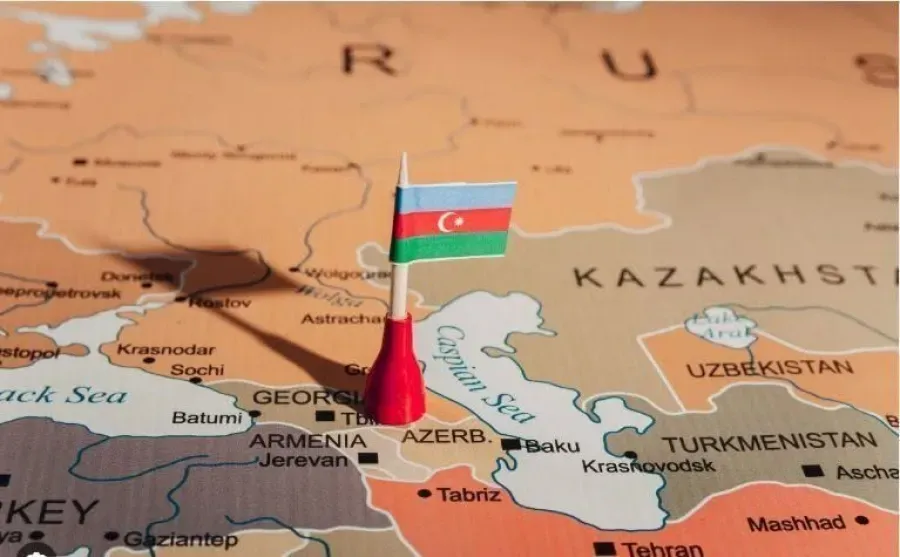
Armenia, backed by Russia, launched aggression against Azerbaijan. At the time, much more serious geopolitical interests stood behind the Armenian-Azerbaijani conflict, but instead of unity within the country, we experienced political polarization in Azerbaijani society.
There were different forces in Azerbaijan’s parliament — pro-Russian, pro-Iranian and pro-Western. There were people who sincerely defended their political views, but there were also those who fought for power, as well as political opportunists who, at every historical moment, seek not the state but a source of personal gain.
And while the country was at war, there was an internal struggle within it, and we were unable to consolidate the state. The result is known.
Azerbaijan lost not only Karabakh, but also seven surrounding districts, which remained under Armenian occupation for many years.
But history did not end there.
In 1994, after the signing of the “Contract of the Century,” an entirely different stage began. Azerbaijan gained the opportunity to build a long-term state strategy. State institutions were created and strengthened, an economy capable of ensuring the country’s strategic resilience was developed, and the army was systematically built.
And most importantly, the state was given time to prepare. Twenty-six years later, in September 2020, Azerbaijan entered the war with Armenia as a completely different state.
The result is known: in 2023, Azerbaijan’s territorial integrity within its internationally recognized borders was fully restored.
I deliberately speak about this in the first person because at that time I myself was in opposition to President Heydar Aliyev.
Today, decades later, having spent many years in the West, studying American and European politics, observing international relations and seeing how states act when their own interests collide with beautiful political slogans, I can honestly say that I was wrong in some of my assessments at the time.
This admission is more important to me than any party affiliation because politics is not a religion.
A politician, political scientist or anyone engaged in public affairs must have the courage to reconsider their own views if history has proven them wrong.
That is precisely why I am saying these things to Ukrainians today.
Not because I want to see less democracy in Ukraine, but because I want to see more statehood in Ukraine.
A strong state capable of protecting its citizens, capable of defending its territory and unwilling to allow corruption to eat away at it from within.
A state that makes every official — from a minister to a member of parliament — remember that public office is not a privilege but a responsibility. And here I come to another painful issue.
Corruption during wartime is not merely a criminal offense; it is a blow to national security.
When an official steals money intended for the army, they are not simply stealing budget funds. They are stealing from a soldier, stealing weapons, stealing time and stealing someone’s life.
Therefore, during wartime, punishment for corruption should be such that a potential corrupt official would be afraid even to think about committing a crime.
But the law must remain the law, and punishment must be imposed by a court, not by political order. That is precisely why martial law must not turn into arbitrariness.
Ukraine does not need the abolition of the rule of law. It needs a genuine wartime rule of law in which the law applies equally to everyone — a minister, a member of parliament, a general, an official, a businessman and an ordinary citizen.
Because if only a minor official is held responsible for a crime while a major politician always remains untouchable, there can be no consolidation of society.
A soldier must know that the person who sends him to fight is himself accountable before the law, and that the person who controls state funds is accountable for every stolen dollar. This is the trust without which no army can truly be strong.
Look at the other post-Soviet states.
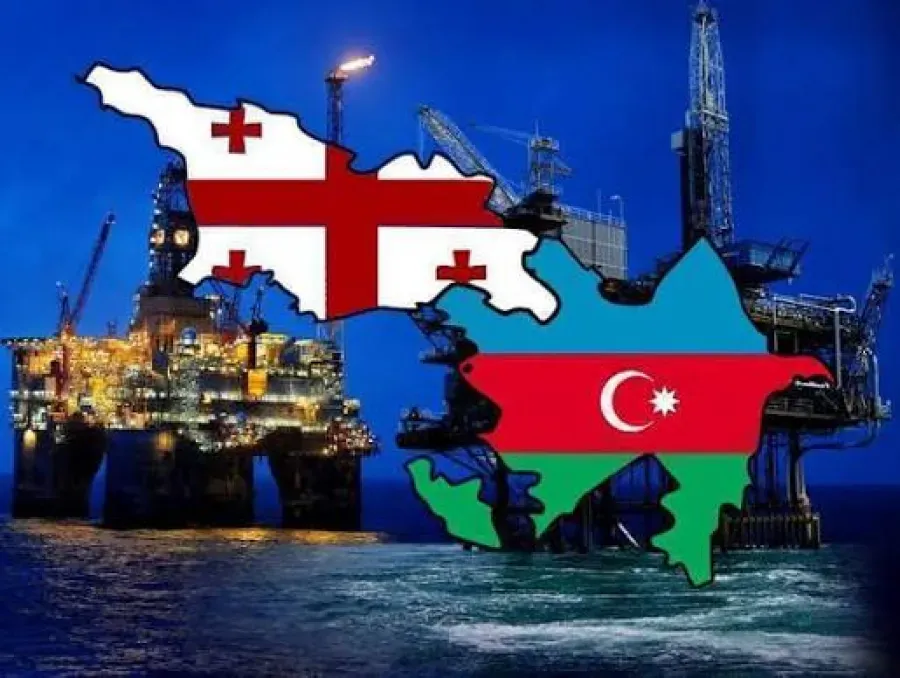
Georgia lost control over Abkhazia and the Tskhinvali region as a result of a complex combination of internal and external factors, including Russian military intervention. Today, the EU explicitly speaks of Russia’s continued military presence and control over these territories.
Moldova has lived with the unresolved problem of Transnistria for decades. The European Union continues to demand the withdrawal of Russian troops and ammunition from the Transnistrian region and reaffirms its support for Moldova’s territorial integrity. At the same time, Brussels warns of ongoing attempts to destabilize Moldovan institutions and society.
Each of these countries has its own history, and it cannot be reduced to a single cause. But there is a common lesson.
When a state is internally weak, it is significantly easier for an external adversary to exploit its weakness. That is precisely why Ukraine must not repeat the mistakes of others.
Ukraine today is in a completely different situation from Georgia or Moldova. It is waging a full-scale war and has already demonstrated its ability to resist an adversary that many considered far more powerful.
The Ukrainian army has become one of the most important factors in European security, while Ukrainian society has already demonstrated an extraordinary capacity for resistance.
But that is precisely why it is particularly strange to see how enormous energy that could be used to strengthen the state is sometimes spent on internal political warfare.
Ukraine has an enemy, and that enemy will not disappear simply because Ukrainian politicians argue among themselves.
Russia will not abandon its strategic objectives because the Ukrainian government and opposition exchange another hundred mutual accusations. Russian missiles will not fly more slowly because of another political scandal in Kyiv, and it certainly will not make things easier for the Ukrainian soldier.
Try to put yourself in the place of a Ukrainian soldier.
You are on the front line and know that you could die tomorrow. You see destroyed cities, lose friends and defend your country because you believe that behind you there is a state and a people. Then you open your phone and see another political brawl, another accusation, another scandal, another struggle for ratings, and you naturally ask yourself:
What am I here for?
This question must not be underestimated, because the morale of an army begins not only with the amount of ammunition, but also with a sense of justice and the feeling that the country behind the soldier is united on what matters most.
You can argue about the president, the government, the economy and the country’s future, but there is one fundamental issue on which the argument must end: Ukraine must survive as an independent state.
This is what national consolidation must be built around. Not around a personality, a party, a rating or another election campaign, but around the state. And here I want to tell Ukraine’s political elite something that many may not want to hear.
War is not the time to build a political future by destroying trust in the state.
Your political future will have meaning only if Ukraine itself continues to exist.
First — the state, then political ambitions. First — victory and security, then elections and the struggle for power. First — the life of the country, then the struggle for positions.
This does not mean abolishing democracy. It means understanding priorities.
Democracy is a mechanism for governing the state, and the state must exist for that mechanism to have any meaning. If someone today deliberately destabilizes society for the sake of their own political future, they must understand one simple thing: a political victory inside a defeated state is not a victory.
And one more thing: Ukraine must stop thinking that the West will always make decisions exclusively based on Ukrainian interests.
The West supports Ukraine, and that support today is enormous and critically important.
But Western states primarily protect their own interests. That is how international politics works.
America protects America, Germany protects Germany, France protects France, Türkiye protects Türkiye, and Azerbaijan protects Azerbaijan. Ukraine, too, must primarily protect Ukraine.
That is why I have always said and continue to say: the most important thing for a state is to be the subject of its own policy — not pro-Russian, not pro-American, not pro-European, not pro-Iranian, not pro-Chinese, but pro-Ukrainian.
Because allies can help, partners can support, and international organizations can adopt resolutions, but no one can replace a state in protecting its own sovereignty.
Azerbaijan paid a very high price for understanding this. Ukraine has already paid and continues to pay an even more terrible price.
Therefore, Ukraine has no right to repeat the mistakes that cost other post-Soviet states territories, lives and decades of historical development.
Today, Ukraine does not need political silence; it needs political discipline centered on the national interest.
If you need to argue — argue. If you need to criticize the authorities — criticize them. If corruption must be investigated — investigate it. If officials must be held accountable — demand it. But do so in a way that after every political dispute, the Ukrainian state becomes stronger, not weaker.
Because there is an enormous difference between democracy that corrects the state’s mistakes and political struggle that helps the enemy destroy the state.
The first is strength; the second is suicide. And today, not only politicians but every Ukrainian must understand this.
Because the war is not between Ukrainian political parties. The war is between Ukraine and Russia.
And while Russian missiles are flying at Ukrainian cities, while the Russian army is attempting to destroy Ukrainian statehood, Ukrainian society must not forget the most important thing: it has one state home. That home can be criticized and rebuilt; its government and laws can be changed, but the enemy must not be allowed to set it on fire from within.
I say all this because I am a friend of Ukraine, and that is precisely why I do not want to tell Ukrainians only what they want to hear.
I have seen how internal divisions weaken a state, and I have seen how political polarization becomes a gift to an external enemy.
I have seen how a country loses territories when the state is unable to unite its own forces into a single fist. And I have seen something else: how a state that learned from its defeats spent years building its army, institutions and economic foundation in order one day to recover what was considered lost forever.
Therefore, my advice to Ukraine today is very simple: do not give the enemy what it could not take on the battlefield. Do not give it Ukraine from within. Russia may destroy Ukrainian cities, but it must not be allowed to destroy Ukrainian society.
Russia may try to divide Ukrainian politics, but Ukrainian politics must not allow that division to become a weapon against its own state.
Russia may wait for Ukraine to become exhausted, but do not help it achieve that.
The war will end one day, but what kind of Ukraine emerges from it will depend not only on the front line. It will also depend on whether Ukrainian society, at the most difficult moment in its history, can understand one simple truth: internal struggle can wait, but the existence of the state cannot.
And here I want to end with the words of Benjamin Franklin: “If we do not hang together, we shall surely hang separately.” War is not the time to determine which of our own is stronger; it is the time to make sure that our own remain our own.
Ramis Yunus
Professor of Political Science
Khazar University